
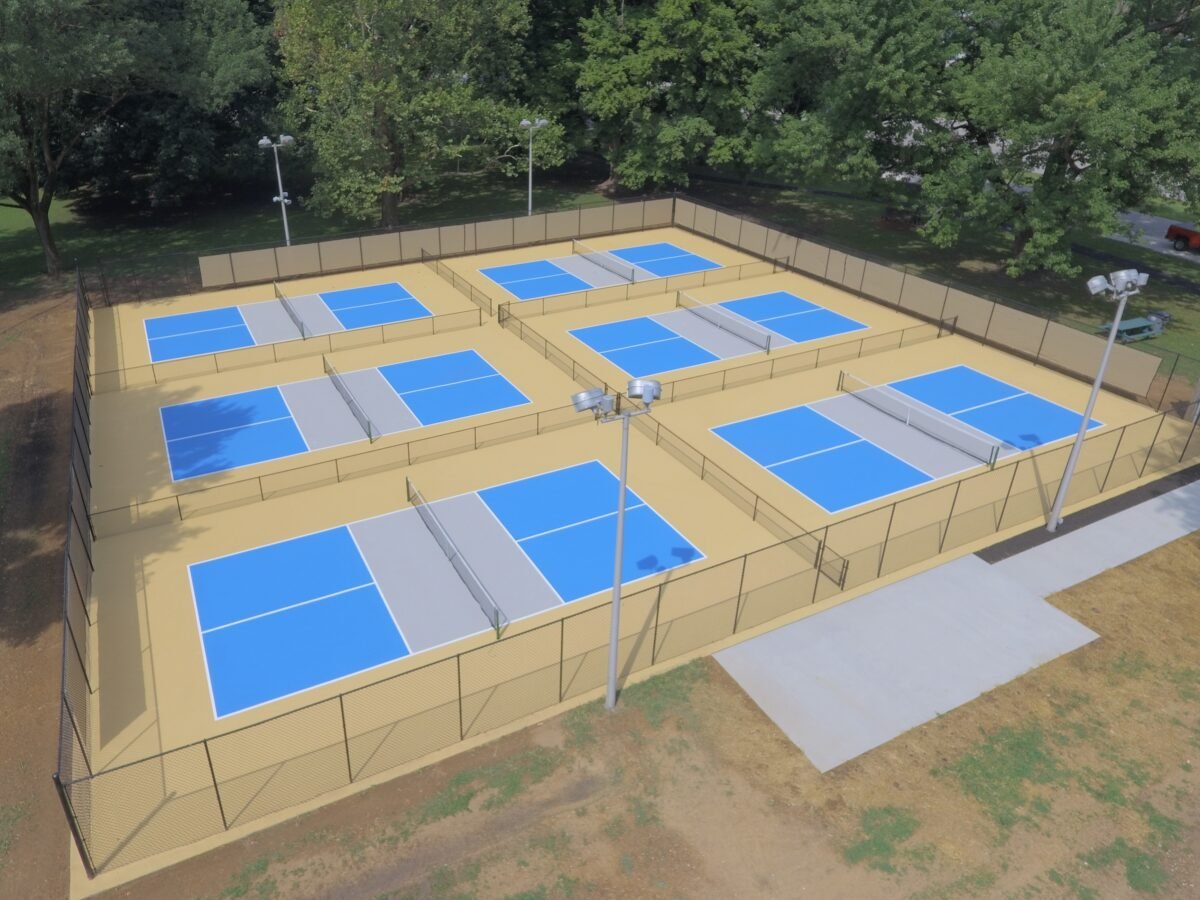
Determining what is the best surface for a pickleball court requires looking past cosmetic paint chips and understanding sub-base geotechnical engineering. A regulation court is a dual-component civil asset: a rigid, moisture-protected structural foundation paired with an elastic, 100% acrylic sports surfacing coating calibrated for plastic ball rebound and athletic shear friction.
Every year, residential homeowners, HOA boards, and municipal recreation directors waste thousands of dollars applying standard exterior latex paint, garage floor epoxies, or unbuffered concrete stains over raw slabs. Within weeks, the coatings bubble from hydrostatic moisture, crack along stress joints, or transform into dangerously slick ice rinks under morning humidity. Understanding what is the best court surface for pickleball and selecting the best paint for pickleball courts demands analyzing concrete curing chemistry, silica sand mesh grading, and slope drainage dynamics.
Direct Answer: What Is the Best Surface for a Pickleball Court?
- The Structural Gold Standard: The best surface for an outdoor pickleball court is post-tensioned (PT) concrete or a properly compacted asphalt pad finished with a multi-layer 100% acrylic sports coating system blended with rounded silica sand.
- The Wearing Surface Standard: The best paint for a pickleball court is a specialized, textured 100% acrylic coating—specifically SportMaster PickleMaster RTU or California Sports Surfaces Plexipave. These systems deliver true vertical ball bounce, UV stability, and slip-resistant traction.
- Joint Protection Upgrade: For aging players and high-frequency clubs, a cushioned acrylic court (incorporating multi-layer SBR rubber granules beneath the color coats) absorbs 20% to 30% of joint impact shock while maintaining 100% regulation ball rebound fidelity.
- Surfaces to Avoid: Raw uncoated concrete, garage floor epoxies, pool paints, and household exterior paints must never be used under any circumstances.
1. Quick Guide: Master Court Surface Comparison Matrix
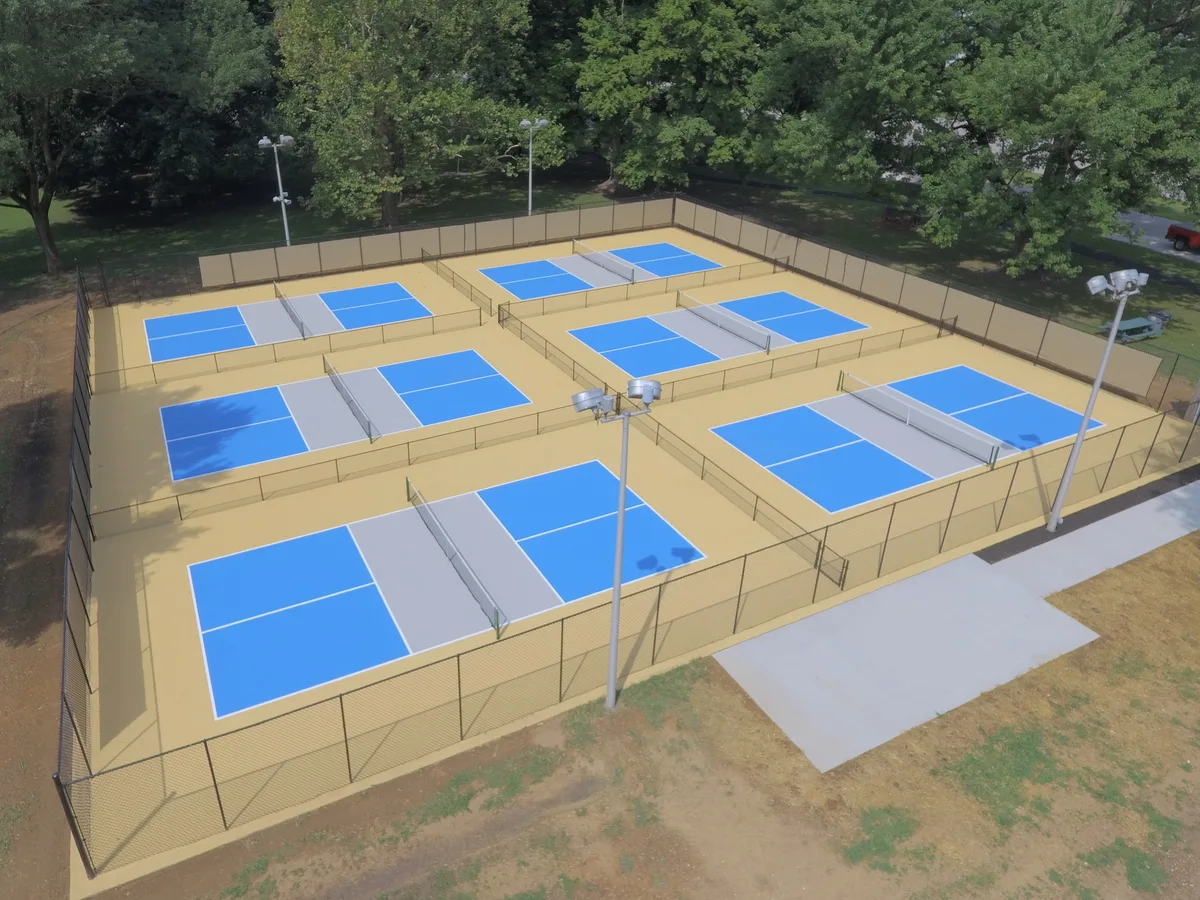
To evaluate what is the best court surface for pickleball across different facility budgets, player demographics, and climate zones, the matrix below benchmarks the primary surface systems against regulation ball response, joint impact, and long-term capital expenditure:
| Court Surface System | Sub-Base Material | Ball Bounce Fidelity | Footwork Traction | Joint Comfort | Base Lifespan | Cost / Sq. Ft. | Best Use-Case Scenario |
|---|---|---|---|---|---|---|---|
| Standard Textured Acrylic | PT Concrete or Asphalt | 10 / 10 (True & High) | 9.5 / 10 (Predictable) | 5.0 / 10 (Firm) | 25–30+ Years | $6.00 – $9.00 | Tournament venues, public parks, standard backyard builds |
| Cushioned Acrylic System | PT Concrete or Asphalt | 9.5 / 10 (True Rebound) | 9.5 / 10 (Predictable) | 8.5 / 10 (Joint-Safe) | 25–30+ Years | $9.00 – $14.00 | Aging players, private clubs, high-frequency elite facilities |
| Modular Interlocking Tiles | Existing Slab / Flat Pad | 6.5 / 10 (Slightly dead) | 6.0 / 10 (Slick in dew) | 7.0 / 10 (Suspended flex) | 10–15 Years | $4.50 – $7.50 | Temporary setups, cracked problem slabs, multi-sport spaces |
| Raw Uncoated Concrete | Poured Concrete Slab | 8.0 / 10 (Skidding bounce) | 4.0 / 10 (Dusty/Abrasive) | 3.0 / 10 (Harsh shock) | Prone to scaling | $3.50 – $6.00 | Unfinished residential driveways prior to sports resurfacing |
| Polyurethane / Vinyl Roll | Hardwood or Concrete | 8.5 / 10 (Medium) | 8.0 / 10 (Indoor grip) | 8.5 / 10 (Resilient) | 10–15 Years | $7.00 – $12.00 | Dedicated indoor sports clubs, converted warehouse facilities |
2. The Structural Foundation: Asphalt vs. Post-Tensioned Concrete vs. Standard Slab
The durability of an athletic court is decided long before paint touches the ground. The structural sub-base accounts for roughly 75% of your total construction budget and dictates whether the court remains glass-flat for thirty years or develops structural cracks within three winters. When evaluating asphalt vs concrete pickleball court options, engineers classify bases into three distinct tiers:
A. Post-Tensioned (PT) Concrete: The Undisputed Structural Benchmark
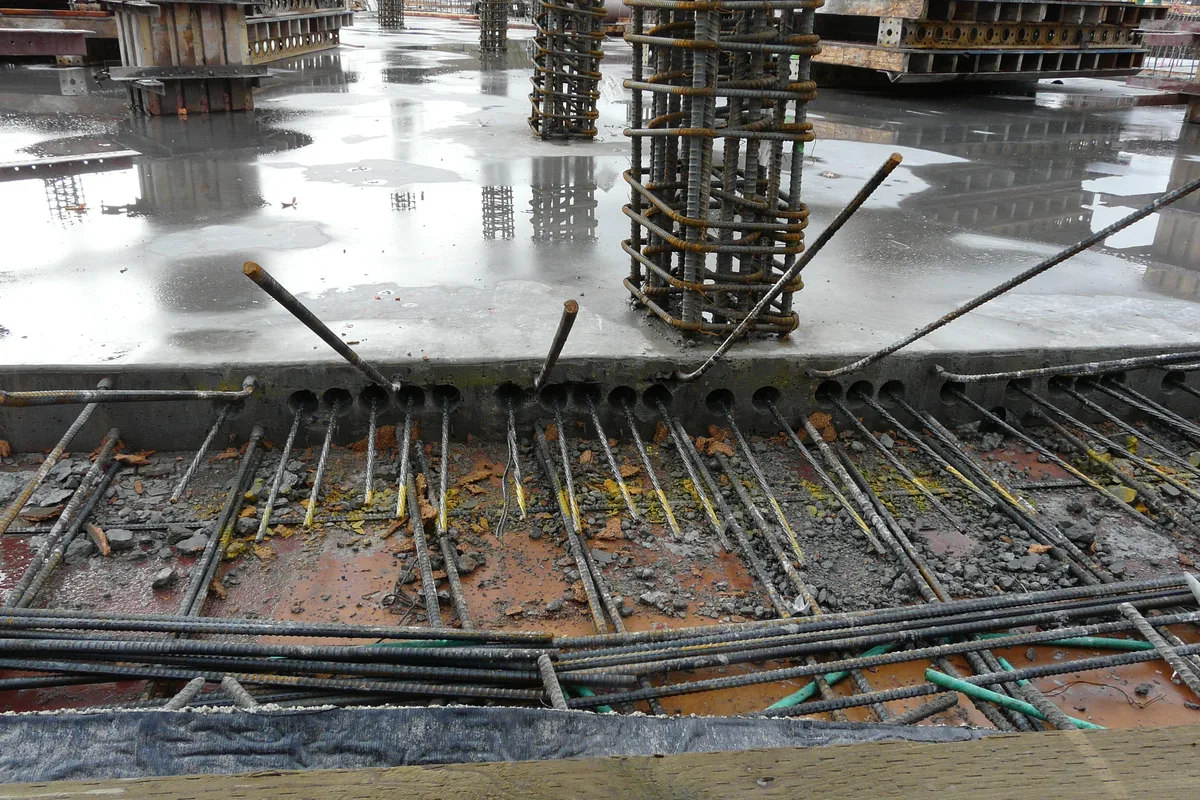
In modern sports civil engineering, a post-tensioned concrete pickleball court represents the gold standard. A PT slab is engineered by pouring a continuous 4-inch to 5-inch monolithic concrete pad embedded with high-strength, plastic-sheathed steel tendons arranged in a grid. Once the concrete reaches roughly 75% of its compressive strength (usually within 3 to 7 days), hydraulic jacks tension the cables to approximately 30,000 pounds of force per tendon.
This tension puts the entire concrete slab under permanent compression. Because concrete is exceptionally strong in compression but weak in tension, post-tensioning locks out shrinkage cracks, settlement shifts, and frost heave. Expansion and control joints are completely eliminated, providing a perfectly continuous, seamless plane that will never reflect cracks upward through your expensive acrylic paint. A PT concrete base carries an expected operational lifespan exceeding 30 years.
B. Bituminous Asphalt: The Cost-Effective Municipal Alternative
Historically, asphalt has been the most common base for outdoor sports courts due to lower initial material costs. Asphalt is a flexible pavement consisting of aggregate stone bound together with asphalt cement. When freshly paved and compacted over a laser-graded crushed stone base, it delivers an outstanding, seamless surface for acrylic paint adhesion.
However, asphalt is inherently vulnerable to oxidation and temperature swings. Ultraviolet rays dry out the asphalt binders over time, causing the surface to become brittle. In regions subject to winter freeze-thaw cycles, sub-surface moisture freezes, expands, and inevitably cracks the asphalt. Furthermore, asphalt requires a minimum 14-to-21-day oxidation period before acrylic resurfacers can be applied, or residual oils will bleed through and stain the court. An asphalt pad typically requires structural crack repairs every 3 to 5 years and full replacement every 12 to 15 years.
C. Standard Poured Reinforced Concrete: The Reflective Cracking Trap
Pouring standard non-tensioned concrete with rebar or wire mesh is common in residential driveway construction, but it poses significant risks for sports courts. Standard concrete shrinks as it cures, requiring saw-cut control joints every 10 to 12 feet to dictate where cracks occur. On a pickleball court, these joints act as erratic ridges that alter ball bounce. If control joints are filled with caulk and painted over, thermal movement will tear the acrylic coating along the joint within twelve months—a failure known as reflective cracking.
| Foundation Archetype | Initial Pad Cost (30’x60′) | Crack Susceptibility | Freeze-Thaw Durability | Expected Base Lifespan | Maintenance Schedule |
|---|---|---|---|---|---|
| Post-Tensioned (PT) Concrete | $14,000 – $22,000 | Near Zero (Compression locks cracks) | Superior (Eliminates joint movement) | 30+ Years | Recolor every 5–8 years; zero crack repairs |
| Standard Reinforced Concrete | $11,000 – $16,000 | Moderate to High (Shrinkage cracks telegraph) | Moderate (Relies on control joints) | 20–25 Years | Joint and crack sealing required every 2–4 years |
| Asphalt (Bituminous Concrete) | $9,000 – $14,000 | High (Oxidizes, becomes brittle, cracks) | Poor to Moderate (Prone to frost heave) | 10–15 Years | Cold-pour crack repairs and resurfacing every 3–5 years |
The 1% Drainage Slope Standard and the ‘Nickel Rule’
Proper surface drainage is a mandatory structural requirement under American Sports Builders Association (ASBA) guidelines. Outdoor hardcourts must be engineered with a strict single-plane slope of 0.83% to 1.0% (a drop of 1 inch for every 8.3 to 10 feet of horizontal run). The court must slope consistently in one direction—ideally side-to-side across the court rather than end-to-end, so that neither player faces an uphill or downhill disadvantage.
A court must never be ‘crowned’ (peaked in the center like a roadway). A crown creates an uneven ridge across the Non-Volley Zone that alters ball trajectories. To verify drainage compliance, contractors use the industry standard ‘Nickel Rule’: exactly one hour after a rainstorm ceases in 70°F weather, the court is inspected for standing water. Any puddle deeper than the thickness of a 5-cent US nickel (approximately 1/16 of an inch) is an unacceptable ‘birdbath’ that must be patched level with acrylic binder before painting.
Vapor Barriers & The 28-Day Concrete Cure Axiom
Two catastrophic installation errors ruin more residential pickleball courts than all other factors combined: omitting the vapor barrier and painting too early.
A sub-slab vapor barrier (consisting of a heavy 10-mil to 15-mil continuous polyethylene membrane) must be installed directly beneath the concrete slab over the compacted gravel base. Without an impermeable vapor barrier, groundwater migrates upward through the concrete via capillary action. When sunlight heats the slab, this trapped moisture turns to vapor, generating hydrostatic pressure that lifts and blisters non-breathable sports coatings off the concrete.
Furthermore, new concrete requires a strict cure period of at least 28 days before surface coatings can be introduced. Concrete needs time to fully hydrate, release excess mix water, and stabilize internal alkalinity. Crucially, the concrete contractor must never use liquid chemical curing compounds or wax-based sealers. These curing membranes leave a microscopic barrier that prevents acrylic primers from mechanically anchoring into the concrete pores. The slab should be water-cured or left to air-cure with a medium-broom finish.
3. What Is the Best Paint for Pickleball Courts? Top Acrylic Systems
When homeowners ask what is the best paint for pickleball court, they are often surprised to learn that sports courts are not coated with traditional liquid paint. Professional courts use a sophisticated multi-layer acrylic sports surfacing system formulated from 100% acrylic latex polymers, high-grade mineral pigments, and precision-graded silica sand aggregates.
The 4-Layer Professional Sports Coating Stack
- Layer 1: Concrete Primer & Adhesion Promoter: An epoxy or acrylic-penetrating binder that seals raw concrete pores and neutralizes residual alkalinity, creating a tenacious chemical anchor.
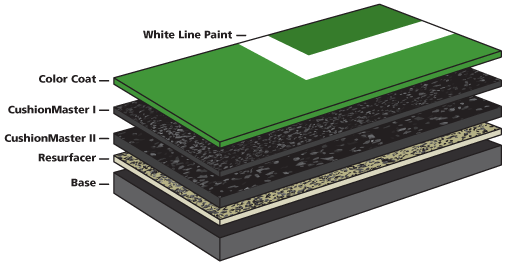
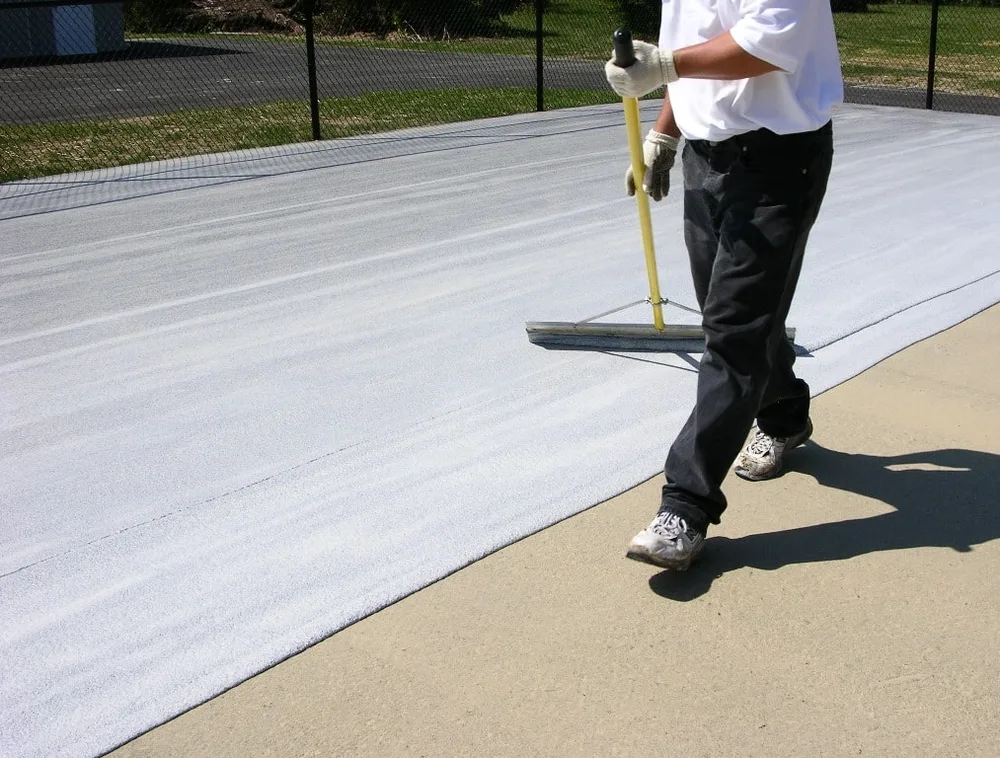
- Layer 2: Acrylic Resurfacer: A high-build, black or neutral 100% acrylic emulsion mixed with 50-to-60 mesh silica sand and clean water. Pushed across the slab with a 36-inch flexible rubber squeegee, this layer levels micro-depressions and establishes a uniform, textured base.
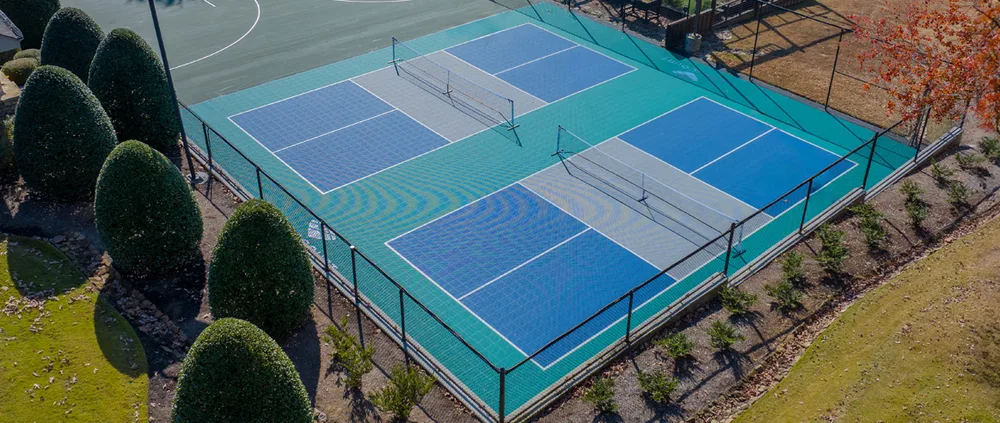
- Layer 3: Two Pigmented Color / Texture Coats: Heavy-duty 100% acrylic color concentrates blended with fine 60-to-80 mesh rounded silica sand. Applied in two separate coats perpendicular to one another, this layer locks in vibrant UV-stable color and establishes the regulation friction coefficient.
- Layer 4: Textured Acrylic Line Paint: High-viscosity white line paint containing fine aggregate. The aggregate ensures that balls striking the 2-inch boundary lines experience identical vertical bounce and traction without skidding.
Leading Commercial Court Coating Systems Reviewed
Four commercial sports coating manufacturers dominate professional tournaments, municipal installations, and private builds:
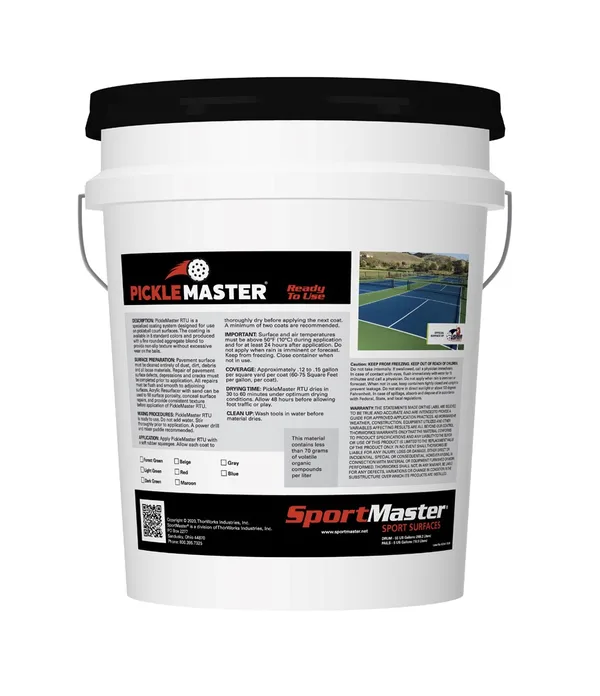
- SportMaster PickleMaster RTU: Manufactured by SealMaster, SportMaster is the official court surface coating system of USA Pickleball. Their dedicated PickleMaster RTU (Ready-To-Use) formula is specifically engineered for pickleball’s distinct ball bounce dynamics. It comes factory-blended with rounded silica sand, eliminating on-site mixing errors. It features exceptional UV-fade resistance and is available in standard tournament colors like Royal Blue and Light Green. It represents the highest-rated product for both DIY projects and professional contractor applications. (Note: High-saturation Royal Blue and Light Green tournament surfaces reflect substantial court glare under direct sun; wearing specialized non-polarized pickleball sunglasses with contrast-enhancing lens tints helps players track optic yellow balls against vibrant acrylic paint.)
- Plexipave / California Sports Surfaces: Manufactured by California Sports Surfaces, Plexipave is the historic benchmark in racquet sports, coating premier tennis stadiums and top-tier pickleball complexes worldwide. Known for its intense color saturation and proprietary acrylic binders, Plexipave delivers unmatched wear life under heavy foot traffic. It is primarily applied by certified sports contractors.
- Laykold Masters Systems: Laykold is the official surface of the US Open tennis championships and has expanded aggressively into dedicated pickleball venues. Their coatings utilize sustainable bio-based polymer resins, offering superior elongation and resistance to thermal cracking in extreme northern climates.
- ArmorPoxy SurfaceBond Systems: For homeowners converting a residential concrete driveway or sound backyard slab, ArmorPoxy offers complete DIY court coating kits. Their water-based acrylic emulsions incorporate slip-resistant texturizing agents and include pre-measured primers, color coatings, masking tape, and line striping supplies.
Silica Sand Mesh Sizing: The Physics of Ball Bounce and Traction
The secret to how a pickleball behaves on an acrylic court lies entirely within the mineral aggregate mixed into the paint. Pure acrylic resin dries smooth and glassy; without aggregate, a hard plastic pickleball would skid, skip low, and behave erratically.
Professional installers use 60-to-80 mesh silica sand at an exact ratio of 7 to 9 pounds of sand per gallon of acrylic concentrate. Sand mesh dictates court pace:
- 50–60 Mesh Sand (Coarser): Creates a higher friction, slower court pace. Favored by training facilities and public parks because it maximizes shoe traction and extends rally lengths, though it causes faster ball wear.
- 70–90 Mesh Sand (Finer): Creates a faster, slicker tournament-grade pace with lower ball deceleration on the bounce.
Crucially, the sand must be sub-angular or rounded silica sand. Installers must never use sharp, angular masonry sand or blasting sand. Angular sand particles act like tiny razor blades, cutting into player shoes, scraping skin on falls, and chewing through the plastic shell of outdoor pickleballs within ten minutes of play.
4. What NOT to Paint a Pickleball Court With: The Catastrophic DIY Failures
When attempting a budget backyard build, homeowners frequently experiment with off-the-shelf hardware store paints. These experiments inevitably result in complete coating failure and costly concrete remediation:
The Three Worst Coating Choices for Pickleball Courts
- 1. Standard Exterior Latex / Acrylic House Paint: Exterior house paint is formulated for vertical wood or masonry surfaces to withstand rain, not horizontal athletic shear stress. When players sprint, slide, and plant their feet on a kitchen dink, the lateral shear force rips latex paint straight off the concrete in wide peeling sheets within two weeks.
- 2. Garage Floor Epoxy: Epoxy creates a hard, non-porous chemical shell that looks sleek inside a garage. However, epoxy degrades rapidly under outdoor UV radiation, yellowing and chalking. Worse, when morning dew, humidity, or light rain touches an epoxy court, it becomes slicker than a bowling alley lane, creating an extreme slip-and-fall injury hazard.
- 3. Concrete Acid Stains & High-Gloss Sealers: Stains soak into concrete pores unevenly, leaving an inconsistent surface profile. Sealers leave a glossy top barrier that prevents the plastic ball from gripping, causing it to skid low without achieving the regulation 30-to-34 inch vertical rebound height required by USA Pickleball.
5. Cushioned Acrylic vs. Interlocking Modular Plastic Tiles: Which Is Better?
For facility managers and residential players evaluating what is the best surface to play pickleball on from an orthopedic standpoint, the choice narrows down to two cushioned solutions:
A. Cushioned Acrylic Court Systems (The Orthopedic Champion)
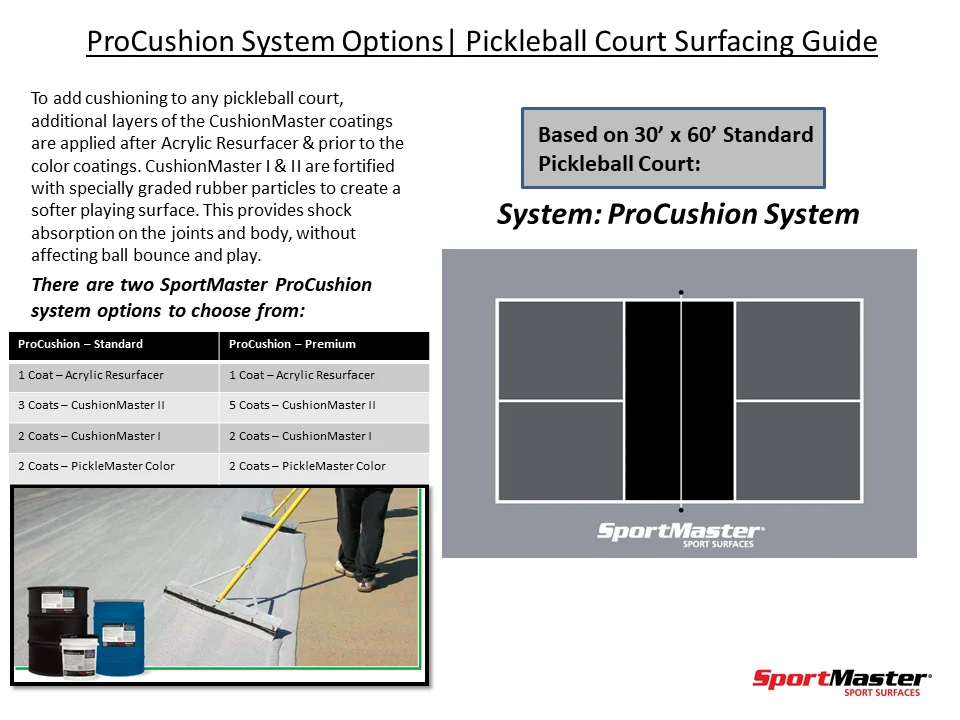
A cushioned acrylic court (such as SportMaster ProCushion or California Sports Surfaces Plexicushion) represents the ultimate playing experience. Over the standard asphalt or concrete base and acrylic resurfacer, technicians squeegee three to five specialized coats of liquid rubber emulsion. This cushion layer contains graded post-consumer SBR rubber granules and EPDM elastomeric particles.
Once cured, this rubber matrix forms a resilient, shock-absorbing cushion totaling 1/8 to 3/8 of an inch thick, which is then sealed beneath two coats of textured acrylic color. Biomechanical studies indicate that cushioned acrylic reduces shock impact on a player’s knees, ankles, and lumbar spine by 20% to 30%. Because the top surface remains textured acrylic, ball bounce fidelity, ball sound, and shoe traction remain 100% true to professional tournament standards.
B. Interlocking Modular Plastic Tiles (The Flexible Alternative)
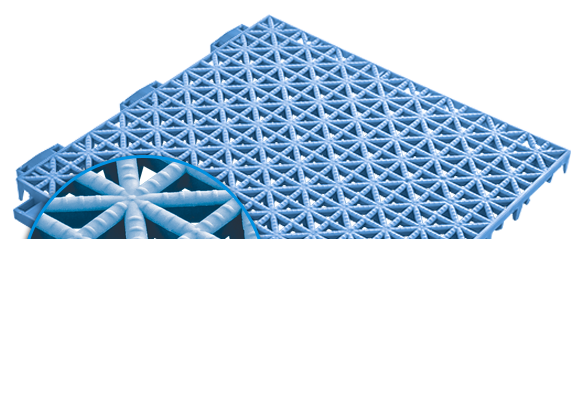
Modular polypropylene plastic tiles (such as Pickletile, VersaCourt, or Sport Court) snap together over any flat, firm concrete or asphalt pad. They are widely utilized for multi-sport backyard setups, temporary event courts, and residential slabs that already suffer from extensive cracking.
Modular tiles offer distinct advantages: they expand and contract freely across seasonal temperature shifts without cracking, install in a single afternoon, and require zero paint curing time. However, dedicated pickleball players often express frustration with plastic tiles. The suspended grid structure deadens delicate kitchen dinks, creates an audible ‘plastic clack’ upon every bounce, and can become slick when ambient morning humidity settles into the tile perforations.
6. Step-by-Step: How to Prep and Paint a Pickleball Court (DIY & Contractor Guide)
Applying a professional court coating requires meticulous mechanical preparation. Follow this six-stage workflow to guarantee lasting adhesion and flawless playability:
Deep Surface Decontamination
Clean the entire slab using a commercial pressure washer (min. 3,500 PSI) with a rotating turbo nozzle to remove dirt, moss, algae, and efflorescence. Scrub oil spots with tri-sodium phosphate (TSP) and rinse thoroughly.
Crack Repair and Birdbath Leveling
Grind structural cracks into a clean ‘V-groove’ and seal with acrylic crack sealant reinforced with stitch-bond fabric. Flood the court, mark puddles deeper than a nickel after one hour, and patch level using acrylic court patch binder.
Moisture Vapor Transmission Testing
Tape a 2×2 ft sheet of clear 6-mil polyethylene tightly to the slab for 24 hours under direct sunlight. If condensation forms beneath or the concrete darkens, apply an epoxy moisture-mitigation primer before painting to prevent blistering.
Acrylic Resurfacer Squeegee Application
Mix acrylic resurfacer concentrate with 50-to-60 mesh silica sand and clean water. Pour a continuous ribbon across the baseline and draw it smoothly across the court using a 36-inch, 70-durometer flexible rubber squeegee. Allow 2 to 4 hours to dry.
Applying Two Pigmented Color Texture Coats
Apply the first color coat parallel to the court’s long axis. Once dry (3 to 4 hours), apply the second color coat perpendicular to the first. Cross-application eliminates squeegee ridges and guarantees uniform sand aggregate distribution.
Precision Line Masking and Textured Line Paint
Measure regulation lines (20×44 ft, 7-ft Kitchen) with calibrated steel tapes and mask using 2-inch tape. Apply clear acrylic line primer to lock edges against bleed, then roll two coats of textured 100% acrylic white line paint.
7. Frequently Asked Questions: Pickleball Court Surfaces Decoded
What is the best surface for an outdoor pickleball court?
What is the best paint for a pickleball court?
Can I just paint pickleball lines on my concrete driveway?
How much does it cost to resurface a pickleball court?
How long does pickleball court paint last?
Why can’t I use regular outdoor paint on a pickleball court?
Related Equipment Guides & Tournament Reading
Indoor vs. Outdoor Pickleball Balls →
Understand hole count, plastic Shore D durometer, and ball flight aerodynamics on hardcourts.
14mm vs. 16mm Pickleball Paddles →
Compare dwell time, pop, and power vs control setups used on professional tournament courts.
Best Foam Core Pickleball Paddles →
Discover modern perimeter foam injection and full foam core vibration dampening technology.
How to Play Pickleball Singles Guide →
Full-court and skinny singles strategies, serving angles, and passing shot tactics.