
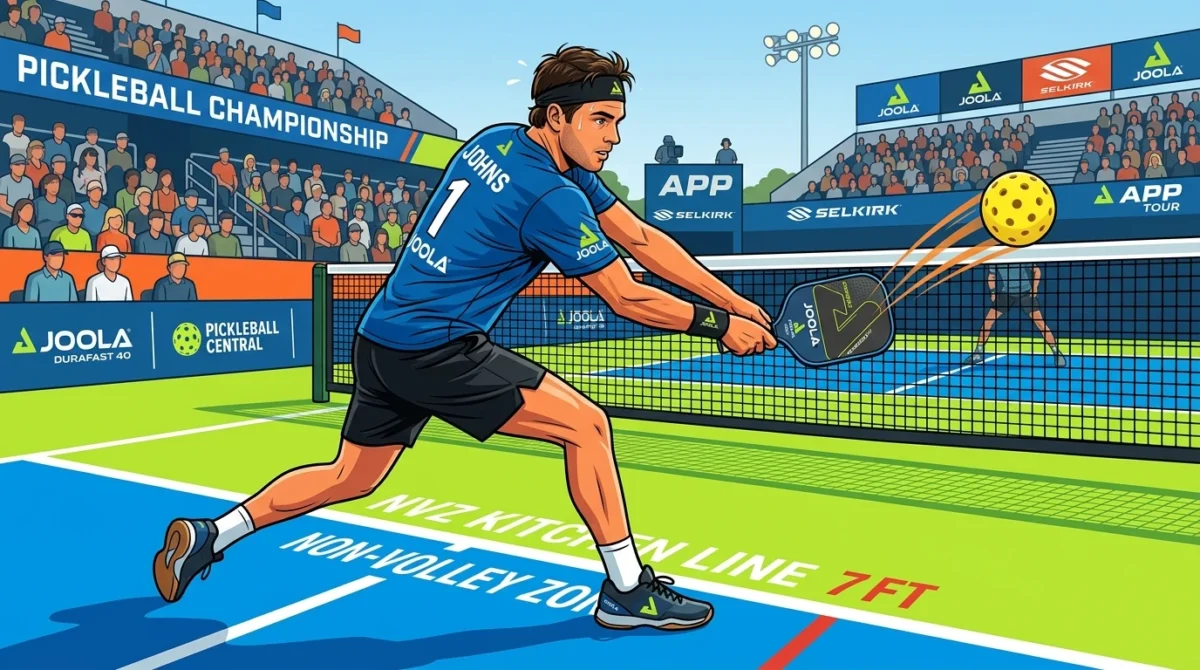
Top touring professionals on the PPA Tour and Major League Pickleball (MLP) overwhelmingly compete with raw carbon fiber paddles featuring elongated shapes (16.5″ × 7.5″) and 16mm polymer honeycomb cores for defensive touch, plush resets, and kitchen hand speed. However, virtually zero pros play their equipment straight out of the box.
Over 85% of touring athletes heavily customize their paddles with perimeter lead or tungsten tape, pushing factory static weights from ~8.0 oz up to 8.35–8.85 oz, and elevating swing weights past 118–124 kg·cm² for plow-through power, sweet spot expansion, and maximum torsional stability.
Editorial Transparency: The specifications documented in this guide represent verified tournament setups recorded across PPA Tour stops and MLP events. Equipment configurations are benchmarked using precision digital swing weight machines (Briffidi SW1) and certified workshop scales. Player sponsorships reflect active 2026 tour registrations.
If you walk into any major sporting goods retailer or unbox a direct-to-consumer paddle, you hold an instrument engineered to satisfy broad consumer appeal: weighing roughly 7.8 to 8.1 ounces, with a swing weight hovering around 110 to 114 kg·cm² and a twist weight near 5.8 to 6.2 kg·cm². But if you believe that Ben Johns, Tyson McGuffin, Catherine Parenteau, or Anna Leigh Waters walks onto Championship Court with an off-the-shelf stock model, you have bought into one of pickleball’s most persistent commercial illusions.
In the pro locker room, an off-the-shelf paddle is simply a blank canvas. Factory mass-production inevitably produces manufacturing variances: internal cores fluctuate by ±0.15 ounces, epoxy resin distributions alter static balance points, and swing weights vary across identical serial numbers. Touring professionals do not gamble their tournament paychecks on factory tolerances.
1. The “Stock Paddle” Myth: What Paddles Pro Players Actually Hold in Their Hands
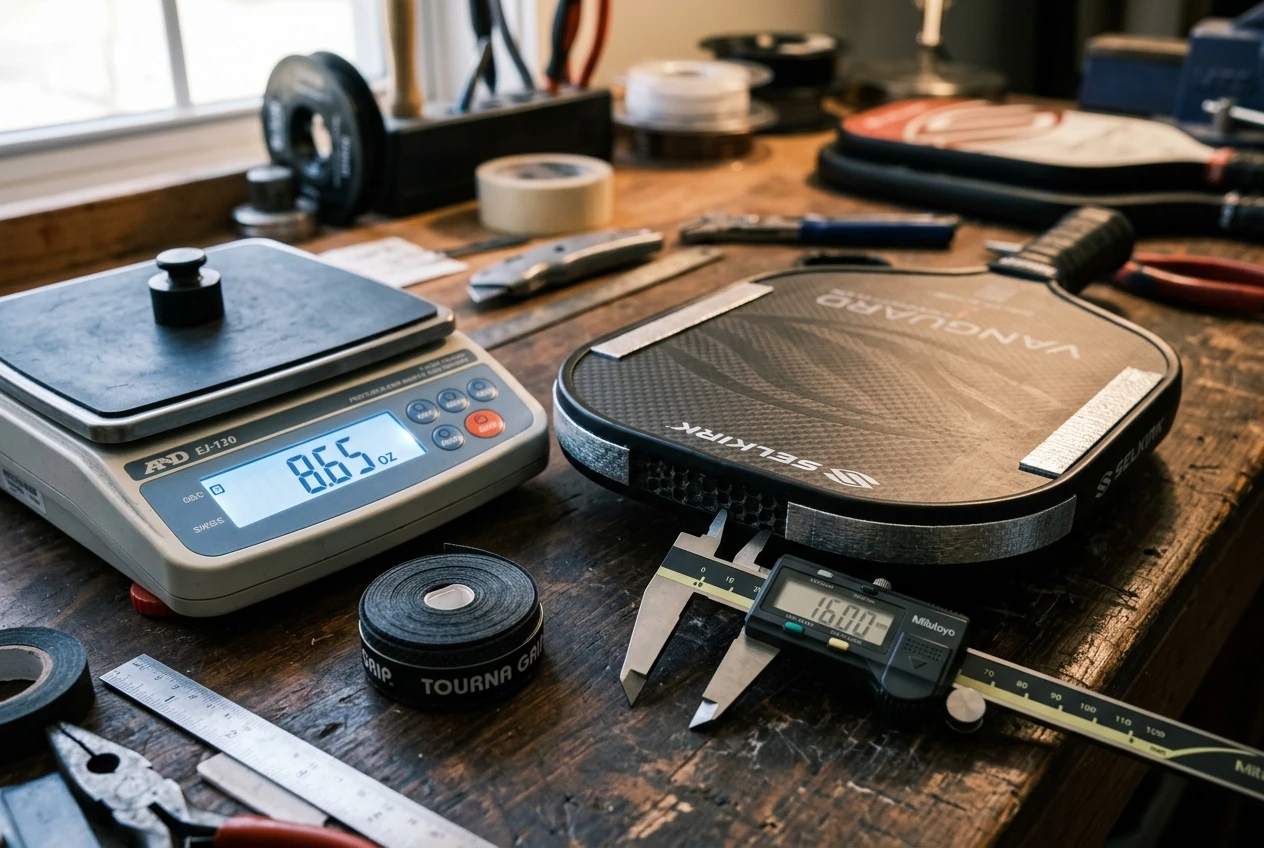
Before a paddle ever strikes an official tournament ball, it undergoes a meticulous bench customization process. Tour technicians and players utilize digital swing weight machines (such as the Briffidi SW1) and precision scales to tune every tournament backup paddle to identical tolerances. Pro equipment customization centers around four distinct mechanical modifications:
- Heavier Static Mass: Factory retail paddles arrive in the 7.9–8.1 oz range to remain accessible to recreational players. Touring professionals immediately add high-density perimeter weighting, elevating battle weights between 8.35 oz (women’s doubles kitchen specialists) and 8.85 oz (men’s singles power drivers).
- Elevated Twist Weight (Torsional Stability): Pros apply weighted tape at the 3 and 9 o’clock positions along the lateral edges. This widens the effective sweet spot, preventing the paddle face from twisting on off-center digs when defending 50+ mph speed-ups at the non-volley zone (NVZ). Learn more about how structural designs influence stability in our guide on pickleball paddle core types explained.
- Targeted Swing Weight Inertia: Pros raise swing weights from the factory standard of ~112 kg·cm² to an aggressive 118–124 kg·cm² by adding mass at the 10 and 2 o’clock corners. This creates ferocious plow-through on drives and dipping topspin rolls that dive at opponents’ feet.
- Custom Handle Geometry & Double Overgrips: Most touring pros strip factory base grips or build up bevel edges with lead strips, heat-shrink sleeves, and stacked tack overgrips. Players with two-handed backhands (like Ben Johns and Anna Leigh Waters) extend the grip wrap up to 5.5–6.0 inches along the elongated neck.
“If an amateur picks up a touring pro’s paddle, their first reaction is almost always: ‘This feels like an anvil.’ The combination of perimeter weighting, double overgrips, and protective edge tape elevates the rotational inertia to levels that demand high-level kinetic chain mechanics to swing for three consecutive tournament matches without shoulder exhaustion.”
— Alex Turner, USAPA Equipment & Athletic Performance Specialist
2. Master 2026 Pro Tour Paddle Matrix: Equipment Specs of Top Champions
Below is the verified equipment inventory of 15 elite PPA Tour and Major League Pickleball (MLP) champions, detailing their exact models, core dimensions, surface materials, and tournament-grade weight modifications:
3. In-Depth Reviews: What Paddles Do Top Pro Pickleball Players Use?
To help players understand how these professional instruments perform on court, we have conducted exhaustive technical teardowns for each marquee paddle model, analyzing factory engineering, real player customizations, and on-court tactical capabilities.
1. JOOLA Ben Johns Perseus Pro IV 16mm (Ben Johns & Federico Staksrud)
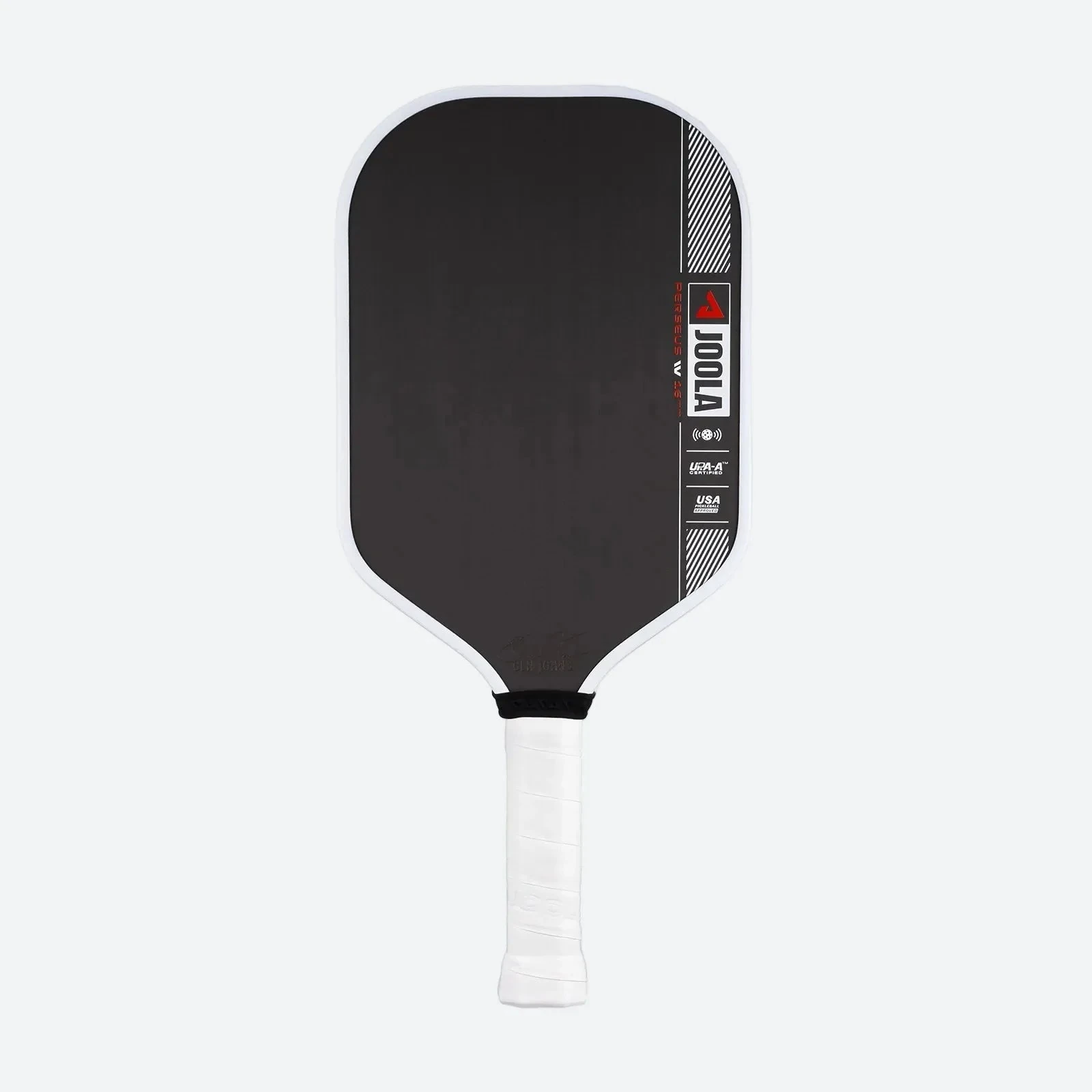
Primary Tour Athletes: Ben Johns (World #1 Men’s Doubles/Singles) & Federico Staksrud (PPA Singles Champion)
Ben Johns’ equipment trajectory mirrors the entire evolutionary arc of competitive pickleball: shifting from soft fiberglass touch paddles to high-inertia thermoformed carbon monsters. The JOOLA Perseus Pro IV 16mm is the flagship weapon of the modern pro circuit, engineered around an elongated 16.5-inch by 7.5-inch chassis that delivers maximum baseline reach and drive leverage.
| Core Thickness & Type | 16mm Reactive Honeycomb Polymer Core |
| Paddle Shape & Dimensions | Elongated (16.5″ Length × 7.5″ Width) |
| Face Material & Grit | Charged Carbon Surface (Textured Raw Carbon) |
| Stock vs. Tour Battle Weight | 8.0 oz Stock → 8.65 oz Tour Setup |
| Tour Swing Weight / Twist Weight | 121 kg·cm² Swing Weight / 6.95 kg·cm² Twist Weight |
| Handle Length & Grip Circumference | 5.5″ Elongated Handle | 4.25″ Circumference |
The Pro Customization Blueprint: Ben Johns adds 3-gram lead tape strips exclusively across the 3 and 9 o’clock perimeter positions on the lower-mid quadrant of the paddle face. By anchoring mass directly across the horizontal axis of the sweet spot, Johns expands the twist weight dramatically without driving the swing weight beyond the threshold of hand-speed fatigue. He tops off the 5.5-inch handle with a tacky overgrip extending one inch past the collar, creating a seamless platform for his dominant two-handed backhand drive.
For more details on how raw carbon fiber elevates spin RPMs, see our deep-dive on pickleball paddle materials explained.
2. Paddletek Bantam ALW-C 14.3mm / 12.7mm (Anna Leigh Waters)
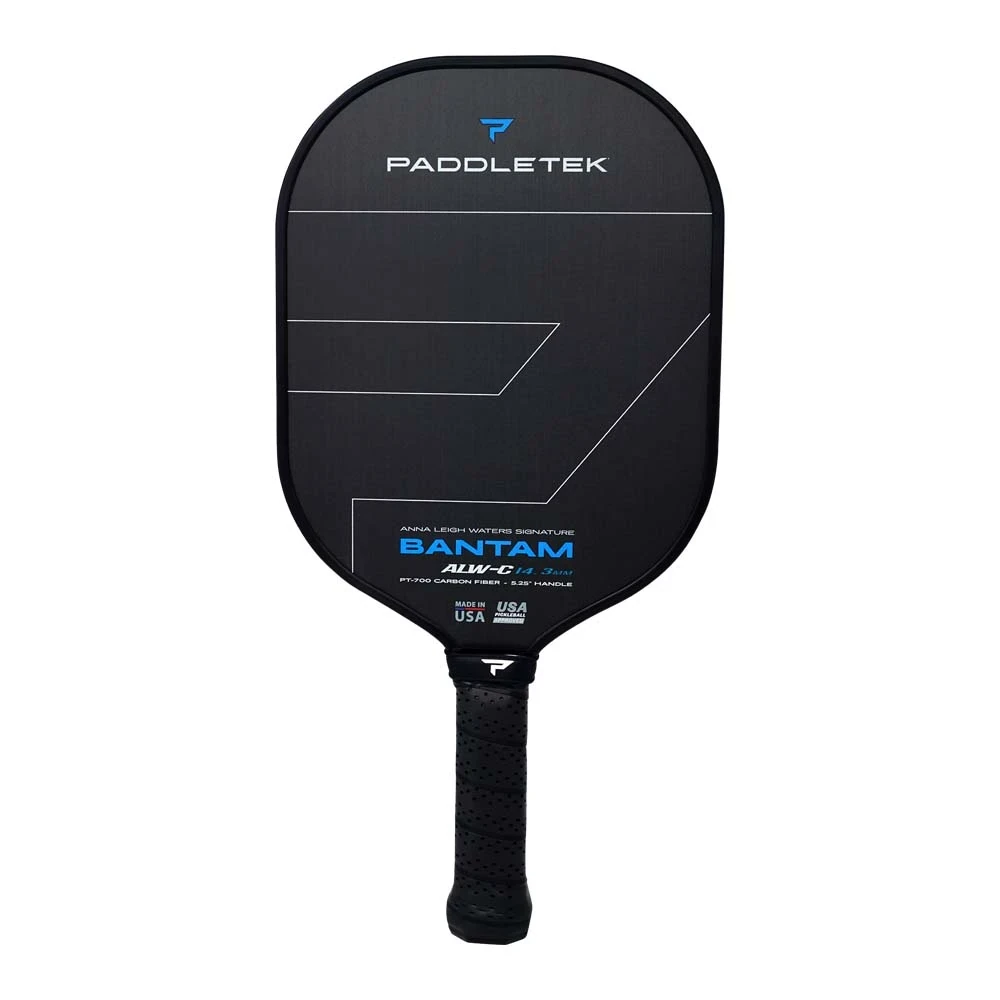
Primary Tour Athlete: Anna Leigh Waters (Undisputed World #1 Women’s Triple Crown Champion)
While more than 75% of touring professionals rely on 16mm thick cores, Anna Leigh Waters dominates the global sport using a fundamentally different mechanical philosophy: thinner cores that release the ball off the face with instantaneous exit velocity. ALW alternates between the 14.3mm and 12.7mm Bantam ALW-C, alongside experimental play with the Franklin C45.
| Core Thickness & Type | 14.3mm (or 12.7mm) Bantam PolyCore |
| Paddle Shape & Dimensions | Standard Hybrid (16.0″ Length × 7.875″ Width) |
| Face Material & Grit | PT-700 High Modulus Unidirectional Raw Carbon |
| Stock vs. Tour Battle Weight | 7.8 oz Stock → 8.25 oz Tour Setup |
| Tour Swing Weight / Twist Weight | 114 kg·cm² Swing Weight / 6.45 kg·cm² Twist Weight |
| Handle Length & Grip Circumference | 5.25″ Handle | 4.125″ Small Grip |
The Pro Customization Blueprint: Thinner cores naturally compress less upon ball impact, providing explosive “pop” during out-of-the-air kitchen attacks and speed-up counters. To compensate for the narrower sweet spot of a thinner core, ALW’s technicians apply high-density tungsten strips from the throat upward through the 4 and 8 o’clock lower quadrants. This stabilizes the paddle against torsional twisting on off-center digs while keeping overall swing weight ultra-low (~114 kg·cm²) for blinding hand speed in kitchen firefights.
3. JOOLA Tyson McGuffin Magnus Pro IV 16mm (Tyson McGuffin)
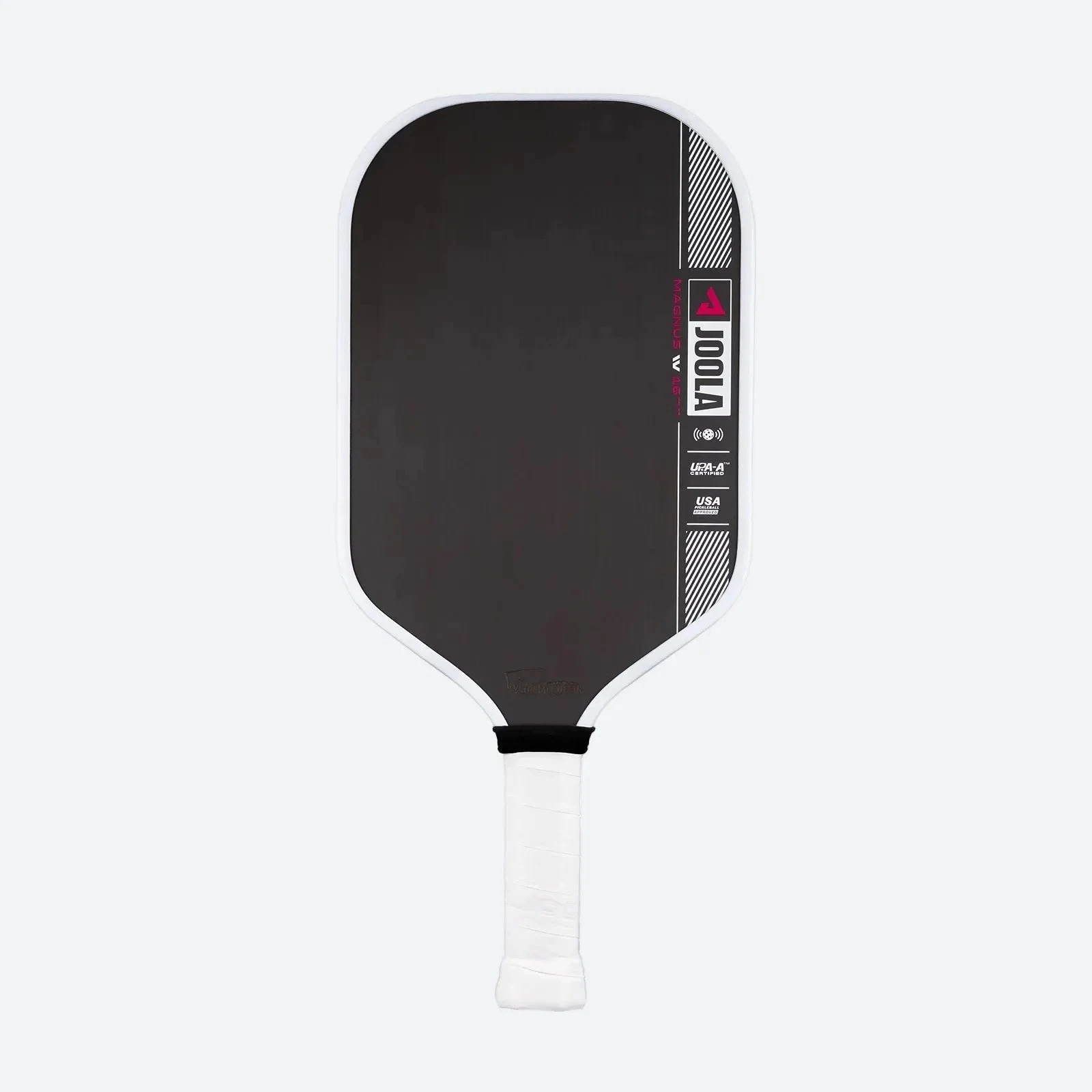
Primary Tour Athlete: Tyson McGuffin (4-Time PPA National Champion)
Tyson McGuffin’s playing style is defined by relentless physical conditioning, aggressive baseline driving, and extreme topspin roll volleys. (Alongside customized lead tape paddle weighting, McGuffin is one of the premier tour pros known for competing in high-performance protective optics; see our complete guide to pro tour eyewear and sunglass lens colors for pickleball.) The JOOLA Magnus Pro IV 16mm features an elongated shape with an aerodynamic, broad-shouldered head profile that redistributes face surface area toward the upper tip.
| Core Thickness & Type | 16mm Propulsion Polymer Honeycomb |
| Paddle Shape & Dimensions | Broad Elongated (16.5″ Length × 7.5″ Width) |
| Face Material & Grit | Proprietary Carbon Friction Textured Surface |
| Stock vs. Tour Battle Weight | 8.1 oz Stock → 8.75 oz Tour Setup |
| Tour Swing Weight / Twist Weight | 124 kg·cm² Swing Weight / 6.60 kg·cm² Twist Weight |
| Handle Length & Grip Circumference | 5.5″ Handle | 4.25″ Circumference |
The Pro Customization Blueprint: McGuffin places heavy lead tape across the 10 and 2 o’clock upper perimeter zones. Placing mass near the tip of an elongated lever spikes the paddle’s swing weight to a towering 124 kg·cm². While an amateur swinging this paddle would quickly suffer from late contact, McGuffin’s rotational torque generates crushing plow-through that forces opponents backward on baseline third-shot drives.
4. Selkirk VANGUARD Control Invikta 16mm (Catherine Parenteau)
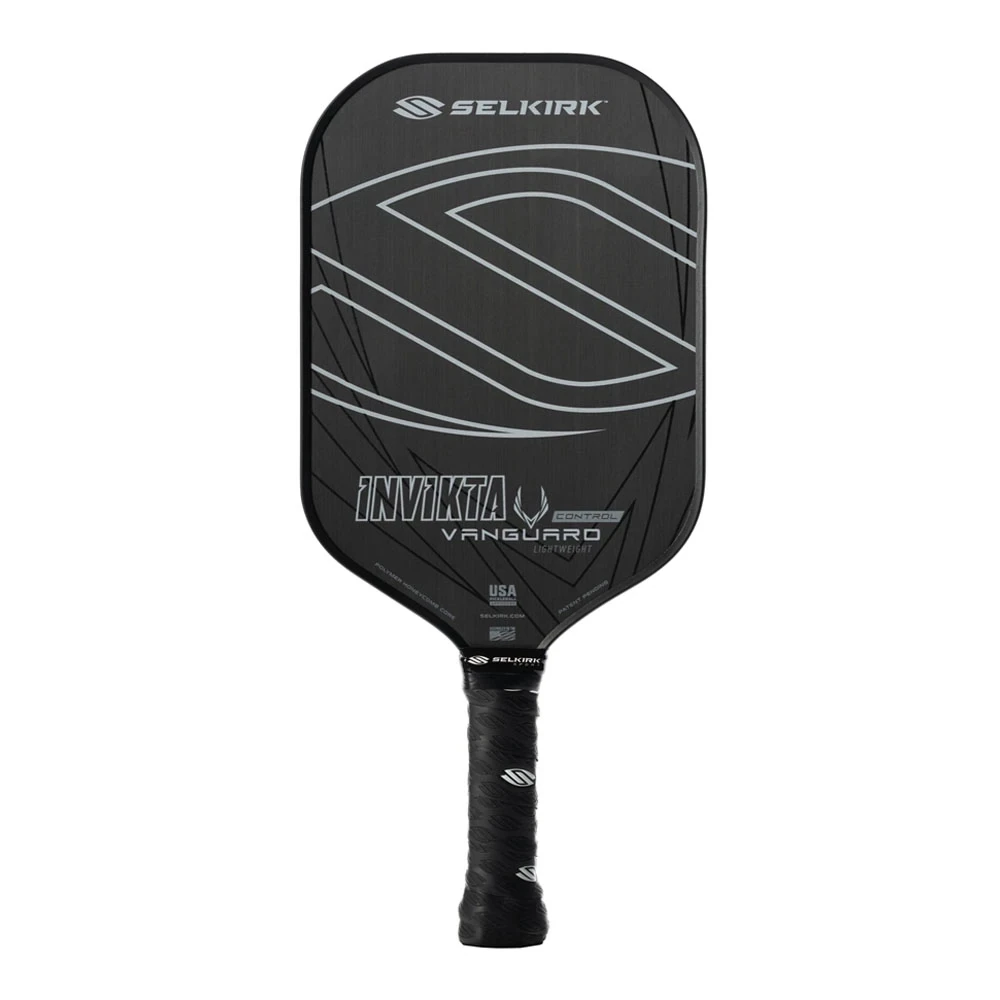
Primary Tour Athlete: Catherine Parenteau (PPA Multi-Gold Medalist)
In an era dominated by stiff thermoformed power paddles, Catherine Parenteau’s paddle choice is a masterclass in surgical control. Playing Selkirk’s non-thermoformed VANGUARD Control Invikta 16mm, Parenteau prioritizes maximum dwell time and plush feedback to execute dead-drop resets from anywhere on the court.
| Core Thickness & Type | 16mm Vanguard X5+ Polypropylene Core |
| Paddle Shape & Dimensions | Elongated (16.5″ Length × 7.375″ Width) |
| Face Material & Grit | QuadCarbon Raw Carbon Weave Face |
| Stock vs. Tour Battle Weight | 7.9 oz Stock → 8.35 oz Tour Setup |
| Tour Swing Weight / Twist Weight | 116 kg·cm² Swing Weight / 6.80 kg·cm² Twist Weight |
| Handle Length & Grip Circumference | 5.25″ Handle | 4.25″ Circumference |
The Pro Customization Blueprint: Parenteau adds thin lead strips along the 3 and 9 o’clock perimeter, bringing static weight to roughly 8.35 ounces. This gives her the torsional stability needed to absorb 55 mph body attacks without popping the ball up, while preserving total freedom of hand speed during rapid-fire cross-court kitchen dink exchanges. For similar control-focused recommendations, explore our curated list of the best pickleball paddles for control and all-court play.
5. Selkirk LUXX Control Air Invikta 20mm (Jack Sock)
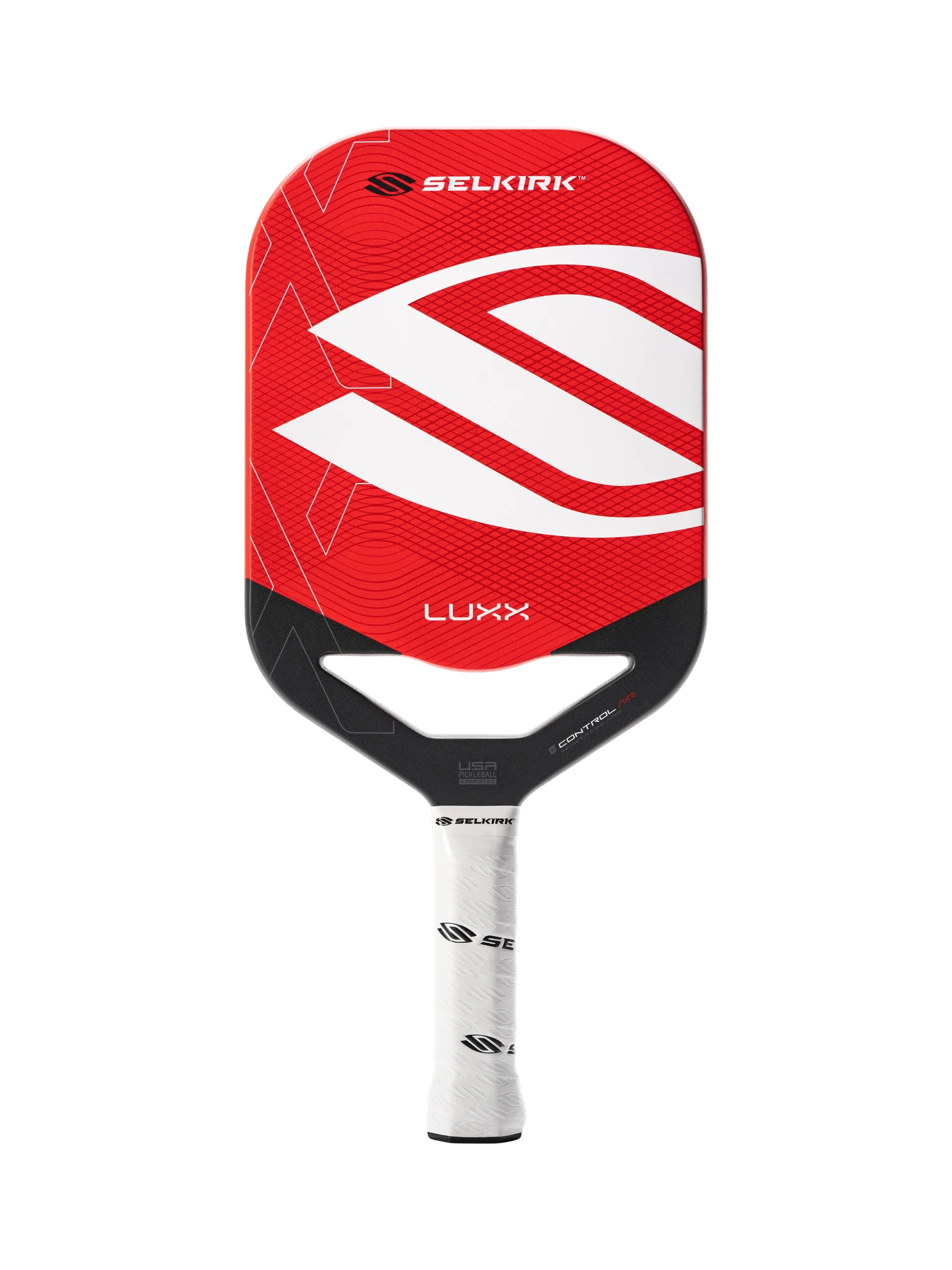
Primary Tour Athlete: Jack Sock (Former ATP Top-10 Tennis Star & PPA Gold Medalist)
Former Wimbledon doubles champion Jack Sock brought extreme ATP topspin mechanics to pickleball, demanding a paddle that could absorb violent incoming drives while offering an ultra-thick cushion for dipping spin. The edgeless Selkirk LUXX Control Air Invikta features a revolutionary 20mm ThoreCore polymer honeycomb paired with an aerodynamic Air Dynamic throat vent.
| Core Thickness & Type | 20mm ThoreCore Polymer Matrix (Edgeless) |
| Paddle Shape & Dimensions | Elongated Edgeless (16.4″ Length × 7.4″ Width) |
| Face Material & Grit | Florek Carbon Fiber with InfiniGrit Technology |
| Stock vs. Tour Battle Weight | 8.0 oz Stock → 8.80 oz Tour Setup |
| Tour Swing Weight / Twist Weight | 123 kg·cm² Swing Weight / 7.20 kg·cm² Twist Weight |
| Handle Length & Grip Circumference | 5.35″ Handle | 4.25″ Circumference |
The Pro Customization Blueprint: Because edgeless paddles naturally have lighter perimeter weights and lower native twist weights, Sock wraps the entire perimeter edge channel in heavy lead tape, taking the paddle from an 8.0 oz stock frame to an 8.80 oz hammer. Combined with his western grip and explosive wrist snap, this ultra-thick setup generates topspin spin rates exceeding 2,100 RPM.
6. Franklin Signature Carbon STK 16mm (JW Johnson)
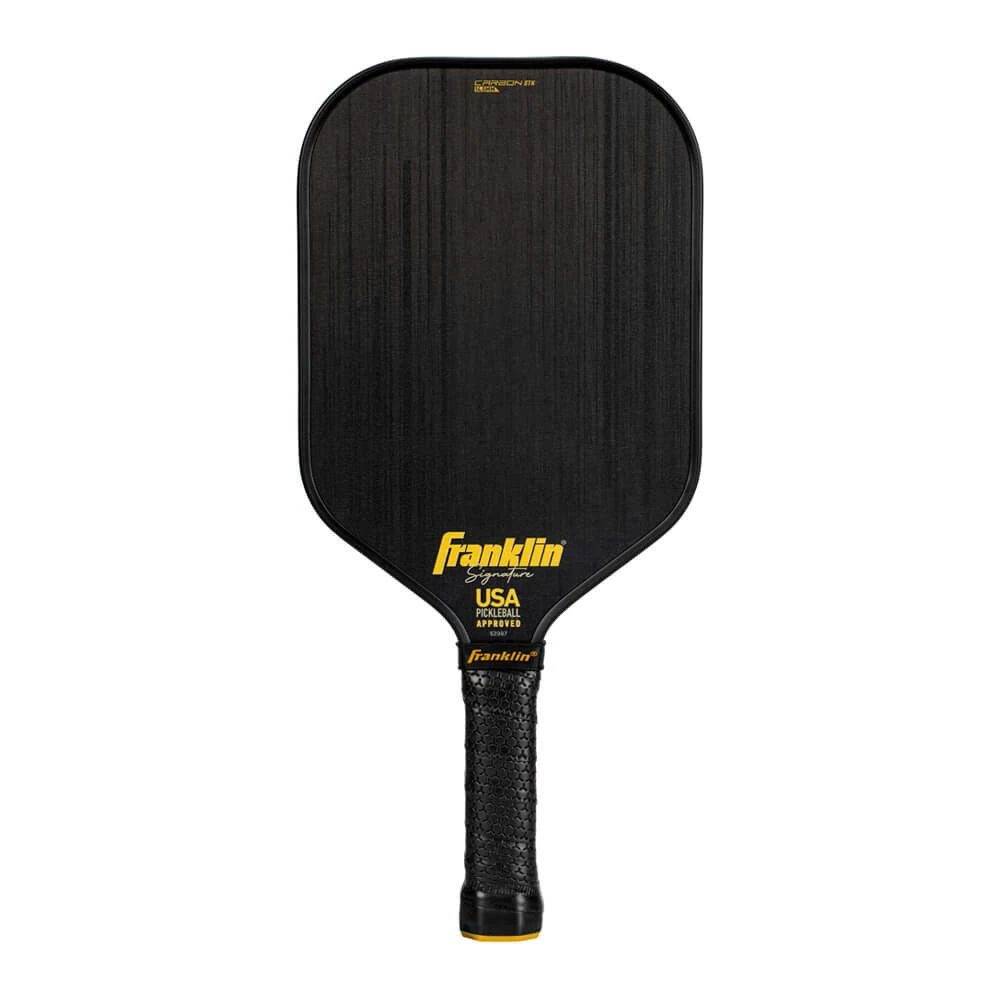
Primary Tour Athlete: JW Johnson (PPA Men’s Doubles & Singles Champion)
JW Johnson is renowned across the professional circuit for possessing the fastest hands in pickleball history. The Franklin Signature Carbon STK 16mm is built for players who rely on quick wrist flick counters, roll volleys, and precise touch drops at the non-volley zone.
| Core Thickness & Type | 16mm Polypropylene Honeycomb Core |
| Paddle Shape & Dimensions | Standard Hybrid (16.0″ Length × 8.0″ Width) |
| Face Material & Grit | Carbon STK Premium Textured Carbon Face |
| Stock vs. Tour Battle Weight | 8.0 oz Stock → 8.45 oz Tour Setup |
| Tour Swing Weight / Twist Weight | 115 kg·cm² Swing Weight / 6.70 kg·cm² Twist Weight |
| Handle Length & Grip Circumference | 5.6″ Elongated Handle | 4.25″ Circumference |
The Pro Customization Blueprint: Unlike players who chase maximum swing weight, JW Johnson keeps his customization balanced. Thin lead strips placed on the lower sides provide just enough stability on off-center digs without compromising his lightning-fast NVZ flick speed.
7. Paddletek Bantam TKO-C 14.3mm (Vivienne David & Christian Alshon)
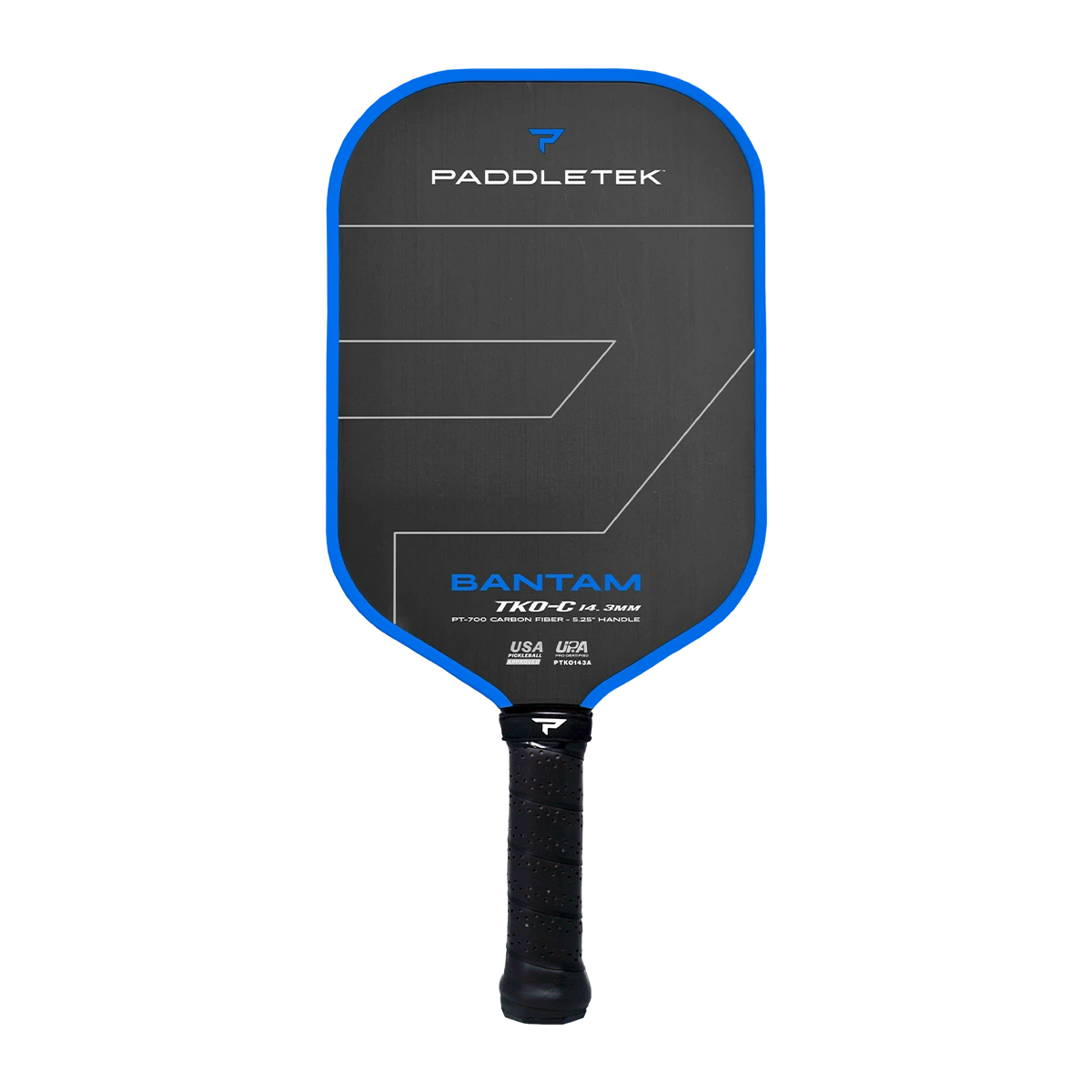
Primary Tour Athletes: Vivienne David & Christian Alshon (Top PPA Contenders)
Designed in collaboration with former Division-1 tennis athletes, the Paddletek Bantam TKO-C 14.3mm combines an elongated 16.5-inch paddle frame with an aggressive 14.3mm core. This pairing gives counter-attackers the reach and aerodynamic whip needed to control the transition zone.
| Core Thickness & Type | 14.3mm Bantam PolyCore |
| Paddle Shape & Dimensions | Elongated (16.5″ Length × 7.5″ Width) |
| Face Material & Grit | PT-700 High Modulus Raw Carbon |
| Stock vs. Tour Battle Weight | 7.9 oz Stock → 8.30 oz Tour Setup |
| Tour Swing Weight / Twist Weight | 117 kg·cm² Swing Weight / 6.55 kg·cm² Twist Weight |
| Handle Length & Grip Circumference | 5.35″ Handle | 4.25″ Circumference |
The Pro Customization Blueprint: Vivienne David concentrates tungsten weighting around the lower quadrants of the paddle throat. This stabilizes the sweet spot for emergency defensive blocks while preserving a low center of gravity for rapid hand resets.
8. JOOLA Anna Bright Scorpeus 3S 16mm Wide-Body (Anna Bright & Callie Smith)
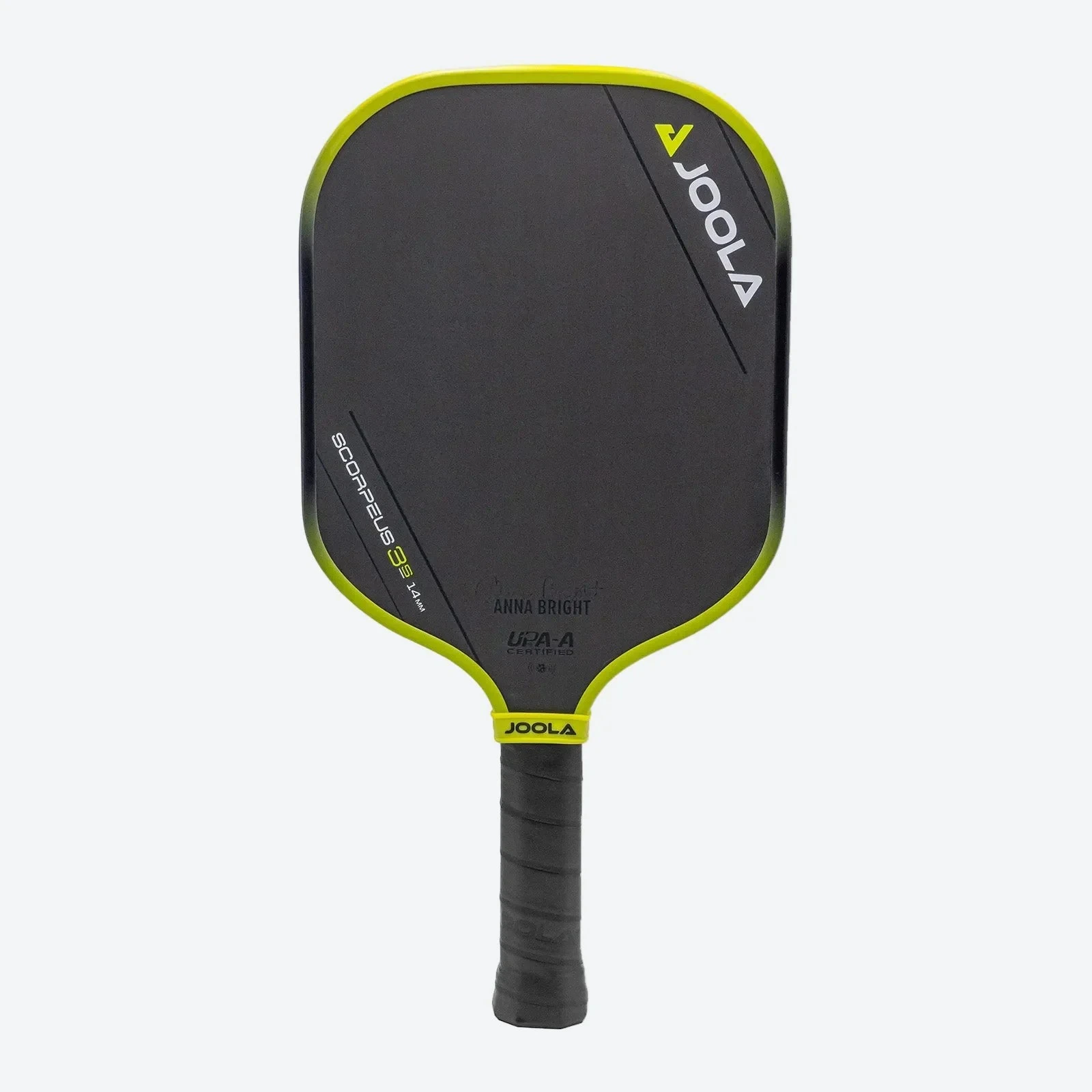
Primary Tour Athletes: Anna Bright, Callie Smith & Collin Johns
For players who operate predominantly at the non-volley zone, wide-body geometry is the ultimate defensive shield. The JOOLA Scorpeus 3S 16mm features an 8.0-inch width that offers the highest native twist weight on the professional tour, virtually eliminating dead zones on off-center digs.
| Core Thickness & Type | 16mm Propulsion Honeycomb Core |
| Paddle Shape & Dimensions | Wide-Body (16.0″ Length × 8.0″ Width) |
| Face Material & Grit | Charged Carbon Surface |
| Stock vs. Tour Battle Weight | 8.0 oz Stock → 8.40 oz Tour Setup |
| Tour Swing Weight / Twist Weight | 112 kg·cm² Swing Weight / 7.45 kg·cm² Twist Weight |
| Handle Length & Grip Circumference | 5.25″ Handle | 4.25″ Circumference |
The Pro Customization Blueprint: Callie Smith and Collin Johns place small 1.5-gram lead strips at 3 and 9 o’clock, bumping twist weight past 7.45 kg·cm². This paddle acts as an impenetrable wall during rapid-fire kitchen hand battles, absorbing blistering speed-ups and redirecting them into soft unattackable dinks.
9. Engage Pursuit Pro EX 6.0 15.2mm (Dekel Bar)
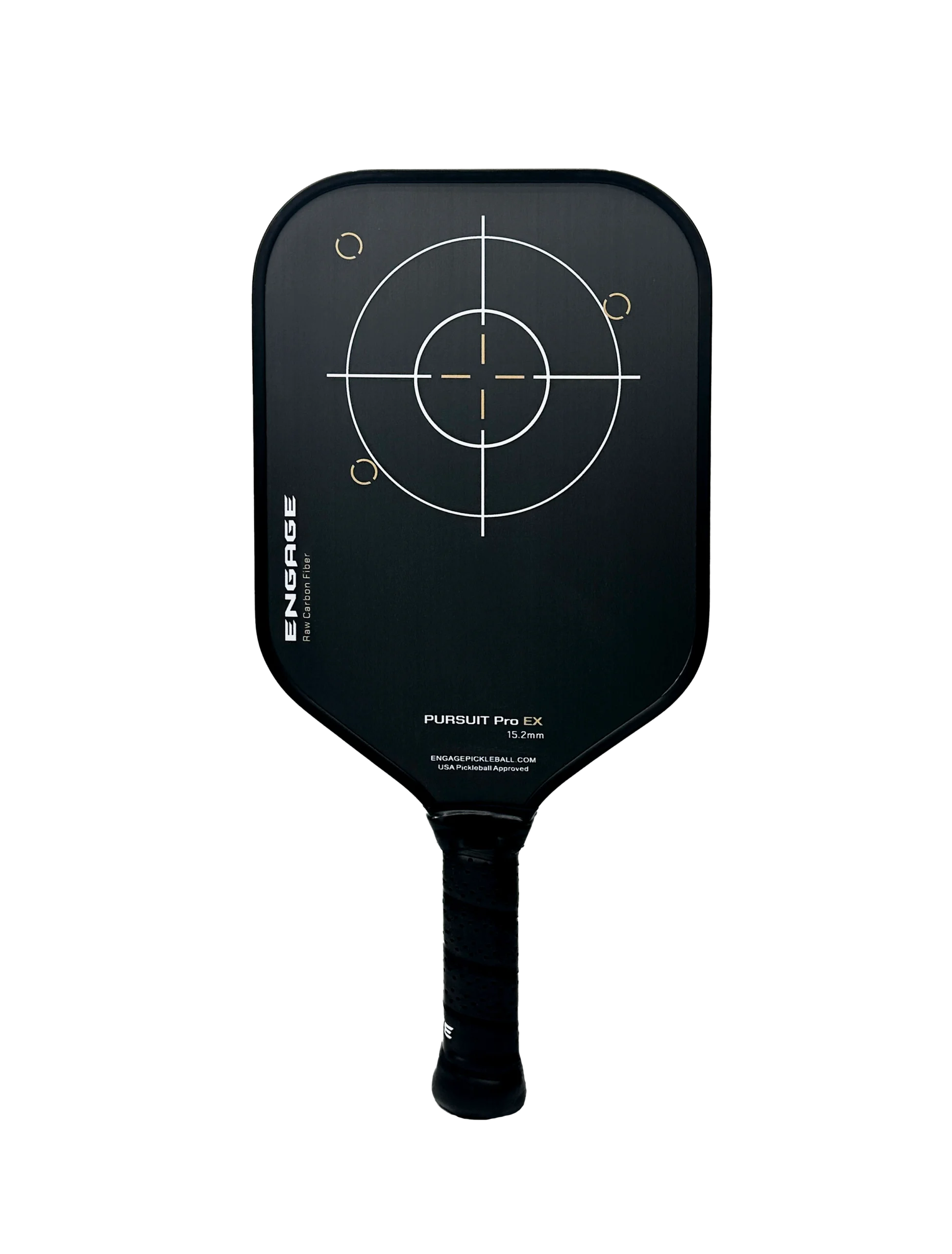
Primary Tour Athlete: Dekel Bar (Engage Flagship Champion)
Dekel Bar is one of the most explosive servers and baseline drivers in pickleball history. The Engage Pursuit Pro EX 6.0 features an engineered 15.2mm core and a proprietary MachPro raw carbon face that combines raw power with a massive sweet spot.
| Core Thickness & Type | 15.2mm Control Pro Black Polycore |
| Paddle Shape & Dimensions | Standard Wide (16.0″ Length × 8.0″ Width) |
| Face Material & Grit | MachPro Polymer-Bonded Raw T700 Carbon |
| Stock vs. Tour Battle Weight | 8.2 oz Stock → 8.85 oz Tour Setup |
| Tour Swing Weight / Twist Weight | 122 kg·cm² Swing Weight / 7.10 kg·cm² Twist Weight |
| Handle Length & Grip Circumference | 5.0″ Handle | 4.25″ Circumference |
The Pro Customization Blueprint: Dekel Bar modifies his paddle with substantial perimeter lead along both sides and across the top edge guard, creating an 8.85 oz battering ram. This heavy setup produces unmatched ball compression on overhead smashes and deep drive returns.
10. ProXR Signature Riley Newman 16mm (Riley Newman)
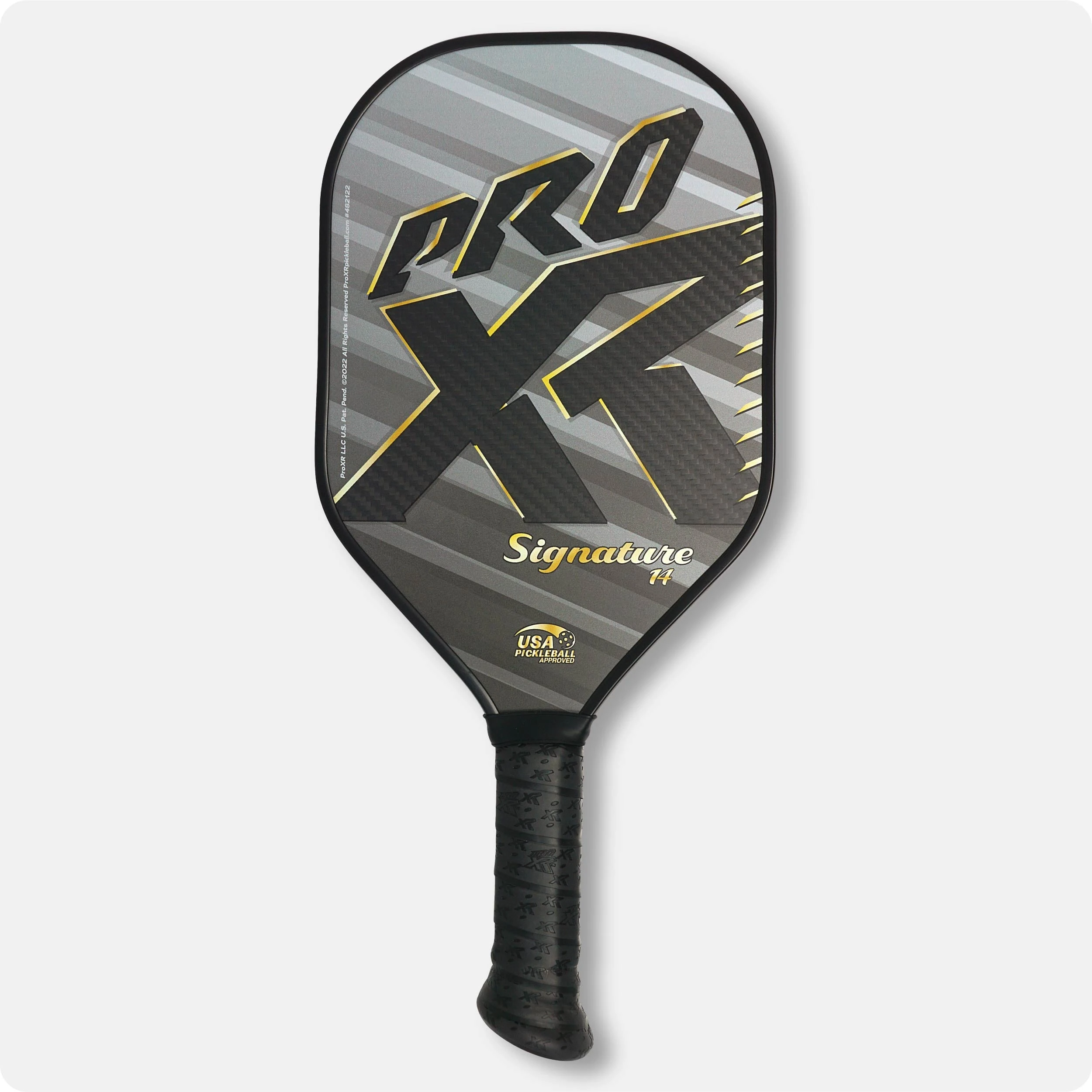
Primary Tour Athlete: Riley Newman (Multi-time PPA Gold Medalist)
Riley Newman has long been celebrated for having some of the quickest wrist snaps and deceptive punch volleys in doubles pickleball. The ProXR Signature 16mm is unique on tour for its patented 23-degree angled handle, which alters the biomechanical indexing of the player’s wrist.
| Core Thickness & Type | 16mm Honeycomb Polymer Core |
| Paddle Shape & Dimensions | Elongated (16.5″ Length × 7.5″ Width) |
| Face Material & Grit | Toray T700 Raw Carbon Fiber Face |
| Stock vs. Tour Battle Weight | 8.1 oz Stock → 8.65 oz Tour Setup |
| Tour Swing Weight / Twist Weight | 119 kg·cm² Swing Weight / 6.85 kg·cm² Twist Weight |
| Handle Length & Grip Circumference | 5.5″ Patented 23° Angled Handle | 4.25″ Grip |
The Pro Customization Blueprint: The angled grip design positions the paddle face naturally into the ball’s path milliseconds faster on quick reactions. Newman places perimeter lead tape along the 3 and 9 o’clock rails to balance the paddle’s torsional stability, ensuring that high-speed wrist flicks do not suffer from face flutter on off-center contact.
4. The 14mm vs. 16mm Core Dilemma: What the Pros Choose & Why
One of the most consequential decisions in modern paddle engineering is core thickness. On the PPA and MLP tours, the breakdown is unmistakable: roughly 75% of touring doubles players compete with 16mm cores, while 25% utilize 14mm (or thinner) profiles. Understanding the physics of this split illuminates why player playstyle dictates equipment selection:
| Performance Metric | 14mm Honeycomb Core | 16mm Honeycomb Core |
|---|---|---|
| Primary Tour Demographic | Singles specialists, aggressive counter-attackers (e.g., Waters, JW Johnson) | Doubles champions, control specialists, reset masters (e.g., Johns, Parenteau) |
| Exit Velocity (Pop) | High / Instantaneous (Less core compression; immediate rebound off carbon face) | Moderate / Controllable (Core absorbs impact energy before rebound) |
| Ball Dwell Time | Low (Ball leaves paddle face quickly; shorter contact window) | High (Ball sinks into core; enhanced friction contact for spin generation) |
| Sweet Spot Size (Twist Weight) | Narrower (Requires precise center contact; twists more on off-center digs) | Expanded (Superior torsional stability; highly forgiving on off-center resets) |
| Touch & Reset Margin of Error | Demands soft hands; prone to popping high under heavy incoming pace | Plush cushion; deadens incoming 50 mph attacks effortlessly into the NVZ |
| Swing Weight Efficiency | Naturally lower swing weight; exceptional hand speed in NVZ firefights | Naturally higher swing weight; requires athletic kinetic chain for maneuverability |
For a detailed breakdown of core physics and how thickness changes your third-shot drop consistency, read our complete guide on 14mm vs 16mm pickleball paddles: which core thickness is right for you?
5. The Tour Customization Blueprint: How Pros Dial in Lead Tape, Grips & Balance
Applying weighted tape to a pickleball paddle follows the same physical principles that govern professional tennis racket customization. Mass placed at different coordinates along the perimeter shifts the paddle’s center of percussion, rotational inertia, and swing weight:
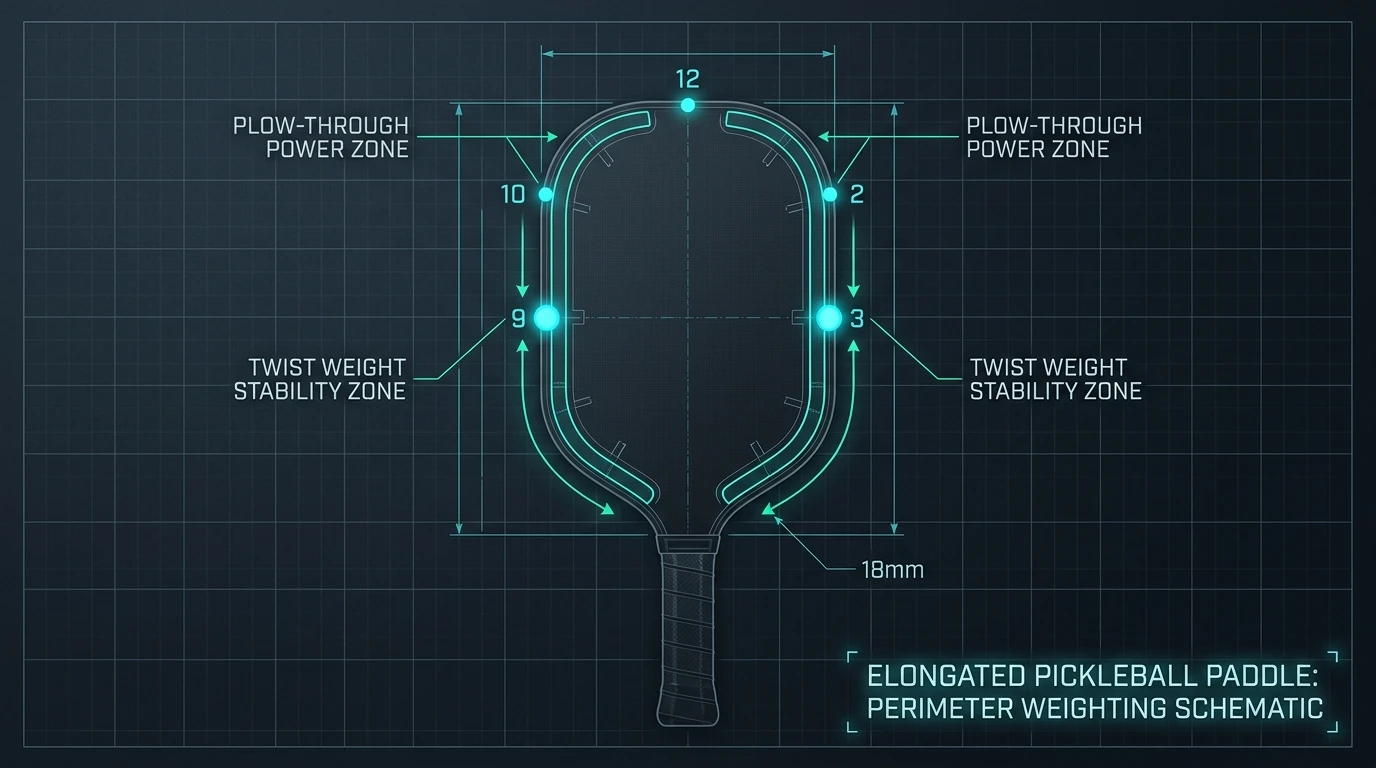
- 3 & 9 o’Clock (The Sweet Spot Stabilizer): This is the gold-standard tour setup utilized by Ben Johns, Catherine Parenteau, and Callie Smith. Adding 3 to 6 grams of high-density lead or tungsten tape to each side expands the sweet spot outward toward the perimeter edges. When an opponent drives a ball at 50 mph toward the paddle edge, this torsional mass prevents the paddle face from fluttering or twisting open in the player’s grip.
- 10 & 2 o’Clock (Plow-Through & Drive Power): Favored by baseline singles players like Tyson McGuffin and Federico Staksrud. Weighting the upper corners increases the paddle’s effective lever arm, elevating swing weight by 5 to 9 points. This provides heavy plow-through on drives, allowing the paddle mass to crush through the ball on contact.
- 12 o’Clock (Pure Head-Heavy Whip): The highest leverage placement possible. Placing tape at the absolute top adds maximum swing weight per gram. However, very few pros place tape exclusively at 12 o’clock because it creates an overly head-heavy balance that severely slows down reaction times in rapid non-volley zone firefights.
- Throat & Lower Corners (4 & 8 o’Clock): Adding weight near the throat keeps the balance point closer to the hand. This increases static mass and shock absorption without substantially raising the swing weight, making it the preferred setup for quick-twitch counter-punchers like Vivienne David.
⚖️ Tungsten Tape vs. Traditional Lead Tape: Tour Density Comparisons
While traditional lead tape has been the standard in racket sports for decades, the professional tour has seen a rapid migration toward pre-cut adhesive tungsten strips. Tungsten provides higher material density than lead, meaning an athlete can add identical mass using roughly one-third less surface area.
Furthermore, tungsten eliminates concerns regarding lead contact and skin toxicity during frequent re-taping sessions.
6. Pro Tour Brand Market Share: Who Dominates the PPA & MLP Podiums?
The professional pickleball landscape is characterized by fierce equipment rivalry. Equipment sponsorships dictate paddle visibility, but brand dominance on the podium reflects substantial investments in raw carbon friction surfaces, thermoformed unibody engineering, and perimeter stability technology:
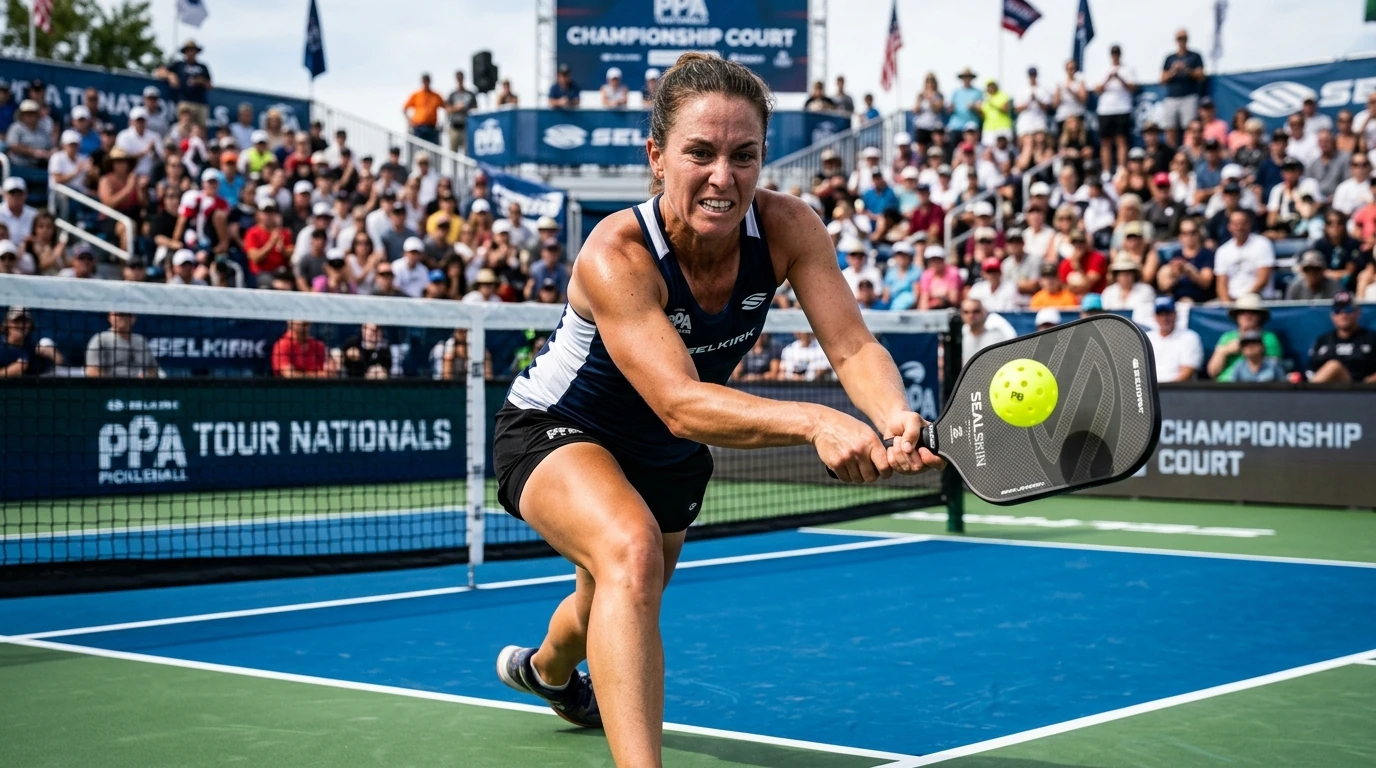
- JOOLA Pickleball (~34% Podium Share): JOOLA remains the dominant force across men’s doubles and singles. Anchored by Ben Johns, Tyson McGuffin, Federico Staksrud, and Collin Johns, JOOLA’s Perseus and Magnus lines feature Charged Carbon surface finishes and specialized perimeter foam injected walls that provide high energy return.
- Selkirk Sport (~28% Podium Share): Driven by Catherine Parenteau, Jack Sock, and Dylan Frazier, Selkirk commands a massive share of elite podium finishes. Selkirk separates itself through two design philosophies: the plush, high-control traditional non-thermoformed VANGUARD series, and the high-tech edgeless LUXX Control and Power Air series featuring aerodynamic throat vents.
- Paddletek (~14% Podium Share): Propelled by the dominance of Anna Leigh Waters and Vivienne David, Paddletek maintains a loyal following. Their Bantam and Tempest lines utilize proprietary high-modulus carbon faces that prioritize raw hand speed and immediate acoustic feedback.
- Franklin, Gearbox & CRBN (~18% Combined Share): Franklin’s Signature Pro series (championed by JW Johnson and Jorja Johnson) delivers reliable, wide-body control. Gearbox represents the engineering fringe with its solid-span carbon core technology (no honeycomb polymer), delivering extreme durability and high exit velocity. Check our review of modern alternatives in our best foam core pickleball paddles guide.
7. The Amateur Buyer’s Reality Check: Should You Play What the Pros Play?
It is a natural instinct for recreational and competitive amateur players (DUPR 3.0 to 4.0) to purchase the exact paddle used by the world’s number one player. However, copying a professional setup without understanding the underlying mechanics frequently harms an amateur’s game:
⚠️ Equipment Reality Check: The Heavy Paddle Trap for Amateurs
Warning for 3.0–3.8 Players: A modified 8.7-ounce elongated pro paddle with a 122 kg·cm² swing weight severely punishes late swing preparation. Without collegiate-level kinetic chain rotation, amateur players attempt to muscle the heavy paddle using wrist and forearm flicking, resulting in slow kitchen hands, popped-up resets, and acute lateral epicondylitis (pickleball elbow). Protect your joints with targeted conditioning from our best exercises for pickleball players guide.
Before adding lead tape or investing in an aggressive elongated 16.5-inch paddle, amateurs should evaluate their real-world court needs:
- Shape Selection (Hybrid vs. Elongated): Elongated paddles add reach and drive leverage, but sacrifice up to 1.5 inches of width across the face. For amateur players who struggle with sweet-spot contact, a standard (16″ × 8″) or hybrid wide-body paddle provides vastly higher forgiveness and fewer unforced frame errors. Explore all profile variations in our comprehensive guide on types of pickleball paddles explained.
- Incremental Customization Rules: If your current paddle feels unstable on off-center hits, start with modest tungsten increments. Place two 1-gram strips at 3 and 9 o’clock. Play two full sessions before adding additional mass. Never jump straight from an 8.0 oz stock paddle to an 8.6 oz pro tournament setup.
- Arm Health Protection: If you suffer from arm or shoulder fatigue, prioritize a lighter swing weight (under 112 kg·cm²) paired with a plush 16mm core that dampens impact shock into the arm.
8. Frequently Asked Questions: Pro Pickleball Player Paddles (FAQ)
What paddle does Ben Johns use in 2026?
Ben Johns plays with his signature JOOLA Ben Johns Perseus Pro IV 16mm paddle. His tournament setup is customized to approximately 8.65 ounces with lead tape placed at the 3 and 9 o’clock perimeter locations, featuring an elongated 5.5-inch handle wrapped in double overgrip for his two-handed backhand drive.
What paddle does Anna Leigh Waters use?
Anna Leigh Waters plays with her signature Paddletek Bantam ALW-C paddle, alternating between 12.7mm and 14.3mm core profiles, alongside the Franklin C45 series. Waters chooses thinner cores than most pros for explosive exit velocity and out-of-the-air pop, weighted to roughly 8.25 ounces with tungsten tape along the throat.
Do pro pickleball players use lead tape on their paddles?
Yes, over 85% of touring professionals apply lead or tungsten tape to their paddles. Stock paddles arrive too light (7.9–8.1 oz) for the power and stability required at the professional level. Adding perimeter mass increases twist weight (preventing flutter on off-center digs) and elevates swing weight for heavier plow-through.
Why do most pros use 16mm paddles instead of 14mm?
Roughly 75% of pro doubles players use 16mm cores because the thicker polymer matrix absorbs incoming ball velocity, offering superior soft-game control for resets, drops, and kitchen dinking. Thicker cores also possess higher native torsional stability (larger sweet spots), which pros then pair with lead tape to generate offensive power.
What weight paddle do most pro pickleball players play with?
While factory retail paddles weigh 7.8 to 8.1 ounces, professional tournament battle weights range between 8.35 and 8.85 ounces. Women’s doubles specialists typically average 8.25 to 8.45 ounces for rapid kitchen counter-punching, while men’s power players and singles specialists average 8.55 to 8.85 ounces for baseline driving power.
How often do pro pickleball players replace their paddles?
Touring professionals replace their tournament paddles every 2 to 4 tournaments (roughly every 3 to 6 weeks). While the internal honeycomb core may remain intact, the raw carbon fiber surface friction (grit) wears down after hundreds of hours of high-RPM play, reducing spin potential below professional standards.