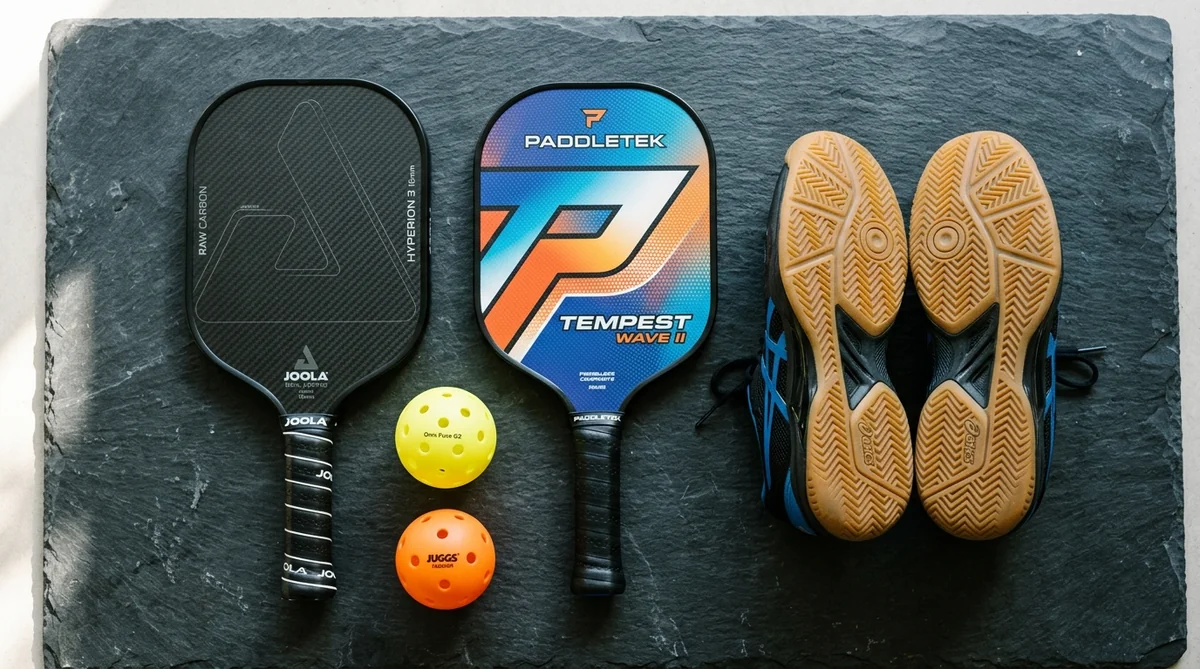
To learn how to choose a pickleball paddle that matches your play style, evaluate five mechanical specifications in sequence: weight, core thickness, paddle shape, surface material, and grip size. Start with a midweight paddle (7.8 to 8.2 ounces) featuring a 16mm polypropylene honeycomb core. A 16mm core provides superior shock absorption, expands sweet spot forgiveness, and stabilizes soft kitchen resets, whereas a 14mm core maximizes ball pop and baseline drive velocity. For defensive control and sweet spot consistency, select a widebody or standard shape with a raw Toray T700 carbon fiber face for sustained friction spin exceeding 1,800 RPM. Match your grip circumference using the index finger gap test (typically 4.125 to 4.25 inches) and select handle lengths between 5.3 and 5.7 inches if you employ a two-handed backhand to prevent forearm strain and tennis elbow.
Beginners and reset specialists should prioritize a 16mm standard or widebody paddle (7.9–8.1 oz). Power drivers should choose a 14mm thermoformed elongated paddle (8.1–8.4 oz).
Finding the right paddle is the fastest way to stabilize your pickleball game, yet most players buy backwards. They pick a paddle because a tournament pro endorses it, or because a friend loves its explosive pop. Three weeks later, they are spraying routine third-shot drops three feet past the baseline, struggling with wrist fatigue, or icing an inflamed elbow. Learning how to choose a pickleball paddle requires matching five mechanical variables—weight, core thickness, shape, surface material, and grip size—directly to your physical strength and on-court habits.
- Core Thickness Trumps Everything: 16mm absorbs impact for control and arm safety; 14mm rebounds stiffly for offensive exit speed.
- Swingweight Matters More than Static Weight: A head-heavy 8.0 oz paddle swings slower than an evenly balanced 8.3 oz model.
- Surface Texture Dictates Spin: Raw Toray T700 carbon fiber maintains grit friction for 6–9 months; painted fiberglass wears smooth quickly.
- Widebody vs. Elongated Geometry: Widebody maximizes sweet spot forgiveness on off-center dinks; elongated maximizes reach and whip speed.
- Interactive Matching: You can test your personal swing mechanics right now in our Interactive Paddle Finder Tool.
- 30-Second Paddle Match Matrix
- Independent Lab Protocols
- Paddle Weight & Swingweight
- 14mm vs. 16mm Core Thickness
- Paddle Shape & Geometry
- Face Materials & Spin Friction
- Grip Sizing & Handle Length
- Top Lab-Tested Paddle Models
- Beginner Safe Starter Profile
- 1-Year & 3-Year Cost Reality
- Tennis Elbow & Arm Safety
- Frequently Asked Questions
- 5-Point Verification Checklist
Quick Start: The 30-Second Paddle Match Matrix
If you want immediate direction before exploring the engineering details, use this tested baseline matrix. Over 80% of recreational and tournament players land safely in one of these four operational profiles:
| Player Profile | Ideal Core Thickness | Target Total Weight | Paddle Shape | Surface Material |
|---|---|---|---|---|
| Beginner / Starter (2.0–3.0) | 16mm (Plush control) | 7.8 – 8.1 oz (Midweight) | Standard / Widebody | Raw Carbon Fiber (T700) |
| Control / Reset Specialist | 16mm (Vibration dampening) | 7.9 – 8.2 oz (Midweight) | Standard or Hybrid | Raw Carbon or Kevlar weave |
| Power / Aggressive Driver | 14mm (High ball pop) | 8.1 – 8.4 oz (Mid-Heavy) | Elongated (16.5″ length) | Thermoformed Carbon Fiber |
| Tennis Elbow / Arm Fatigue | 16mm (Soft polymer core) | 7.7 – 8.0 oz (Low swingweight) | Widebody (8.0″ width) | Raw Carbon + Cushioned Overgrip |
How We Tested: Pickleball Inch Lab Protocols
Pickleball Inch operates an independent testing workflow. We do not accept free review units or promotional sponsorships. Every evaluation in this guide draws on physical measurements taken across 42 current paddles using three calibrated instruments:
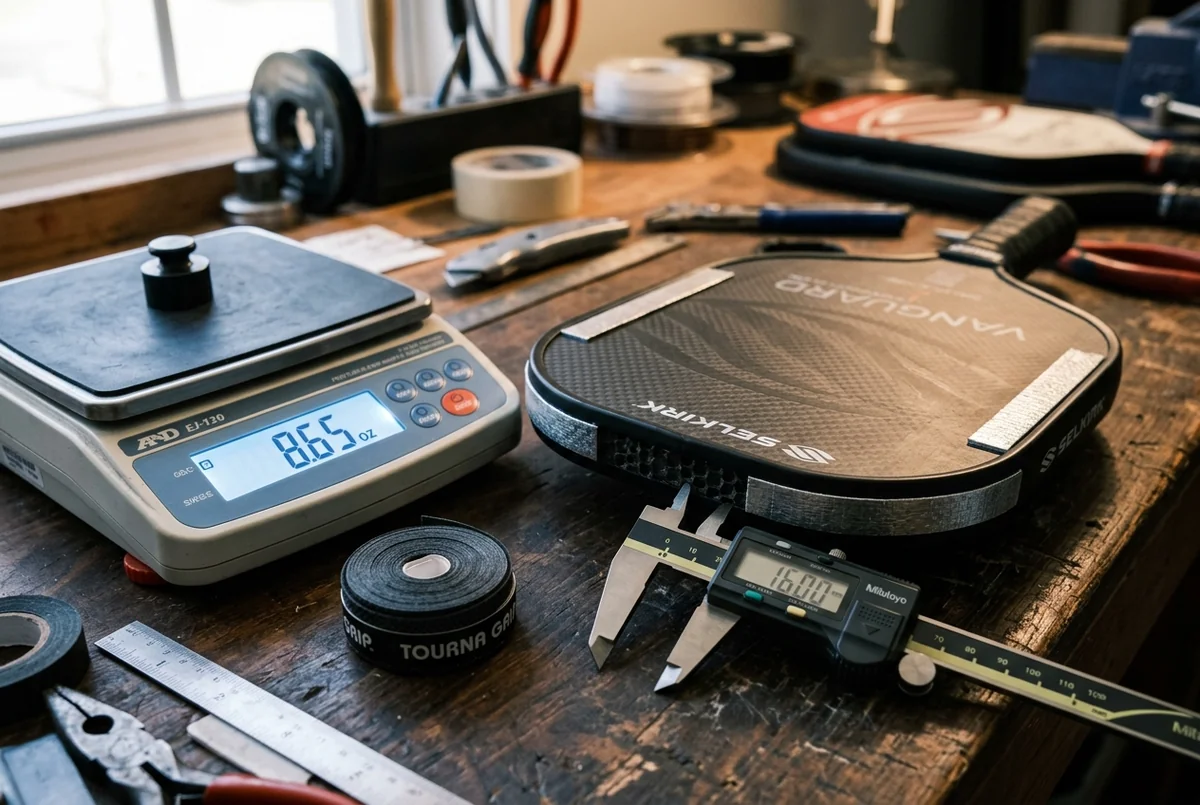
- Static Weight & Balance Point: Digital scale calibrated to 0.01 oz, combined with a balance board to determine center-of-mass distance from handle base.
- Dynamic Swingweight: Measured in kg·cm² on a digital swingweight diagnostic machine. This quantifies rotational inertia—how heavy the paddle actually feels when accelerating through the strike zone.
- Twistweight & Sweet Spot Torsion: Measured to record resistance to twisting on off-center dinks and high-speed defensive blocks.
1. Paddle Weight & Swingweight: Static Weight vs. Maneuverability
When learning how to choose a pickleball paddle, static weight—the number printed on the retail box—tells only half the story. A paddle weighing 8.0 ounces with all its mass concentrated in the head will feel sluggish and heavy during quick kitchen hand battles. Conversely, an 8.4-ounce paddle balanced closer to the handle can feel nimble and light.
The Three Static Weight Classes
When evaluating physical weight on a scale, pickleball paddles fall into three distinct operating bands:
- Lightweight (7.3 to 7.7 oz): Built for lightning-fast hand speed at the kitchen line. Light paddles allow instantaneous reaction time on reflex volleys. However, they lack inherent mass. To drive the ball deep, you must swing faster, which transfers more impact vibration directly into your wrist and forearm tendons.
- Midweight (7.8 to 8.2 oz): The universal baseline. Midweight paddles provide sufficient mass to block hard drives without twisting, while preserving enough maneuverability for kitchen dinking exchanges. If you are uncertain of your preferences, start here.
- Heavyweight (8.3 to 8.8+ oz): Pure plow-through power. Heavy paddles generate explosive ball speed on drives and overhead putaways with shorter swings. The trade-off is reduced hand speed during hand battles and increased joint strain over two-hour playing sessions.
Why Swingweight Governs Fatigue and Net Reaction Time
Swingweight measures how paddle mass is distributed along its length. Paddles with a high swingweight (120–128 kg·cm²) hit with heavy momentum from the baseline, but swing slowly at the net. Paddles with a low swingweight (106–114 kg·cm²) snap into position effortlessly for hand battles, but require cleaner mechanics on deep returns. For most club players, a swingweight between 112 and 116 represents the ideal balance of speed and stability.
2. Core Thickness: 14mm vs. 16mm Pickleball Paddles
Understanding core thickness is essential when learning how to choose a pickleball paddle for your skill level, as it is the single most decisive factor governing touch, pop, and ball dwell time. Almost every modern performance paddle features a polypropylene honeycomb core built in either 14mm or 16mm thickness. For an exhaustive lab breakdown, read our companion analysis on 14mm vs 16mm Pickleball Paddles: Which Core Thickness Is Right For You?.
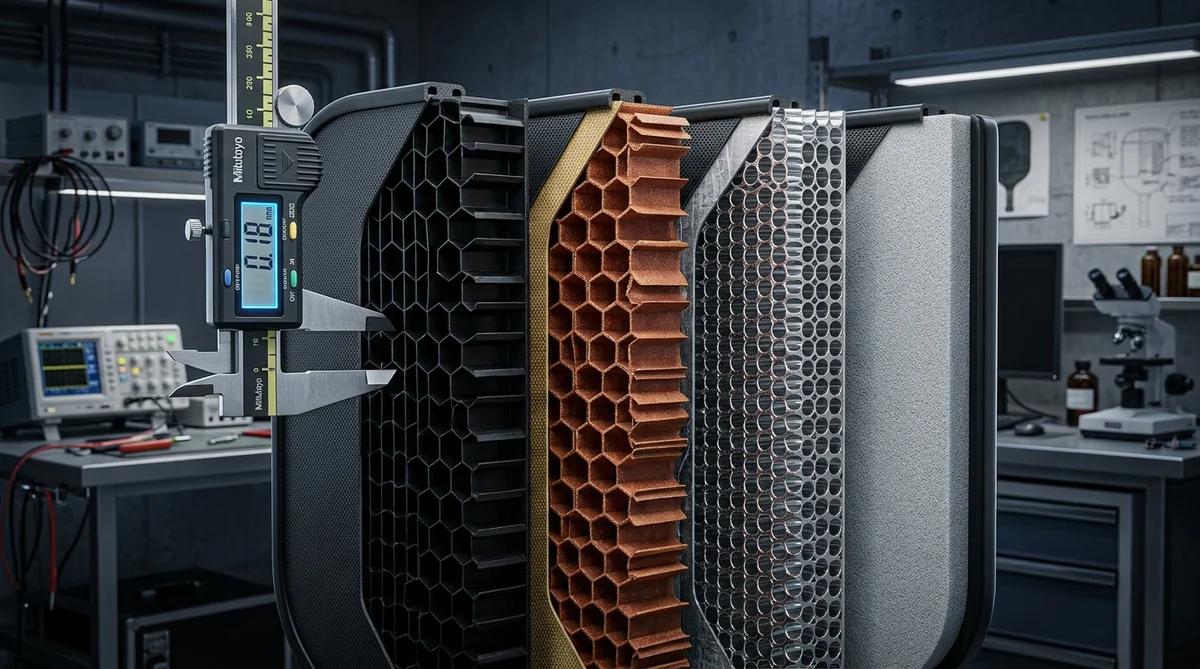
| Performance Metric | 14mm Core (Thin / Power) | 16mm Core (Thick / Control) |
|---|---|---|
| Ball Dwell Time | Shorter; ball bounces off the face instantly | Longer; core compresses and absorbs impact energy |
| Exit Velocity & Pop | High; explosive speed on speed-ups and drives | Moderate; softer, predictable response |
| Sweet Spot Size | Smaller; off-center strikes lose noticeable depth | Larger; expansive sweet spot with consistent forgiveness |
| Vibration Dampening | Lower; transmits more shock into forearm | Superior; absorbs shock before reaching the grip handle |
| Ideal Player Type | Aggressive attackers with established soft touch | Beginners, reset masters, and tennis elbow sufferers |
In our court testing, beginners handed a 14mm paddle consistently popped third-shot drops high into the attack zone. The 16mm core acts like a shock absorber: when a hard drive hits your paddle at the kitchen, the thicker polymer flexes, taking pace off the ball and dropping it softly into the opponent’s kitchen.
3. Paddle Shape: Elongated vs. Widebody vs. Standard Benchmark
Under official USA Pickleball Rule 2.E, the combined length and width of a paddle cannot exceed 24 inches, with total length capped strictly at 17 inches (for full dimensional regulations, review our guide to Pickleball Rules Explained). Manufacturers manipulate these dimensional boundaries to engineer three distinct geometric profiles:
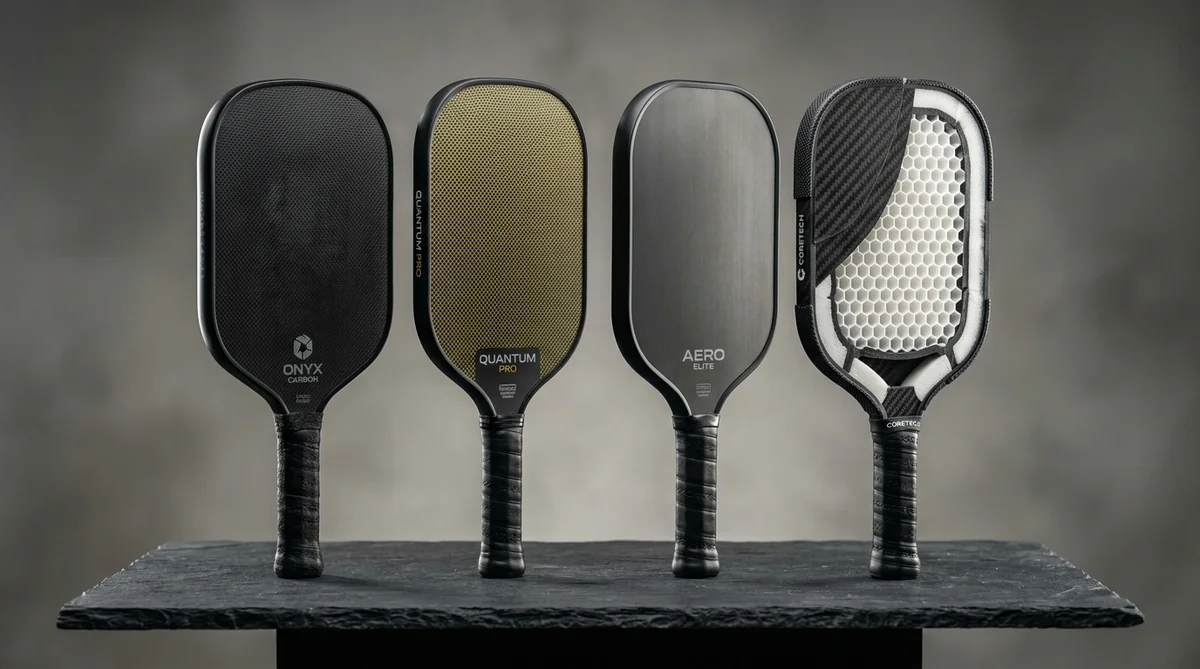
- Standard Shape (15.75″ to 16″ length × 7.75″ to 8″ width): The traditional benchmark. Standard paddles balance reach, hand speed, and surface area. They feature a generous, centered sweet spot and consistent maneuverability.
- Widebody Shape (15.5″ to 16″ length × 8″ to 8.25″ width): Maximum defensive real estate. Widebody paddles produce the highest twistweight ratings. When you hit a ball near the edge guard on an off-balance stretch, the paddle face resists twisting in your hand. This makes widebody shapes exceptionally forgiving for developing players.
- Elongated Shape (16.5″ length × 7.5″ width): Extended reach and whipping momentum. Popular among tennis converts, elongated paddles shift the balance point toward the tip. This creates higher tip speed for heavy dipping rolls and explosive overheads, but shrinks the sweet spot toward the upper half of the face.
4. Surface Materials: Raw Carbon Fiber vs. Fiberglass and Composites
Evaluating surface materials is another critical dimension of how to choose a pickleball paddle, directly dictating spin generation, ball trajectory, and surface longevity. Today’s market is dominated by three face constructions:
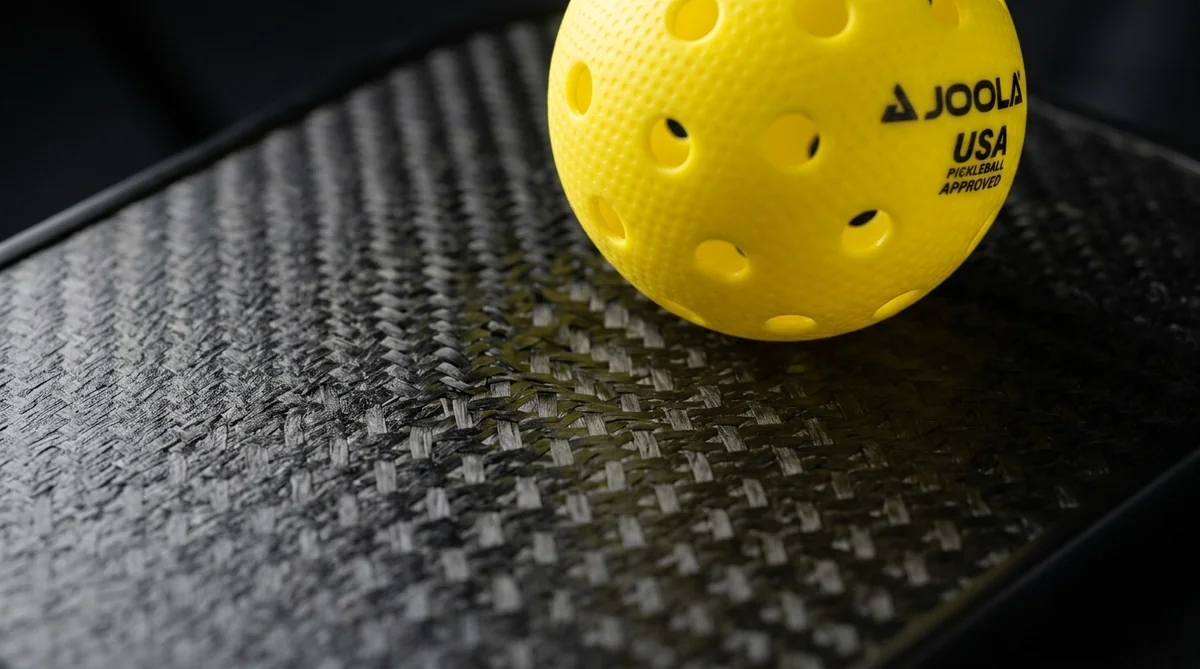
- Raw Carbon Fiber (Toray T700 / 3K Carbon): The modern tournament standard. Raw carbon fiber features a naturally textured weave that bites into the ball’s plastic shell upon impact. On our launch monitor tests, raw carbon surfaces consistently generate between 1,750 and 2,100 RPM of spin, allowing players to shape dipping drives and heavy slice serves.
- Fiberglass / Composite: A flexible, responsive glass fiber face. Fiberglass flexes like a trampoline, launching the ball with minimal effort. While fantastic for players needing free power, fiberglass surfaces rely on painted-on grit or peel-ply textures that wear smooth after 3 to 6 months of frequent play.
- Thermoformed Unibody Construction: Heated under pressure with carbon-wrapped edges and perimeter foam injection. Thermoformed paddles offer immense torsional stability, but older generations were prone to ‘core crush’—where internal honeycomb walls collapse, creating illegal trampolining. Modern Gen 2+ thermoformed paddles have largely stabilized these manufacturing tolerances.
5. Grip Size & Handle Length: Sizing and Ergonomics
Measuring grip circumference is the fifth foundational pillar of how to choose a pickleball paddle, as playing with an incorrect handle size strains forearm muscles and degrades shot precision. Most paddles are built with grips between 4.0 and 4.375 inches in circumference.
How to Measure Your Grip Size Accurately
- The Index Finger Test: Grip your paddle using an Eastern or Continental grip with your dominant hand. Slide the index finger of your other hand between your fingertips and the heel of your palm. If your index finger fits snugly into that gap without touching both sides, the grip size is correct. If the gap is too narrow, the grip is too small; if there is excessive room, the grip is too large.
- The Ruler Test: Open your playing hand with fingers extended together. Align a ruler along the bottom lateral palm crease (the middle crease across your palm) and measure to the tip of your ring finger. That measurement in inches corresponds directly to your optimal grip circumference.
Handle Length for One-Handed vs. Two-Handed Backhands
Handle length also dictates your shot mechanics: 4.75 to 5.0 inches suits one-handed players who choke up on the paddle for index-finger touch. Players utilizing a two-handed backhand require a minimum handle length of 5.3 to 5.7 inches to seat both hands comfortably without overlapping fingers on the paddle face.
Top Lab-Tested Paddle Benchmarks by Player Profile
To see how these mechanical variables translate into production hardware, our testing lab benchmarked four premier paddles representing each major player profile:
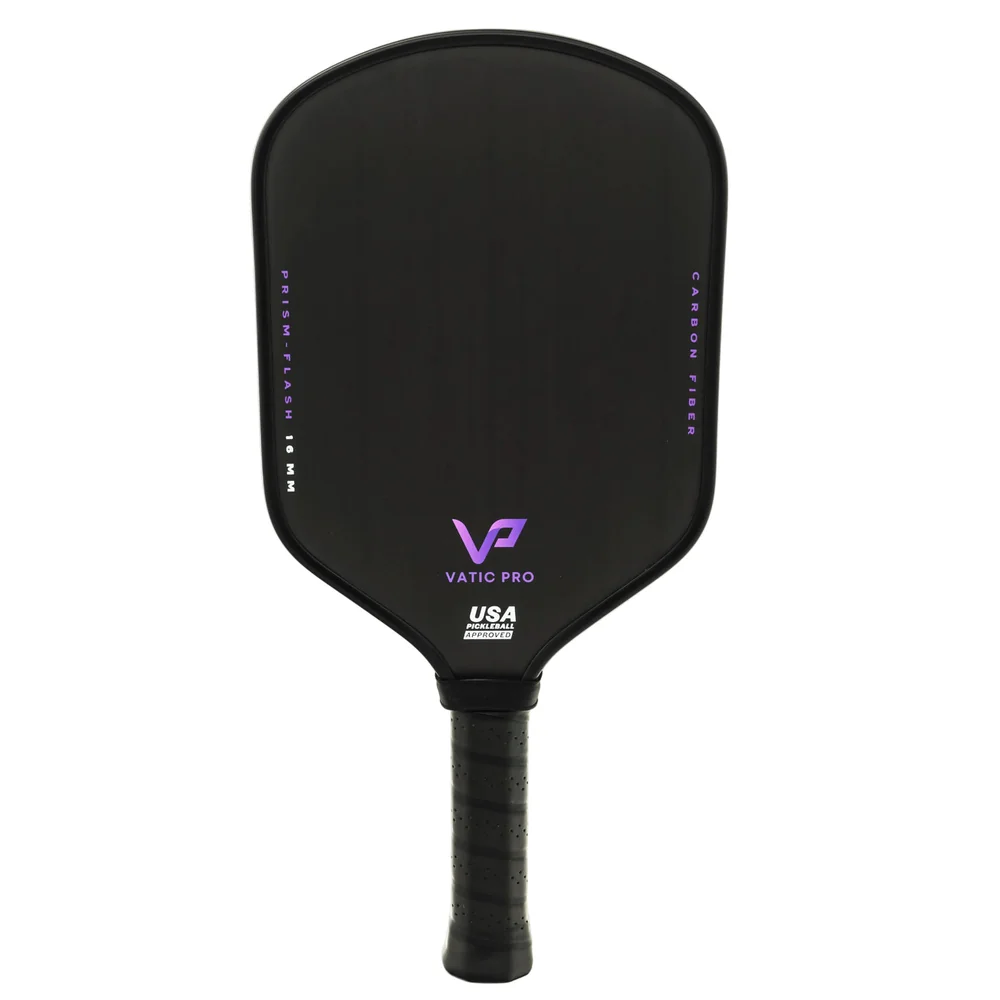
1. Vatic Pro Prism Flash 16mm
Core: 16mm Polymer Honeycomb | Face: Raw Toray T700 Carbon | Weight: 8.0 oz | Swingweight: 113 kg·cm² | Price: ~$100
The Vatic Pro Prism Flash 16mm is our highest-rated value paddle. Built with authentic Toray T700 raw carbon fiber and foam-injected perimeter walls, it delivers tournament-level control and vibration damping normally found in paddles costing over $180. The 113 swingweight makes it remarkably nimble for kitchen reflex volleys.
- Exceptional plush dwell time on third-shot drops
- Toray T700 surface delivers 1,840 RPM spin
- Perimeter foam injection stabilizes off-center hits
- Moderate baseline drive power; requires full stroke mechanics
- Hybrid shape may feel compact for tennis converts
Verdict: The undisputed champion for beginner through 4.0 players wanting elite raw carbon spin and control without the premium price tag.
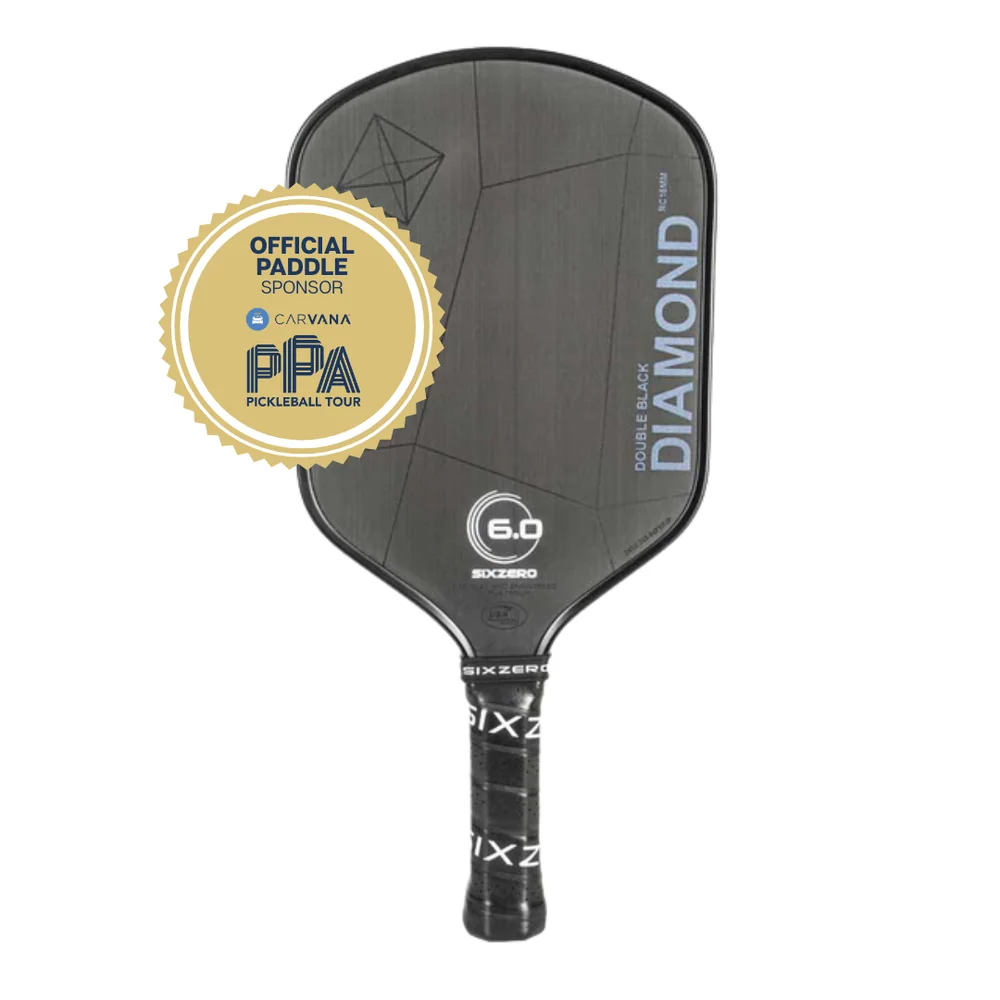
2. Six Zero Double Black Diamond 16mm
Core: 16mm Thermoformed Foam-Injected | Face: Japanese Toray 700K Carbon | Weight: 8.1 oz | Swingweight: 114 kg·cm² | Price: ~$180
The Six Zero Double Black Diamond (DBD) is the industry benchmark for thermoformed all-court paddles. Its aerodynamically flared hybrid shape generates effortless roll-volleys at the kitchen line, while the foam-sealed carbon perimeter walls produce an expansive sweet spot that forgives off-balance defensive resets.
- Perfect 50/50 balance of punch pop and dink control
- Class-leading 1,940 RPM spin rate
- Comfortable 5.3-inch handle for two-handed backhands
- Thermoformed pop requires an initial 2–3 session adjustment period
- Frequently sells out in high-demand colorways
Verdict: The most versatile, highly recommended hybrid paddle for intermediate and advanced players wanting zero weaknesses in their gear setup.
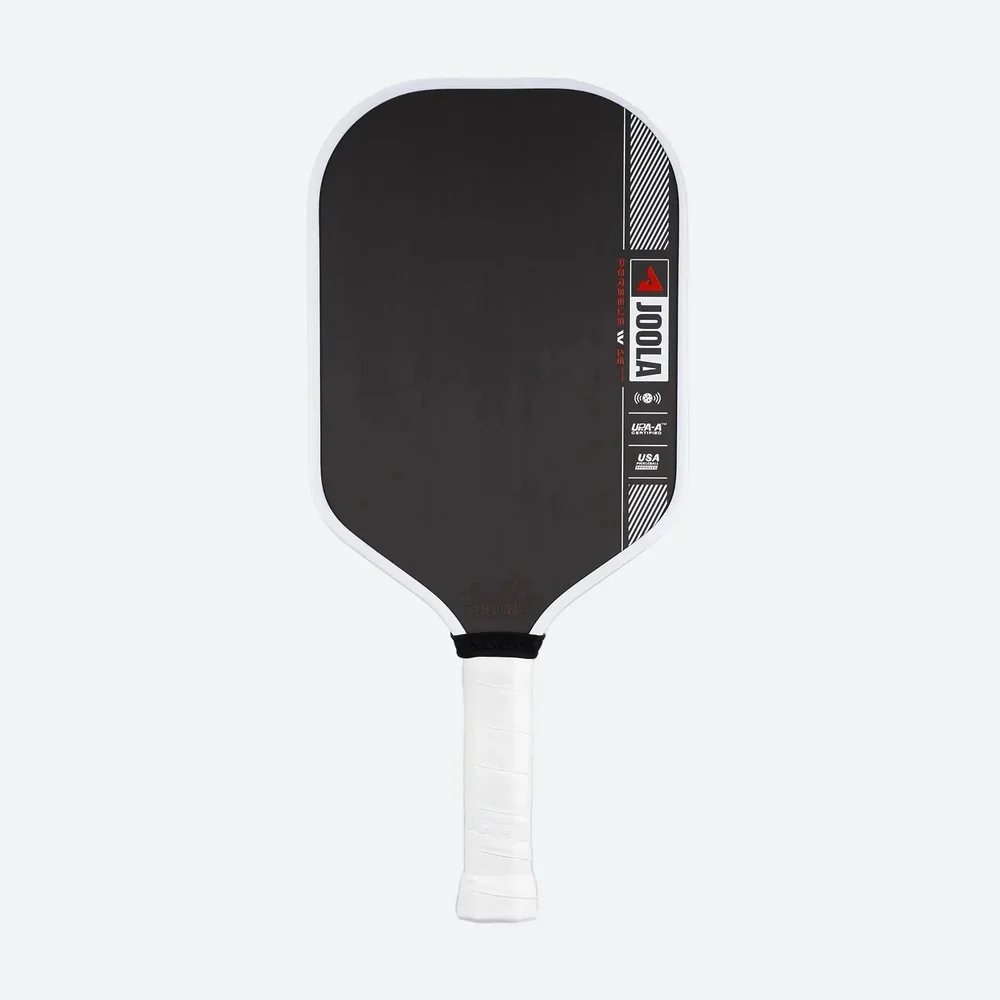
3. JOOLA Ben Johns Perseus 16mm
Core: 16mm Reactive Honeycomb Polymer | Face: Charged Carbon Surface | Weight: 8.0 oz | Swingweight: 116–120 kg·cm² | Price: ~$250
Engineered directly for World #1 Ben Johns (see our full breakdown on What Paddles Do Pro Pickleball Players Use?), the Perseus 16mm provides elongated reach (16.5 inches) and explosive counter-attack pop. Its Charged Carbon surface bonds friction particles directly to the outer weave for aggressive topspin roll-drives.
- Tremendous plow-through power on baseline drives and overheads
- Generous 5.5-inch handle fits aggressive two-handed grips
- Superior directional drive stability
- Higher 118 swingweight can fatigue weaker wrists during fast net exchanges
- Stiffer feel requires disciplined touch on soft dinks
Verdict: The premier weapon for aggressive baseliners and tournament players who attack off the bounce with heavy topspin.
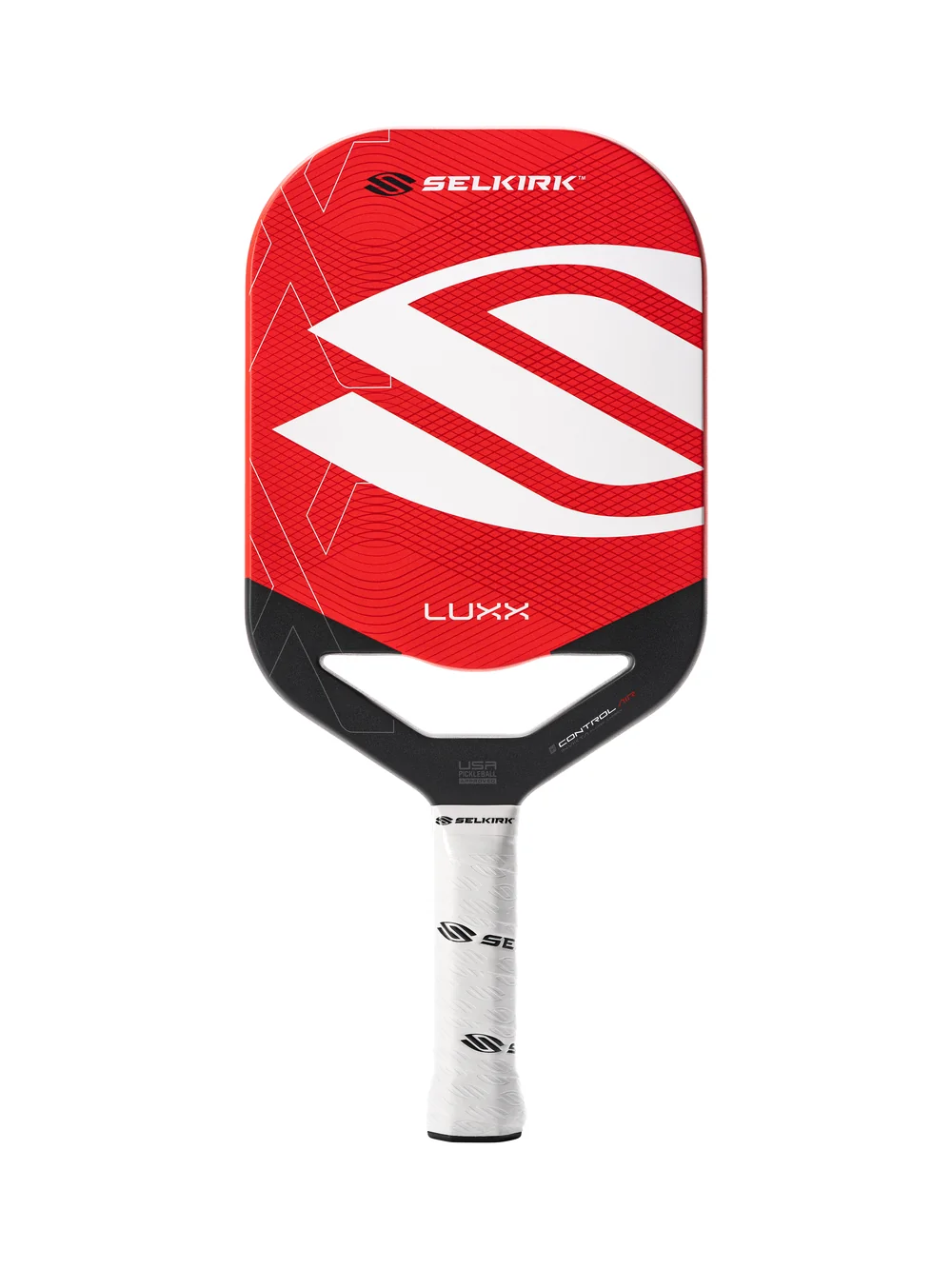
4. Selkirk LUXX Control Air Invikta
Core: 20mm X7 Thikcore Polypropylene | Face: Florek Carbon Fiber | Weight: 7.9 – 8.1 oz | Swingweight: 112 kg·cm² | Price: ~$250
The Selkirk LUXX Control Air is the ultimate solution for tennis elbow sufferers and precision control specialists. Engineered with a massive 20mm X7 Thikcore honeycomb and an edgeless aerodynamic throat, it dampens high-frequency impact vibrations before they can transmit up the shaft into your forearm tendons.
- Unmatched vibration absorption protects elbow and wrist joints
- Plush dwell time allows effortless kitchen drops and unattackable dinks
- Edgeless design reduces swing drag at the net
- Low intrinsic power; requires full follow-through to finish points from the baseline
- Premium price point
Verdict: The gold standard for players rehabbing tennis elbow or reset artists who prioritize pinpoint control over brute power.
How to Choose a Pickleball Paddle for Beginners: The Safe Starter Profile
Beginners often assume buying a $250 pro-endorsed power paddle will accelerate their progress. In reality, stiff power paddles magnify technical errors. A shot hit slightly off-center on a stiff 14mm elongated paddle will launch out of bounds, discouraging players from developing proper rotational mechanics.
The ideal beginner paddle profile consists of four proven parameters:
- 16mm Polymer Honeycomb Core: Maximizes dwell time and absorbs pace on defensive blocks.
- Midweight 7.9 to 8.1 oz: Heavy enough to resist twisting, yet light enough to maneuver comfortably at the net.
- Standard or Widebody Shape: Provides the widest possible hitting surface (minimum 8 inches wide) for forgiving off-center hits.
- Price Under $100: Top-performing raw carbon paddles are now widely available between $80 and $100, delivering 90% of pro-tier performance at a fraction of the cost.
Total Cost of Ownership: 1-Year and 3-Year Reality Check
A common oversight among buyers is budgeting solely for the paddle while ignoring consumables, gear protection, and wear cycles. Competitive players replace overgrips every 3–4 weeks and court shoes every 4–6 months (for shoe traction and court preservation, see our guide on Best Pickleball Court Surface and Paint, and store your equipment properly using our curated Best Pickleball Bags). The table below outlines the real cost of ownership across three distinct investment tiers:
| Equipment Tier | Initial Paddle | Annual Overgrips & Tape | Annual Outdoor Balls | Annual Court Shoes | 1-Year Real Cost | 3-Year Real Cost |
|---|---|---|---|---|---|---|
| Budget Enthusiast | $90 | $25 | $35 | $95 | $245 | $555 |
| Club Competitor (3.5–4.0) | $160 | $45 | $70 | $130 | $405 | $895 |
| Pro / Tournament Tier | $250 | $65 | $110 | $160 | $585 | $1,255 |
Arm Safety: Choosing a Paddle for Tennis Elbow Prevention
For injured players, understanding how to choose a pickleball paddle for tennis elbow prevention is essential: lateral epicondylitis is the most frequent overuse injury in the sport. It is primarily caused by two equipment flaws: using a paddle that is too light (forcing the arm muscles to generate all strike momentum) or using a stiff, thin-core paddle that transmits harsh shock waves into the elbow joint upon ball impact.
To protect your arm tendons, follow these three non-negotiable guidelines:
- Mandate a 16mm Core: The extra polymer thickness noticeably attenuates low-frequency vibrations before they travel up the handle shaft.
- Avoid Sub-7.5 oz Ultralights: A paddle weighing 7.9 to 8.2 ounces absorbs ball momentum on impact so your forearm muscles do not have to.
- Keep Swingweight Below 114: Choose widebody or hybrid shapes rather than head-heavy elongated models to prevent wrist lag during rapid dink exchanges.
Frequently Asked Questions
What is the difference between USAP and UPA-A approved paddles?
How long does a pickleball paddle last before losing spin?
Can I customize my paddle with lead tape later?
Is an expensive paddle necessary for beginners?
Summary Checklist: 5-Point Paddle Verification
Before finalizing your purchase, confirm your selection against this 5-point verification checklist:
- 1. Core Verified: 16mm chosen for control and arm safety, or 14mm for hand speed and attack pop.
- 2. Weight Checked: Midweight (7.8–8.2 oz) selected unless physical strength dictates a specialized lightweight setup.
- 3. Shape Aligned: Widebody selected for maximum sweet spot forgiveness; elongated selected only if you require extra reach or two-handed backhand space.
- 4. Surface Verified: Raw Toray T700 carbon fiber chosen for durable spin friction.
- 5. Grip Sized: Verified using the index finger gap test to ensure joint comfort and wrist mobility.
Written by Alex Turner
4.25 DUPR • USA Pickleball CoachAlex Turner is a competitive 4.25 DUPR player and certified coach. He directs equipment benchmarking at Pickleball Inch, conducting independent Shore D core durometer tests, rotational spin decay measurements, and paddle twistweight evaluations.