
- Direct Answer: The overall best places to live for pickleball in 2026 are Naples, Florida for tournament volume and winter court density (66 permanent courts at East Naples), St. George & Greater Utah Valley, Utah for high-level 4.0–5.0 DUPR play and mountain sunshine, and Opelika, Alabama for affordable living and 24 covered, rainproof courts.
- The Playability Reality: Sheer court counts mean nothing if you are waiting 45 minutes on a paddle rack. Cities like Madison, WI (#5 courts per capita) and Opelika, AL beat crowded tier-1 metros on actual daily court time.
- Summer Climate Strategy: Sunbelt hubs require an indoor contingency. In Phoenix (112°F) and Naples (100% humidity), air-conditioned clubs like The Picklr and Chicken N Pickle serve as essential infrastructure.
- Financial Relocation Matrix: Relocating to Florida, Texas, Nevada, or Tennessee saves 4% to 13.3% annually in state income taxes compared to California or northern states, offsetting higher local housing or insurance costs.
Three years ago, I packed four tournament paddles, two cases of Dura Fast 40s, and a duffel bag into the back of my Subaru and spent five weeks on the road. I was looking for something specific that Zillow filters couldn’t show me: a place where I could wake up at dawn, drive less than ten minutes to a bank of dedicated, post-mounted courts, slide my paddle into a four-on/four-off rack, and get four solid 4.0–4.5 games in before my morning espresso went lukewarm. What I discovered on that road trip—and through dozens of court audits since—is that most “best pickleball cities” lists online are borderline fraudulent. They count raw municipal park pins on Google Maps, completely blind to the fact that half those pins are dual-striped tennis courts with warped portable nets, or that a Tuesday evening queue in Austin will leave you sitting on the bleachers for forty-five minutes between games.
Relocating for this sport isn’t eccentric anymore; it’s an intentional lifestyle engineering choice. But the difference between a pickleball paradise and an everyday headache comes down to granular, on-the-ground mechanics: whether asphalt court surfaces hit 135°F by noon, whether the local club ladder has genuine 4.5+ depth or plateaus at casual rec play, and whether rainouts or winter freezes force you into an air-conditioned indoor facility. To identify the true best places to live for pickleball, our research team tracked court density, peak-hour queue wait times, indoor contingency clubs, and 2026 cost of living across the country. Here is the unvarnished, player-tested relocation guide for 2026.
- Relocation Ranking Methodology
- 2026 Pickleball Playability Matrix
- Top 10 Cities in America
- 1. Naples, Florida
- 2. St. George & Utah Valley
- 3. Scottsdale & Mesa, Arizona
- 4. The Villages, Florida
- 5. Austin, Texas
- 6. Orange County, California
- 7. Opelika & Auburn, Alabama
- 8. Grand Rapids, Michigan
- 9. Madison, Wisconsin
- 10. Raleigh-Durham, North Carolina
- 55+ Active Adult Retirement Havens
- Climate Reality: Sun vs. Indoor AC
- 3-Year Total Cost of Relocation Matrix
- Frequently Asked Questions
- Final Verdict: Choosing Your Haven
Methodology: How We Ranked the Best Places to Live for Pickleball
Every city and master-planned development in this guide was audited against five objective relocation benchmarks:
- Dedicated Permanent Courts: Post-mounted nets on cushioned acrylic or post-tension concrete surfaces (excluding dual-striped tennis courts).
- The Playability Ratio (Wait Times): Average paddle queue wait times during peak weekday morning (8:00–10:00 AM) and weekend open play sessions.
- Year-Round Climate Feasibility: Number of comfortable outdoor months (50°F to 88°F), paired with the presence of commercial air-conditioned indoor facilities.
- Competitive DUPR Ecosystem: Frequency of weekly round robins, ladder leagues, and sanctioned tournaments across 3.5, 4.0, and 4.5+ brackets.
- Economic & Tax Relocation Value: 2026 Zillow median home sale prices, effective property taxes, state income tax burdens, and annual club dues.
Alex’s Scouting Experience: Playing Across Naples Humidity vs. St. George Altitude
Over the past four years competing in regional 4.0 and 4.5 tournaments across the Sunbelt and Mountain West, the single biggest lesson I have learned is that climate drastically redefines court physics. Playing at East Naples Community Park during the US Open, dense 85% Gulf humidity makes outdoor balls heavy and slow, demanding aggressive leg drive to push third-shot drops over the net.
Conversely, landing in St. George, Utah at 2,800 feet elevation, the thin, dry desert air turns standard outdoor balls into rocket ships. Drives sail two feet deeper, and resets pop up unless you switch to softer 16mm honeycomb paddles with heavy topspin shaping. When choosing where to relocate, consider how seasonal temperature swings, afternoon winds, and court availability will shape your everyday game, not just the marketing brochures.
The 2026 Pickleball Playability Matrix: City-by-City Comparison
Before packing your bags, compare the hard numbers across our top 10 metropolitan hubs to determine which location qualifies among the best places to live for pickleball based on your competitive level and housing budget:
| City & State | Dedicated Courts | Indoor Backup | Playable Outdoor Months | Median Home Price | Wait Score | Best Player Profile |
|---|---|---|---|---|---|---|
| Naples, FL | 66+ at East Naples | High (The Picklr) | 8 Months (Oct–May) | $590,000 | 5/10 (Peak winter wait) | Tournament Competitors & Sunseekers |
| St. George & Provo, UT | 24+ (St.G) / 45 (Provo) | High (The Picklr) | 9–10 Months (Year-round St.G) | $510,000 | 8/10 (Excellent rotation) | High DUPR Players (4.0–5.0) |
| Scottsdale & Mesa, AZ | 41+ (Bell Bank) / 100+ | Very High (Multiple) | 8 Months (Oct–May) | $585,000 | 7/10 (Lighted nights help) | Year-Round Desert Players |
| The Villages, FL | 240+ Dedicated | Low (Outdoor focus) | 8 Months (Oct–May) | $395,000 | 8/10 (Massive court count) | Active Adults & Retirees (55+) |
| Austin, TX | 70+ (Bouldin/Dreamland) | High (Chicken N Pickle) | 9 Months (March–Nov) | $540,000 | 6/10 (Heavy evening rush) | Young Professionals & Remote Tech |
| Fountain Valley, CA | 39 (Los Cab) / 80+ | Low (Not needed) | 12 Months (72°F Coastal) | $1,050,000 | 6/10 (High membership demand) | Affluent Competitors & Touring Pros |
| Opelika & Auburn, AL | 24 Covered SportsPlex | Covered Outdoor Facility | 11 Months (Zero rainouts) | $310,000 | 9/10 (Zero bottle-neck) | Budget-Conscious Players & Families |
| Grand Rapids, MI | 21 (Belknap) / 50+ | High (Winter clubs) | 6–7 Months Outdoor + Indoor | $325,000 | 8/10 (Superb park culture) | Midwest Enthusiasts & Tournament Hosts |
| Madison, WI | 45+ (#5 per capita) | Medium (KEVA/Indoor) | 6 Months Outdoor + Indoor | $415,000 | 9/10 (High courts per capita) | Recreational Players & Community Club |
| Raleigh-Durham, NC | 60+ (Method Rd) | High (Brier Creek) | 9 Months (March–Nov) | $435,000 | 7/10 (Growing steadily) | Balanced 4-Season Living & Relocators |
Top 10 Cities in America: Best Places to Live for Pickleball
Here are the definitive, player-audited profiles for each of the top 10 metropolitan pickleball communities in 2026:
1. Naples, Florida — The Undisputed Tournament Mecca
Court Infrastructure & The US Open Experience
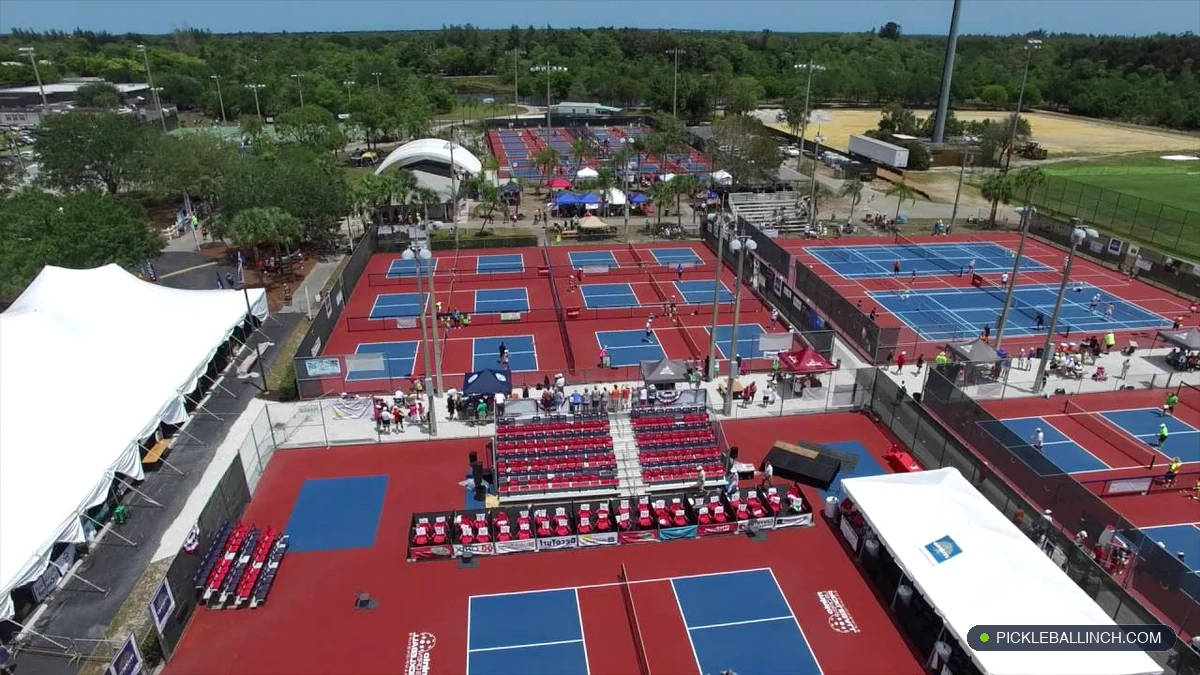
Naples earned its title as the Pickleball Capital of the World because East Naples Community Park remains the undisputed crown jewel of dedicated paddle infrastructure. With 66 permanent, individually fenced, post-tension concrete courts arranged in tournament pods around the iconic Zing Zang Championship Court, no other venue in the world matches its scale. Every April, the Minto US Open Pickleball Championships transforms the venue into an electrifying stadium environment hosting over 3,000 players from all 50 states and 30 countries.
The Playability Reality: Winter Queues & Summer Heat
In peak winter (January to April), open play uses a four-on, four-off paddle saddle rotation. While wait times on standard 3.5 courts can stretch to 30 minutes between 8:30 AM and 10:30 AM, players who arrive by 7:30 AM or play under the lights after 6:30 PM enjoy continuous action. Veterans Community Park (14 lighted courts) in North Naples provides a superb overflow valve. However, from June through September, Naples temperatures surpass 92°F with 95% relative humidity and daily tropical rainstorms, requiring an indoor strategy.
Relocation Economics & Housing Snapshot
Florida charges 0% state income tax, delivering substantial annual savings for high earners and retirees. However, Collier County property values have appreciated steeply, with median single-family home prices hovering near $590,000 and homeowners insurance carrying coastal storm premiums. For active players seeking world-class daily competition, the lifestyle dividend is unmatched.
- 66 permanent courts at one flagship venue
- Electrifying tournament culture year-round
- 0% Florida state income tax
- High winter seasonal paddle rack wait times
- Brutal summer humidity and tropical thunderstorms
- Elevated home prices and insurance costs
If you move here between Thanksgiving and Easter, abandon all hopes of casual 9:30 AM drop-in play unless you love chatting in line for 40 minutes. Set your alarm for 6:45 AM, arrive at East Naples while the maintenance crew is squeegeeing morning dew off the championship pods, and jump directly onto the 4.0+ challenge courts. By 8:30 AM, you’ve played four tournament-speed matches while the snowbird crowd is still searching for parking. If you’re buying a home, stick within Collier County’s southern or central corridors so you can access both East Naples and Veterans Park without fighting Tamiami Trail traffic.
2. St. George & Greater Utah Valley, Utah — High-Altitude Competitive Mecca
Court Infrastructure & Red Rock Scenery
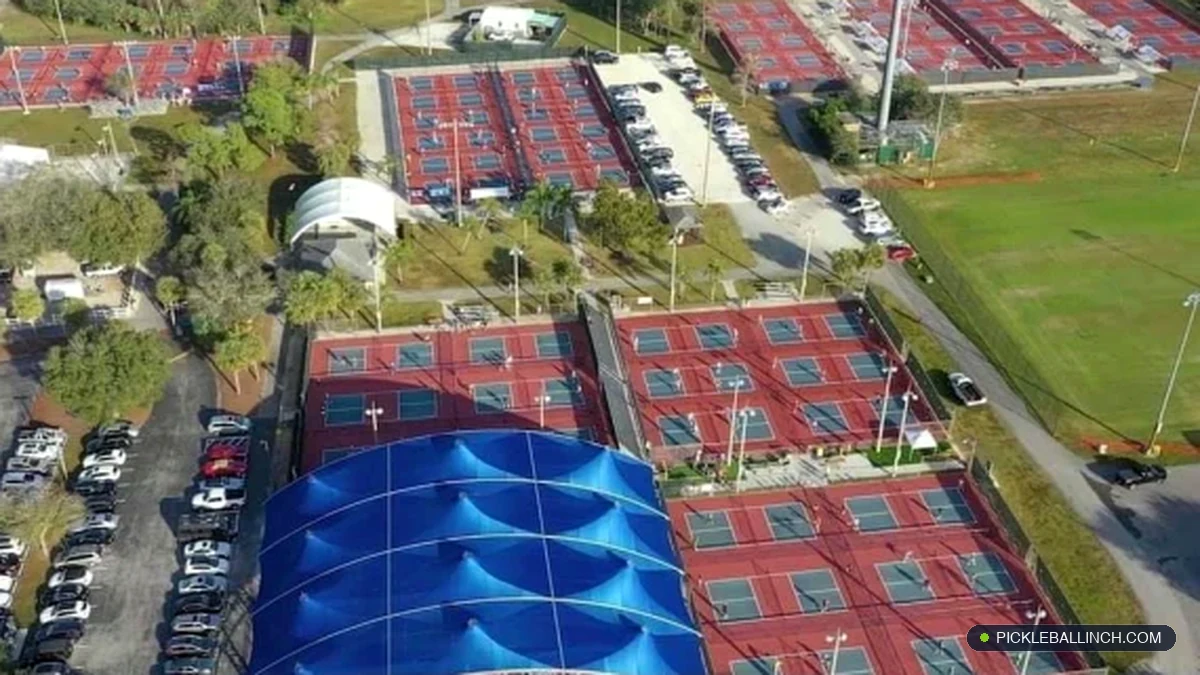
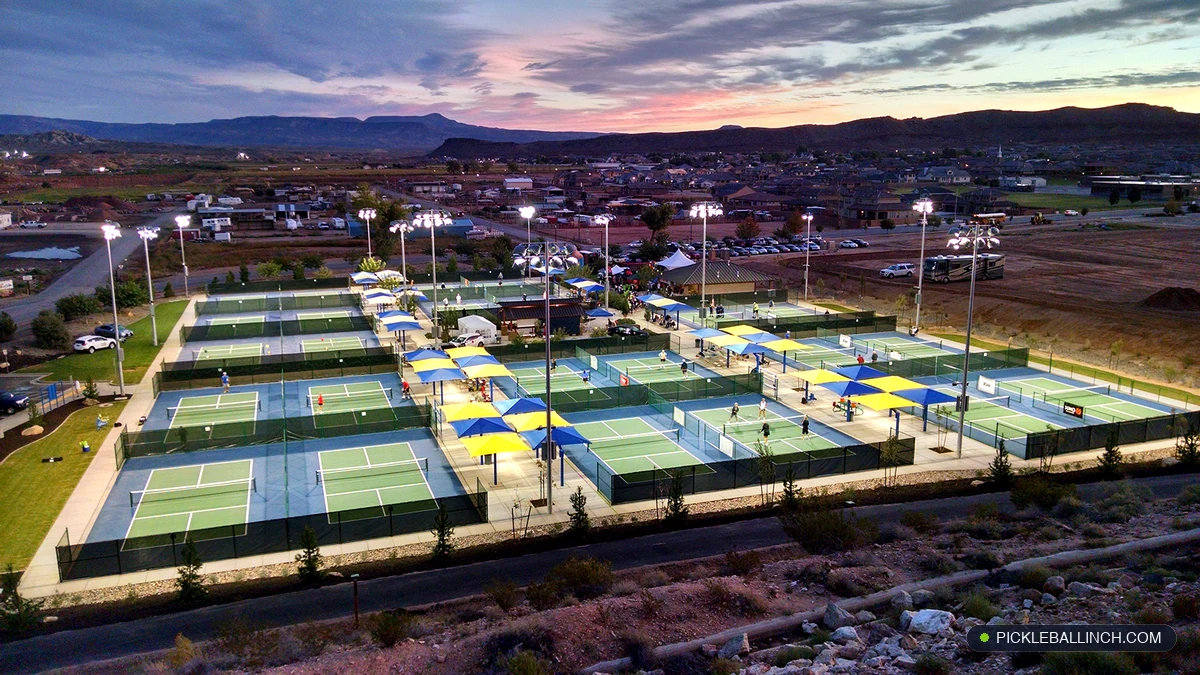
Utah has quietly fostered the most technically skilled amateur pickleball community in the United States. St. George boasts the stunning Little Valley Pickleball Complex, offering 24 sunken championship courts flanked directly by towering red rock bluffs. In Northern Utah along the Wasatch Front (Provo, Orem, and Salt Lake City), the sport is supported by the highest concentration of premium indoor air-conditioned facilities in the nation, anchored by corporate headquarters of The Picklr and Club Pickleball USA.
Playability & DUPR Ladder Depth
Little Valley utilizes color-coded skill level courts (3.0, 3.5, 4.0, and 4.5+) with an honor-system paddle line. Rotation is remarkably rapid: winning teams stay on for two consecutive games before cycling off, keeping wait times under 15 minutes even on Saturday mornings. Utah’s college tennis alumni and athletic multi-generational families have created a hyper-competitive local DUPR ladder where 4.5 games resemble professional qualifiers.
Housing & Relocation Economics
St. George offers clean master-planned desert living with a median home price of $510,000. Property taxes are remarkably low (effective rate of 0.52%), and the state flat income tax sits at 4.65%. While summer afternoon temperatures can spike past 100°F, low desert humidity and early morning light make year-round outdoor play thoroughly realistic.
- 300+ days of mountain desert sunshine
- Highest density of 4.5+ amateur tournament players
- Breathtaking red rock scenery and low property taxes
- Intense July/August midday desert heat
- Northern Utah requires indoor club winter dues
- Aggressive amateur skill level can intimidate beginners
St. George winters are crisp but completely playable (55°F afternoons). In summer, play at dawn outdoors, then retreat to The Picklr when the mercury hits 100°F. If fast-paced, high-spin, technical pickleball is your religion, move to Utah.
3. Scottsdale & Mesa, Arizona — The Sonoran Pickleball Hub
Court Hubs: From Public Parks to Mega-Sportsplexes
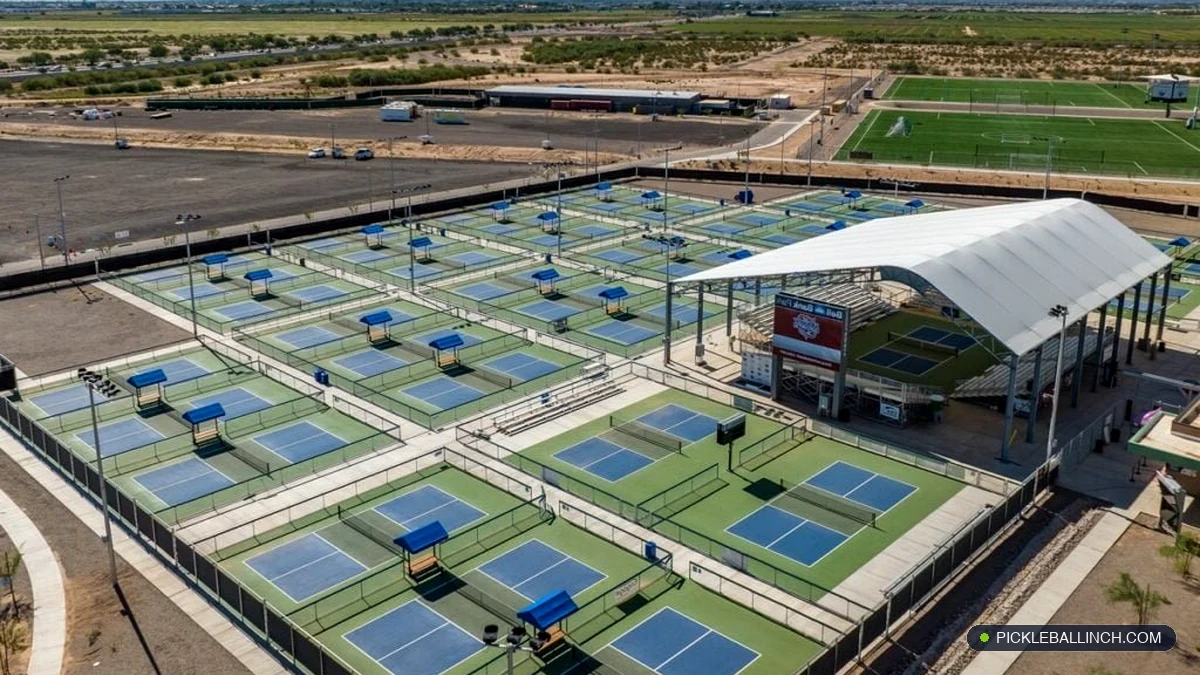
The Greater Phoenix valley is a sprawling desert haven where master-planned subdivisions treat dedicated pickleball complexes as essential neighborhood amenities. The East Valley is anchored by Bell Bank Park (Legacy Sports USA in Mesa), featuring a 41-court tournament stadium layout. In Scottsdale, Horizon Park, Thompson Peak Park, and Cholla Park offer beautifully maintained municipal courts with high-intensity LED lighting that allows vigorous play well into the cool desert evenings.
Summer Climate Survival: The Indoor Shift
From late May through September, outdoor daytime play is virtually impossible as court surface temperatures easily exceed 130°F. The Valley has addressed this with the largest indoor commercial pickleball buildout in the Southwest, featuring Pickleball Kingdom, The Orchard, and numerous climate-controlled athletic clubs. Arizona players transition indoors for summer league play, returning outdoors the moment October brings 75°F desert breezes.
Housing & Living Costs
Arizona offers a competitive flat state income tax of just 2.5%, making it highly attractive to professionals and retirees leaving California. While Scottsdale real estate carries a luxury premium (median home price $780,000+), adjacent East Valley hubs like Mesa, Gilbert, and Chandler offer spacious master-planned homes with community courts for $480,000–$550,000.
- Superb winter climate with zero rainouts
- Massive indoor air-conditioned backup infrastructure
- Low 2.5% flat Arizona state income tax
- 110°F+ summer heat makes outdoor daytime play hazardous
- Scottsdale housing prices carry a steep premium
- Air conditioning electric bills spike from June to August
Look closely at Gilbert and Chandler if you want newer master-planned communities with community-owned courts. Budget $120–$180/month for an indoor membership during the four peak summer months to keep your game razor-sharp.
4. The Villages, Florida — The Active Adult Retirement Epicenter
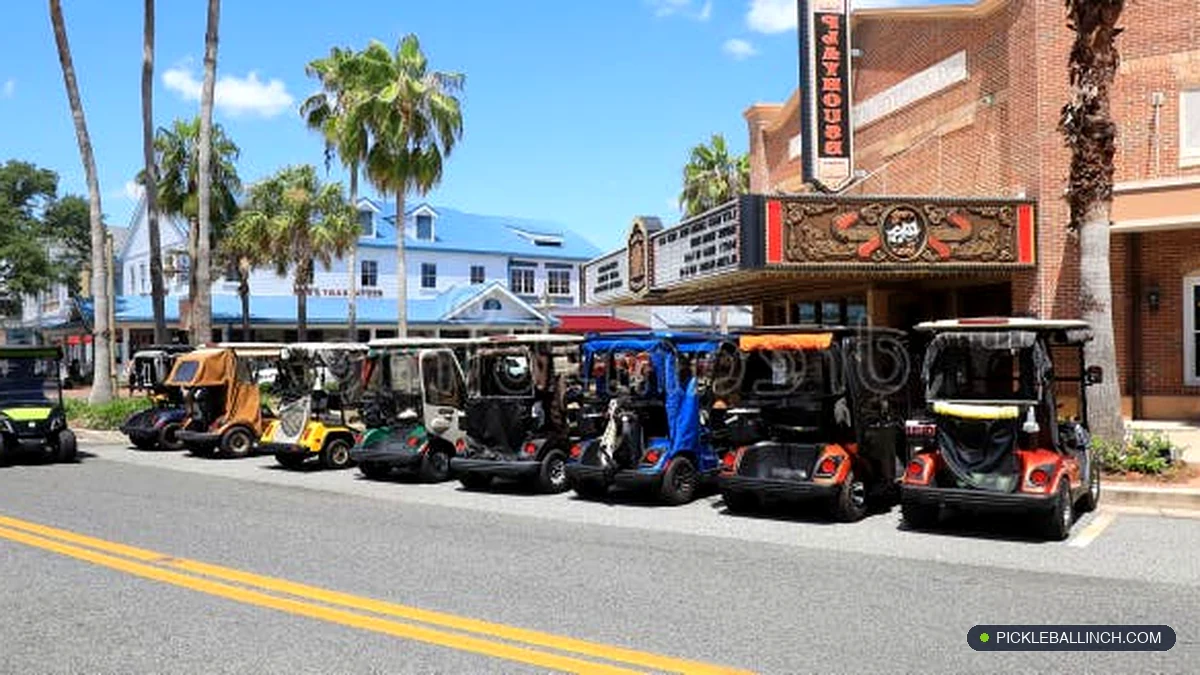
240+ Dedicated Courts & Community Connectivity
No geographic entity on earth matches the pure volume of pickleball infrastructure found in The Villages. Spanning three Central Florida counties, this 55+ master-planned city operates over 240 dedicated permanent courts distributed across more than 40 regional recreation complexes. Crucially, the entire 50-square-mile development is linked by hundreds of miles of dedicated golf cart paths, allowing residents to drive their cart straight from their garage to their morning court session.
Queue Mechanics & The 3.5 Rating Plateau
With hundreds of courts available simultaneously, paddle wait times are among the lowest in the nation. Recreation centers designate courts by skill bands (Advanced, Intermediate, Beginner), and the sheer volume of retirees guarantees that you can find a competitive 3.5 morning game every day of the week. However, high-level competitors (4.5+) frequently report hitting a “3.5 rating ceiling,” as the community demographic heavily favors social and intermediate play over cutthroat tournament grinding.
Lifestyle TCO & Amenity Fees
Housing in The Villages is remarkably affordable compared to South Florida coastal enclaves, with median home prices sitting at $395,000. All court access is included in the mandatory monthly amenity fee (~$195/month), eliminating private club dues. Coupled with Florida’s zero state income tax, it remains the gold standard for active retirement living.
- Unprecedented 240+ court footprint across one community
- Total golf cart mobility from front door to court
- Low median home prices and no state income tax
- Strict 55+ age restrictions for permanent residents
- Limited depth for elite 4.5+ and 5.0 tournament competitors
- Mandatory CDD bond assessments on newer village properties
If your DUPR is between 3.0 and 3.8 and your goal is to play three hours of fun, social, highly organized pickleball every single morning of your retirement, nowhere on earth compares to The Villages.
5. Austin, Texas — Social Play & High-Tech Community
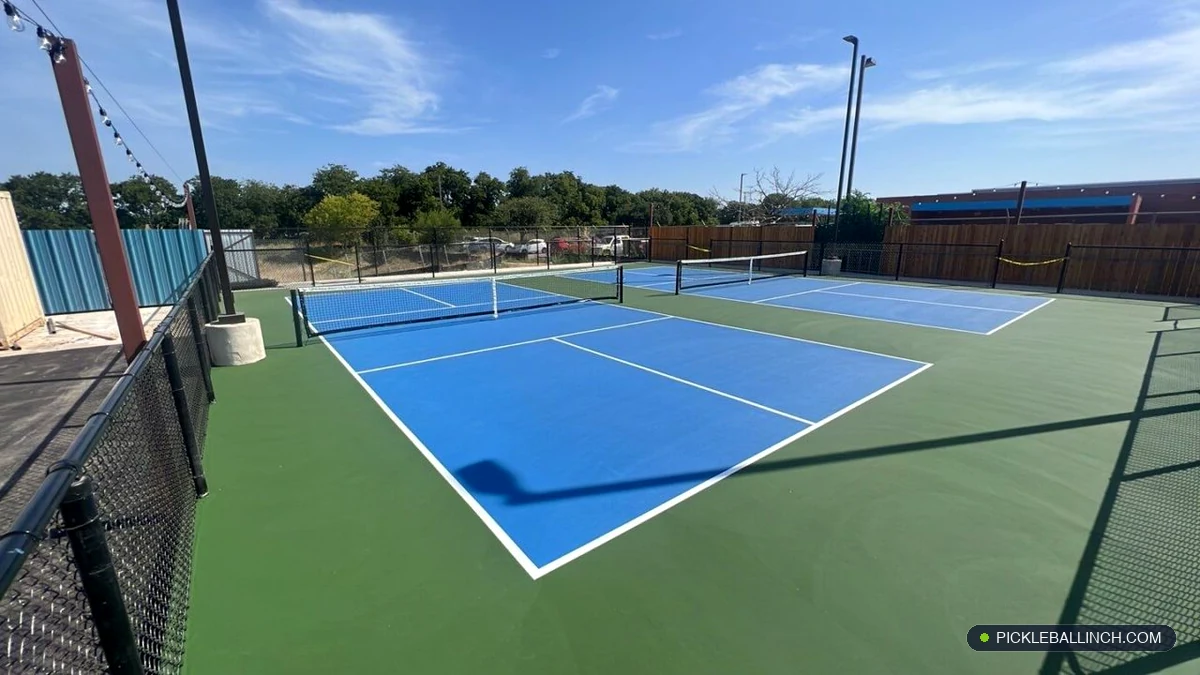
Entertainment Hybrids vs. Dedicated Muni Hubs
Austin pioneered the social entertainment pickleball movement with venues like Bouldin Acres and Dreamland Dripping Springs, combining championship courts with craft taprooms and lawn games. But serious players gravitate toward the Austin Tennis & Pickleball Center (8 dedicated courts) and South Austin Tennis Center. The local scene is distinctly youthful, driven by remote tech workers, collegiate athletes, and an exploding 25–40 demographic.
Rush-Hour Queue Benchmarks
Because the sport has exploded in popularity faster than municipal court additions, peak weekday evening hours (5:30 PM to 8:00 PM) at free public courts like Pan American Park can be heavily bottlenecked, with paddle racks running six deep. Players adapt by booking private reservations at indoor venues like Chicken N Pickle or joining private clubs like 512 Pickle.
Living Costs & Texas Tax Tradeoffs
Texas boasts zero state income tax, making it a financial haven for high earners. However, property taxes in Travis and Williamson counties are substantial, with effective rates between 1.8% and 2.2%. Median home prices have normalized to approximately $540,000, offering solid value compared to coastal California.
- Dynamic, youthful, highly energetic player culture
- 0% Texas state income tax
- Booming social, culinary, and live music scene
- Heavy wait times at public courts during weeknight rush hours
- High property tax rates (approx. 2.0% annually)
- Intense 100°F+ July/August summer heat
If you are under 45 and want your pickleball paired with live music, top-tier barbecue, and an ambitious professional network, Austin is unmatched. Join an organized private ladder league to bypass public park queues.
6. Fountain Valley & Orange County, California — Year-Round Coastal Perfection
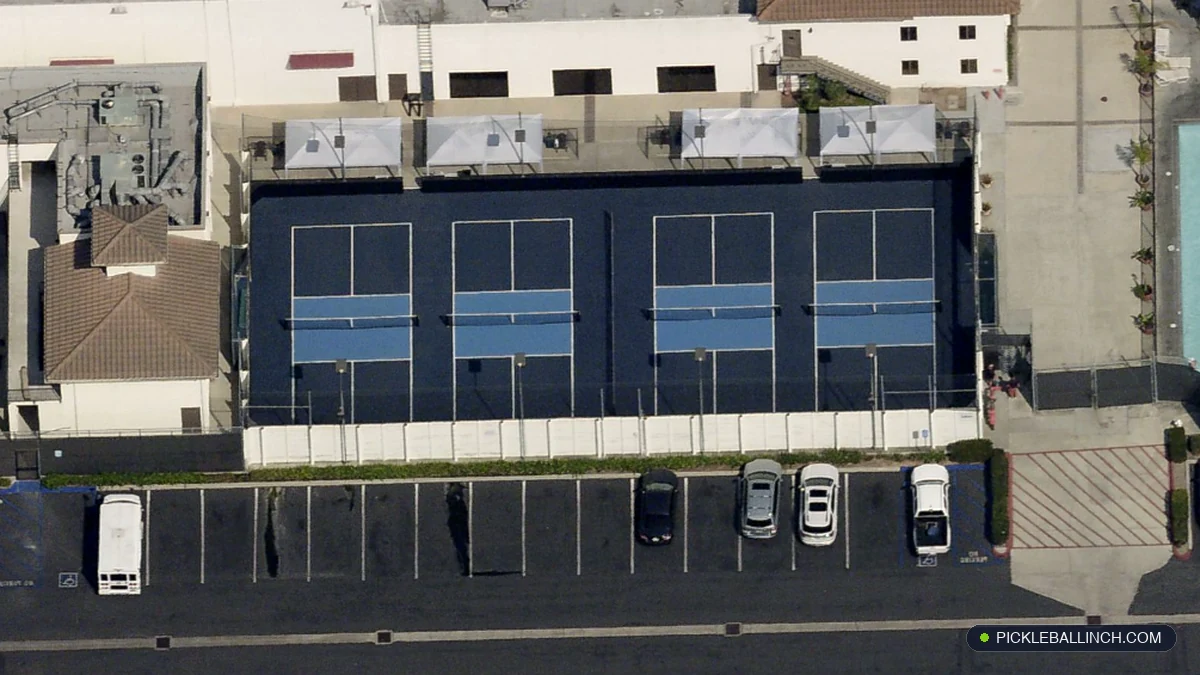
The Los Cab & Private Club Scene
If pure weather is your sole criterion, coastal Southern California has no peer on earth. Fountain Valley is home to Los Caballeros Sports Village, offering 39 permanent lighted courts and serving as a training headquarters for numerous touring pros on the PPA Tour. Nearby municipal complexes in Costa Mesa, Tustin, and Newport Beach offer pristine ocean-breeze playing conditions 365 days a year with zero humidity and virtually zero rainouts.
12 Months of 72°F Outdoor Play
While players in Florida, Texas, and Arizona retreat indoors for four months of scorching summer, and Midwesterners bundle up for snow, Orange County players enjoy 72°F sunshine in both January and July. You never need an indoor court membership, and court surfaces maintain ideal polymer ball rebound physics year-round.
High-Cost-of-Living Realities
The barrier to entry is financial. Orange County median single-family home prices exceed $1,050,000, and California’s top marginal state income tax bracket reaches 13.3%. Membership at premier facilities like Los Cab carries initiation fees and monthly dues (~$150–$250/mo), making this an enclave for affluent players and sponsored professionals.
- Perfect 72°F coastal climate 365 days a year
- World-class professional player and coaching density
- Premier private athletic club infrastructure
- High real estate entry cost ($1M+ median home price)
- High California state income tax rates
- High club membership dues
If your budget permits, Orange County offers the finest athletic lifestyle on the planet. You will play outdoors in comfort 52 weeks a year, and your regular morning pickup game might feature players competing on national television that weekend.
7. Opelika & Auburn, Alabama — The Municipal Covered-Court Wonder
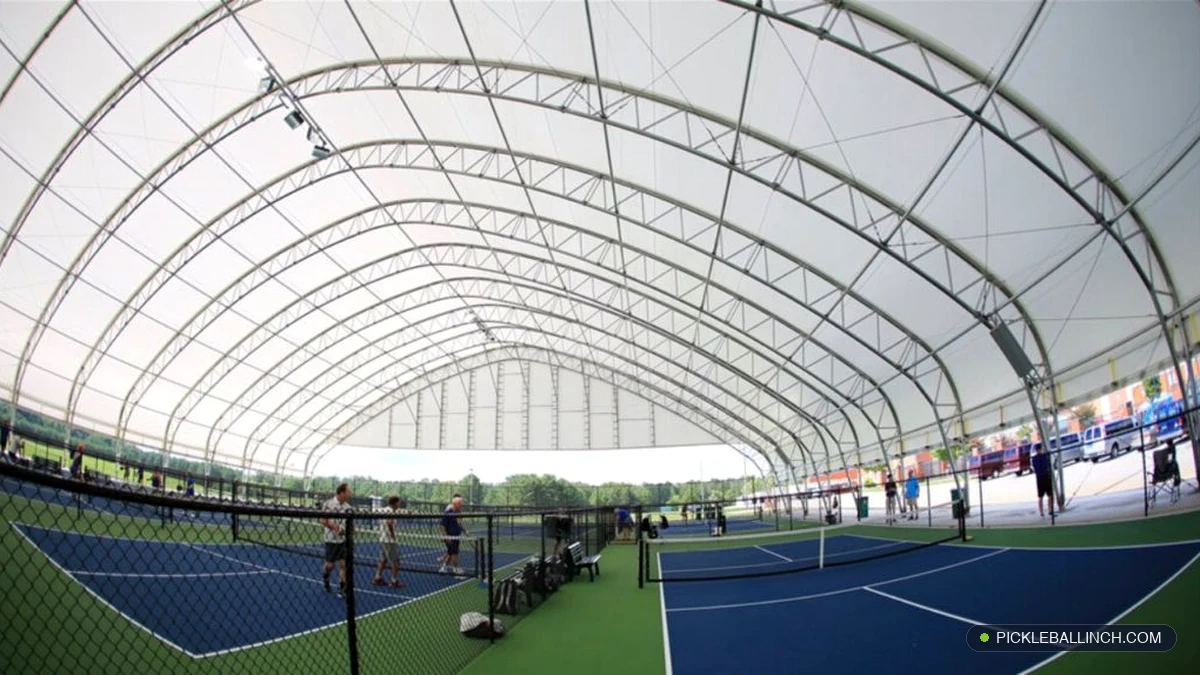
24 Covered SportsPlex Courts (Zero Rainouts)
Opelika, Alabama represents the single smartest municipal pickleball investment in America. While other cities built uncovered asphalt courts subject to summer rain delays and blistering sun, the City of Opelika constructed a 24-court covered tournament pavilion at the Opelika SportsPlex & Aquatics Center. All 24 courts are individually fenced, fully lighted, and sheltered beneath a massive engineered tensile canopy that shields players from rain and direct UV exposure while preserving natural outdoor airflow.
Unmatched Playability & Near-Zero Wait Times
Because the canopy prevents rainouts and temperature extremes, court utilization in Opelika is the most reliable in the Southeast. With 24 dedicated courts serving a combined Opelika-Auburn population of approximately 100,000, the courts-per-capita ratio is phenomenal. Wait times rarely exceed 5 minutes even during peak Saturday morning round robins.
Low Cost of Living & Tax Advantages
Financially, Opelika is the bargain of this entire guide. Median home prices sit at $310,000, Alabama’s effective property tax rate of 0.39% is among the lowest in the nation ($1,209 annually on a median home), and annual SportsPlex membership costs a fraction of commercial indoor clubs. It is an ideal haven for remote workers and budget-conscious retirees.
- 24 covered, rainproof courts with zero weather cancellations
- Exceptional cost of living ($310k median home) and low property taxes
- Virtually zero wait times for open play
- Smaller college-town metro area (Auburn-Opelika)
- Fewer commercial airport flight options (90 mins to Atlanta)
- Moderate Alabama state income tax (5.0%)
Opelika is the best-kept secret in the sport. If you want maximum daily court time without breaking the bank on real estate, this covered pavilion facility is a masterclass in municipal planning.
8. Grand Rapids, Michigan — The Midwest Tournament Engine

Belknap Park & The Beer City Open
Grand Rapids proves that top-tier pickleball culture is not restricted to the Sunbelt. Belknap Park features 21 dedicated hillside courts overlooking the city skyline, maintained through a remarkable public-private partnership led by the Grand Rapids Pickleball Club. Every July, Belknap hosts the Beer City Open, one of the premier independent tournaments in the country, attracting top international pros and distributing six-figure prize money.
Winter Survival: Indoor Club Infrastructure
From May through October, Michigan summers provide crisp 75°F weather that Sunbelt players envy. During winter, the local scene transitions without missing a beat into indoor athletic facilities like MVP Sportsplex and dedicated commercial indoor facilities, ensuring that tournament skills do not hibernate.
Affordable Midwest Relocation
With a median home price of $325,000 and a 4.25% flat Michigan state income tax, Grand Rapids provides an exceptional quality of life for families and professionals who appreciate four distinct seasons, Lake Michigan beaches, and a vibrant local craft brewing and culinary culture.
- Iconic Belknap Park facility and energetic club community
- Gorgeous summer weather (75°F to 82°F)
- Highly affordable housing market ($325k median home)
- Winter snow requires indoor court memberships from Nov to April
- Lake effect winter clouds
- Spring outdoor season can start slowly in April
If you want genuine Midwest friendliness and an energetic volunteer tournament community, Belknap Park is sacred ground. Just factor winter indoor court fees into your annual sports budget.
9. Madison, Wisconsin — Top Courts Per Capita Leader
Municipal Density & Public Access
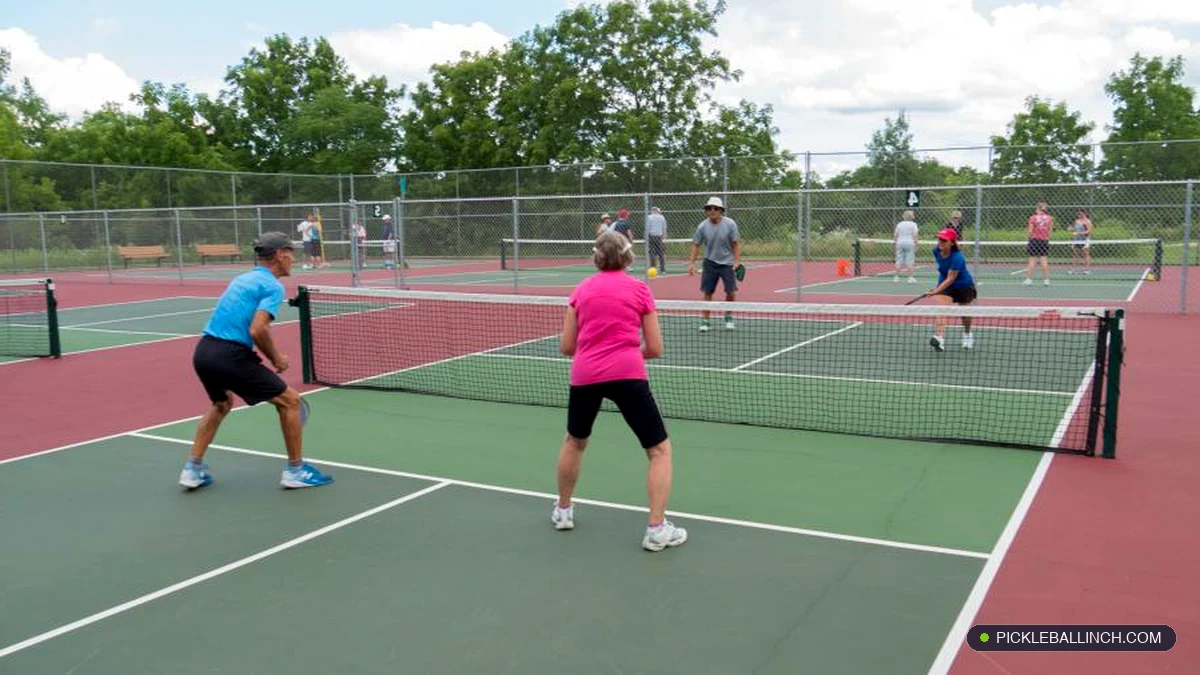
According to Trust for Public Land studies, Madison repeatedly ranks in the top five U.S. cities for public pickleball courts per capita. Garner Park, McKee Farms Park, and Goodman Park feature dedicated complexes that are completely free to the public. The Capital City Pickleball Club coordinates seamless open play rotations across skill tiers, creating an accessible, welcoming environment.
Seasonality & Winter Indoor Play
Outdoor play thrives from May through October across the city’s lakefront parks. During the crisp Upper Midwest winter, players migrate to indoor venues such as KEVA Sports Center in Middleton and the Princeton Club, utilizing converted indoor turf and gym courts for round robins and leagues.
Community Culture & Livability
Madison routinely appears at the top of national “Best Places to Live” rankings for its top-tier healthcare network (UW Health, Epic Systems), bicycle infrastructure, university culture, and lakeside recreational amenities. Median home prices sit at $415,000 with a progressive, community-minded lifestyle.
- Nation-leading public court density per 100,000 residents
- Exceptional overall quality of life and healthcare systems
- Welcoming, community-first open play culture
- Cold Upper Midwest winters restrict outdoor play for 5 months
- Higher Wisconsin state income tax (up to 7.65%)
- Property tax rates in Dane County are above national averages
If you value accessible municipal parks where you can drop in and play for free without waiting in massive commercial queues, Madison’s parks department has set the standard for Midwestern cities.
10. Raleigh-Durham, North Carolina — Balanced 4-Season Mid-Atlantic Living
Triangle Court Growth & Municipal Investment
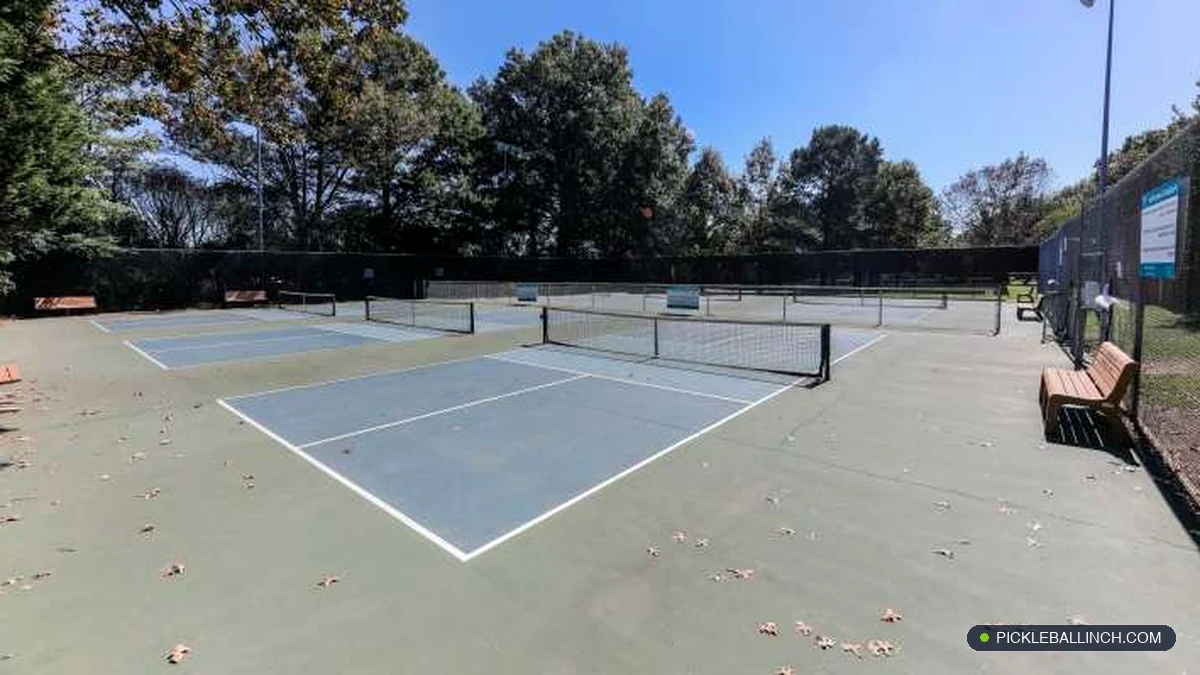
The Research Triangle (Raleigh, Durham, and Cary) has seen explosive court development funded by municipal park bonds. Method Road Community Park in Raleigh provides 9 dedicated courts with stadium lighting, while Cary Tennis Park and Bethesda Park offer extensive tournament setups. The local scene blends tech professionals, university researchers, and retirees.
Climate Sweet Spot: 9 Comfortable Months
Unlike South Florida’s oppressive summer humidity or the Upper Midwest’s prolonged freeze, North Carolina offers four balanced seasons. Spring and autumn provide months of ideal 68°F to 75°F afternoons. Winters are relatively mild, allowing outdoor play on most sunny 50°F afternoons with a lightweight windbreaker.
Mid-Atlantic Economic Appeal
North Carolina features a competitive flat 4.5% income tax, moderate property taxes (0.80%), and strong job market fundamentals. Median home prices across Wake County hover near $435,000, making the Triangle a primary destination for relocators from the Northeast seeking balanced weather and active recreation.
- Balanced 4-season climate with 9 comfortable outdoor months
- Thriving economy powered by Research Triangle universities & tech
- Competitive 4.5% flat state income tax
- Pollen season in late March/April coats outdoor courts
- Peak weekday evening court demand in Cary/Raleigh
- Summer July heat requires early morning sessions
Raleigh-Durham is the sweet spot if you cannot handle year-round desert heat or Florida’s peak hurricane humidity, but refuse to shovel six feet of snow. The paddle community here is welcoming, educated, and rapidly expanding.
Best Places to Live for Pickleball: Top 55+ Retirement Communities
For players planning their retirement transition, these five master-planned developments offer the highest concentration of dedicated courts, golf-cart mobility, and active league schedules:
1. The Villages (Central Florida)
Courts: 240+ Dedicated • Cost: $395k Median Home
The undisputed king. 240+ dedicated courts, zero state income tax, and golf cart connectivity throughout. Ideal for social to competitive 3.5 players.
2. Sun City (Phoenix Metro, AZ)
Courts: 28+ Dedicated • Cost: $310k Median Home
The original active adult master-planned community. Large, well-organized player clubs with dedicated covered spectator pavilions and rapid game rotations.
3. On Top of the World (Ocala, FL)
Courts: 20+ Dedicated • Cost: $320k Median Home
Central Florida equestrian country setting. Sunken championship courts, active DUPR training clinics, and significantly lower insurance rates than coastal Florida.
4. Latitude Margaritaville (FL & SC)
Courts: 12–16 Dedicated • Cost: $420k Median Home
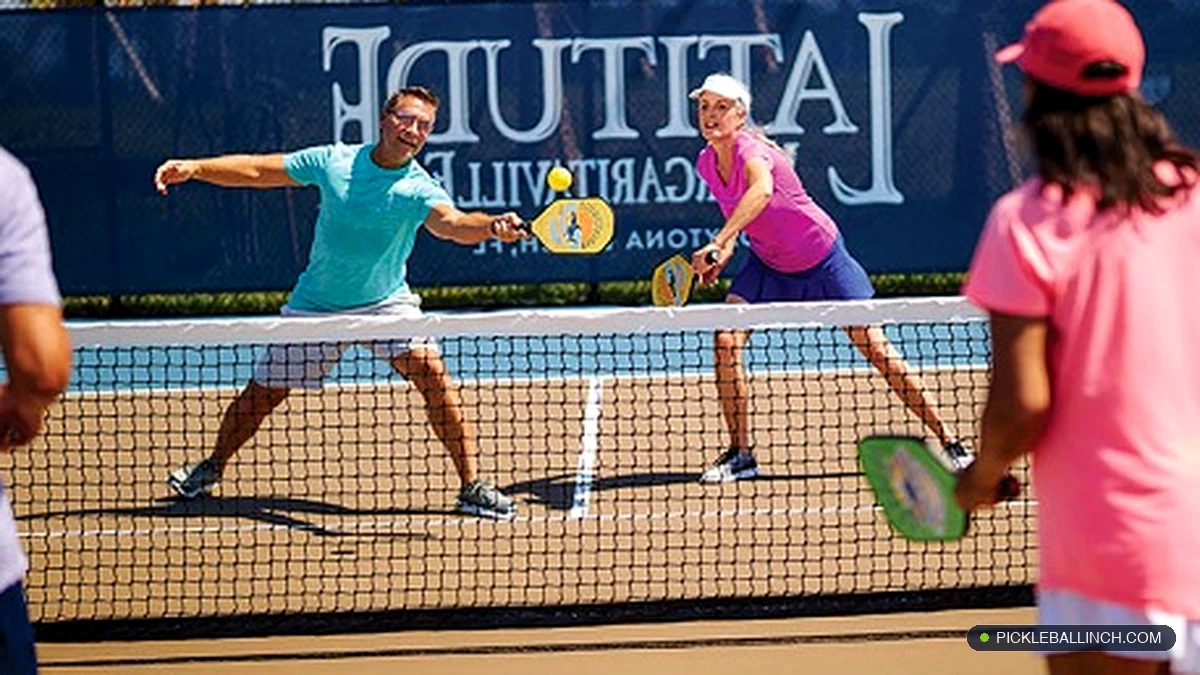
Located in Daytona Beach, Watersound, and Hilton Head. Resort-style courts with live music, tiki bars, and organized nightly social round robins.
5. SaddleBrooke Ranch (Tucson, AZ)
Courts: 24 Dedicated • Cost: $520k Median Home
High-desert elevation (3,000 ft) provides temperatures 5°F–8°F cooler than Phoenix. 24 tournament-grade courts with active competitive travel leagues.
Climate Reality Check: Outdoor Sun vs. Indoor Air-Conditioned Backup
One of the biggest mistakes relocators make is evaluating a city exclusively based on winter vacation weather. Every region demands a seasonal strategy:
Sunbelt Summer Realities (FL, AZ, TX)
From June through September, outdoor courts become physical heat traps. In Arizona, asphalt hits 135°F. In Florida and Houston, morning humidity exceeds 90% with afternoon lightning storms.
The Solution: Budget $100–$160/month for a commercial indoor club (The Picklr, Chicken N Pickle, or local athletic clubs) during summer months.
Northern Winter Realities (MI, WI, UT)
Northern summers (May–October) offer the finest, crispiest 75°F outdoor pickleball in the nation. But snow and freezing temperatures shut down public park courts from November to April.
The Solution: Look for hubs with strong indoor sports dome or club infrastructure. Many northern players maintain indoor league play in winter and play 100% free outdoors all summer.
Best Places to Live for Pickleball on a Budget: 3-Year Cost Matrix
To accurately budget your relocation, evaluate the total financial commitment including home prices, property taxes, state income taxes (calculated on a $120,000 household income benchmark), and average facility dues over a 3-year horizon:
| City & State | Median Home Price | Property Tax Rate | State Income Tax ($120k) | Annual Club Dues | 3-Year Cumulative Cost |
|---|---|---|---|---|---|
| Naples, FL | $590,000 | 0.83% ($4,897/yr) | $0 (0.0%) | $960 | $607,571 |
| St. George, UT | $510,000 | 0.52% ($2,652/yr) | $5,580 (4.65%) | $1,140 | $538,116 |
| Scottsdale, AZ | $585,000 | 0.51% ($2,983/yr) | $3,000 (2.5%) | $1,440 | $607,269 |
| The Villages, FL | $395,000 | 0.89% ($3,515/yr) | $0 (0.0%) | $2,340 (Amenity Fee) | $412,565 |
| Opelika, AL | $310,000 | 0.39% ($1,209/yr) | $6,000 (5.0%) | $480 (SportsPlex) | $333,067 |
| Orange County, CA | $1,050,000 | 0.73% ($7,665/yr) | $9,600 (8.0%) | $2,400 (Los Cab) | $1,108,995 |
Frequently Asked Questions About the Best Places to Live for Pickleball
The Final Verdict: Choosing Your Ideal Pickleball Haven
There is no universal single answer when ranking the best places to live for pickleball. Your ideal relocation depends entirely on your competitive goals, lifestyle preferences, and housing budget:
- Choose Naples, Florida if you crave tournament electric energy, world-class winter weather, and zero state income tax.
- Choose St. George or Greater Utah Valley if you are a 4.0–5.0 player seeking the highest amateur DUPR competition in the country.
- Choose The Villages if you are 55+ and want complete golf cart mobility to 240+ social courts.
- Choose Opelika, Alabama if you want zero rainouts beneath 24 covered courts at half the cost of living of coastal states.
- Choose Orange County, California if you demand 12 months of 72°F ocean breezes and have the budget for premier athletic clubs.
Before you move, dial in your equipment for different court surfaces and regional climates. Explore our interactive laboratory tools:
Court Construction Cost Estimator →
DUPR Rating Calculator →
Paddle Lead Tape Calculator →
Paddle Finder (14mm vs 16mm) →
Also review our empirical gear science guides, including Indoor vs. Outdoor Pickleball Balls: Lab Tests & Durability and 14mm vs. 16mm Pickleball Paddles: Which Core Thickness Is Right For You? to match your equipment to your new hometown courts.
Written by Alex Turner
4.25 DUPR • USA Pickleball CoachAlex Turner is a competitive 4.25 DUPR player and certified coach. He directs equipment benchmarking at Pickleball Inch, conducting independent Shore D core durometer tests, rotational spin decay measurements, and paddle twistweight evaluations.