
⚡ Quick Summary: The 5 Fundamental Pickleball Rules
- The Underhand Serve: Must be struck below the navel in an upward arc, traveling diagonally past the opponent’s kitchen line.
- The Two-Bounce Rule: The serve must bounce once before being returned, and the return must bounce once before being played—no early volleys.
- The Kitchen (Non-Volley Zone): You cannot hit an airborne volley while standing on or touching the 7-foot kitchen line or zone.
- Serve-Only Scoring: Only the serving team can earn points; standard games are played to 11 (must win by 2).
- Doubles Scoring Sequence: Three numbers are called before every serve: [Serving Score] – [Receiving Score] – [Server 1 or 2].
📖 Table of Contents
- What is Pickleball? The Fundamentals of the Game
- Pickleball Court Layout & Anatomy Explained (20′ x 44′)
- Pickleball Serving Rules: Volley Serve vs. Drop Serve
- The Two-Bounce Rule Explained (Formerly ‘Double Bounce’)
- The Non-Volley Zone (The Kitchen): Rules, Myths & Physics
- Pickleball Rules and Scoring: Mastering the Three-Number Call
- Faults & Line Calls: What Stops Play Immediately?
- Modern USA Pickleball Rule Updates (2024–2026)
- Frequently Asked Questions (Pickleball Rules Explained)
Whether you are stepping onto the pickleball court for the very first time or refining tournament strategy under USA Pickleball sanctioned guidelines, knowing the exact pickleball rules explained step-by-step is essential to enjoying the game and avoiding contentious court arguments. Often misspelled as ‘pickelball rules’ or colloquially called ‘pick ball’ and ‘picker ball’, pickleball has surged into the fastest-growing paddle sport in the world because it blends high-energy play, accessible mechanics, and deep tactical nuance. In this master manual, every official pickleball rule, serve constraint, scoring sequence, and kitchen boundary is dissected with mathematical clarity, visual court schematics, and practical gameplay examples.
1. What is Pickleball? The Fundamentals of the Game
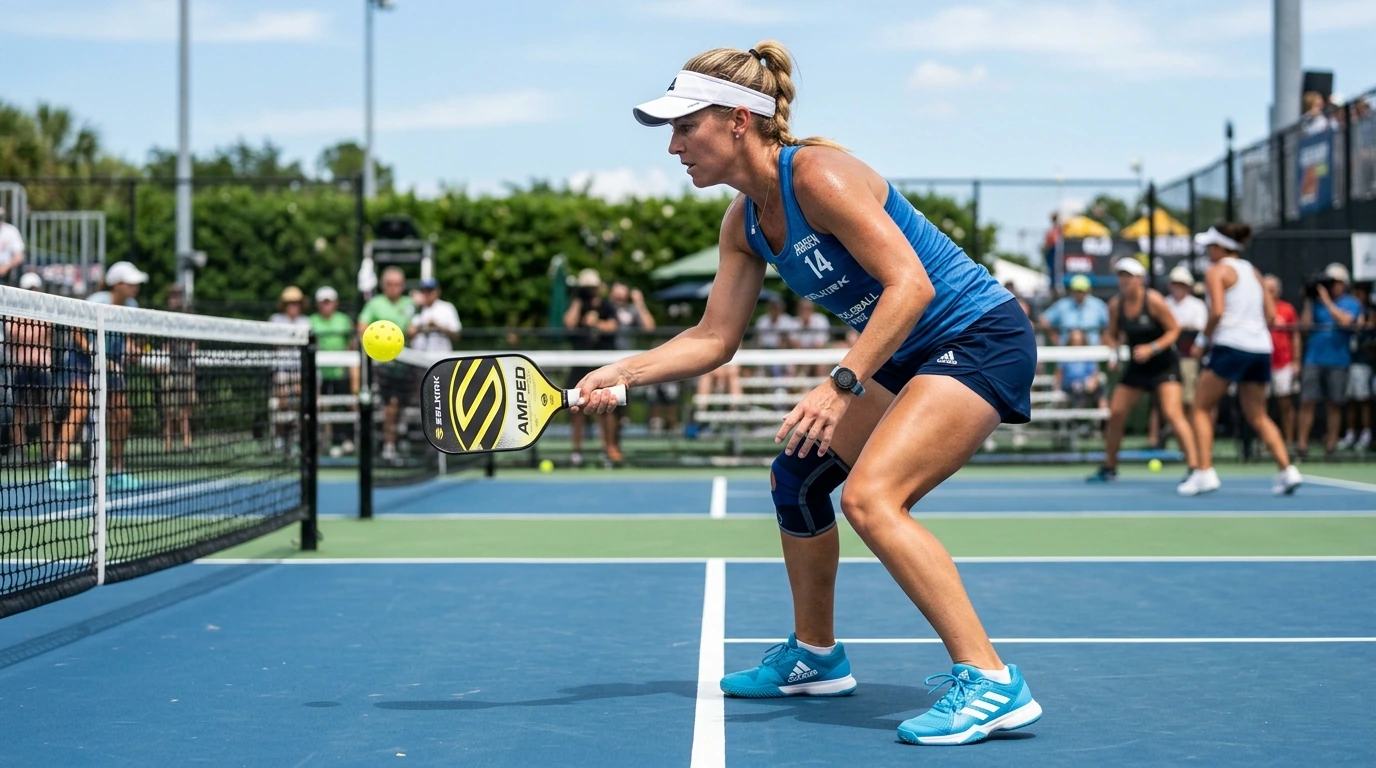
Pickleball is an internationally recognized paddle sport that combines core tactical elements of tennis, badminton, and table tennis. Invented in 1965 on Bainbridge Island, Washington, by Joel Pritchard, Bill Bell, and Barney McCallum, the game is played on a compact court measuring 20 feet wide by 44 feet long. Two players (singles) or four players (doubles) use solid composite or carbon-fiber paddles to hit a perforated polymer plastic ball over a 34-inch center net. (Read more about our testing standards and team background on our About Pickleball Inch page).
The objective of the pickleball game is simple: hit the ball over the net and land it within the opponent’s court boundaries such that they fail to return it legally. However, unlike tennis, where raw power, overhead smashes, and 120-mph serves dominate, pickleball is governed by specific equalizing rules—most notably the underhand serve, the Two-Bounce Rule, and the Non-Volley Zone (the ‘Kitchen’). These rules neutralize athletic disparity, transforming the sport into a thrilling contest of hand-eye coordination, kitchen dinking, geometric positioning, and patience.
2. The Pickleball Court Layout & Anatomy Explained
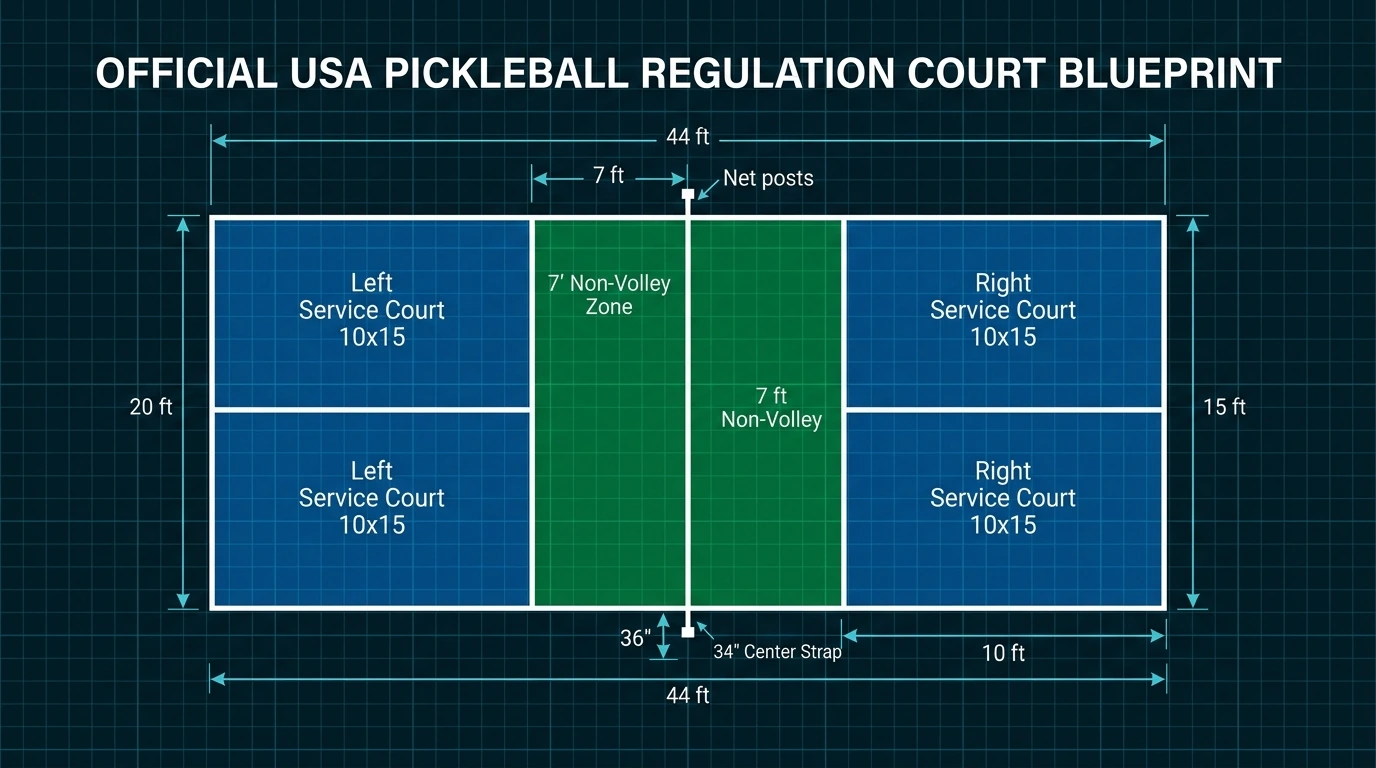
Understanding the physical anatomy of the pickleball court is the first prerequisite to mastering the rules of pickleball. Unlike tennis, where singles and doubles use different boundary lines, an official pickleball court maintains the exact same dimensions regardless of whether you play singles or doubles.
Overall Court Size: 1. Court Dimensions: The court is a rectangle measuring 20 feet (6.10 m) wide and 44 feet (13.41 m) long for both singles and doubles play.
Net Height: 2. Net Specifications: The net spans 22 feet across the court, hanging 36 inches (0.91 m) high at the outer sidelines and exactly 34 inches (0.86 m) high at the center strap.
Non-Volley Zone: 3. Non-Volley Zone (The Kitchen): Extending 7 feet (2.13 m) back from the net on both sides, spanning the entire 20-foot width of the court. The lines bounding this zone are called the Non-Volley Zone Lines (or Kitchen Lines).
Service Boxes: 4. Service Courts: The remaining 15 feet between the kitchen line and the baseline is divided down the middle by a Centerline, creating the Right Service Court (Even Court) and the Left Service Court (Odd Court). Each service court measures 10 feet wide by 15 feet deep.
Boundary Lines: 5. Baselines and Sidelines: The perimeter lines demarcating the back and sides of the court. All lines are 2 inches wide.
Official USA Pickleball Court Anatomy & Regulation Dimensions
20′ × 44′ Court Boundary • 7′ Non-Volley Zone (The Kitchen) • 36" Sideline Posts • 34" Center Net
3. Pickleball Serving Rules: Volley Serve vs. Drop Serve
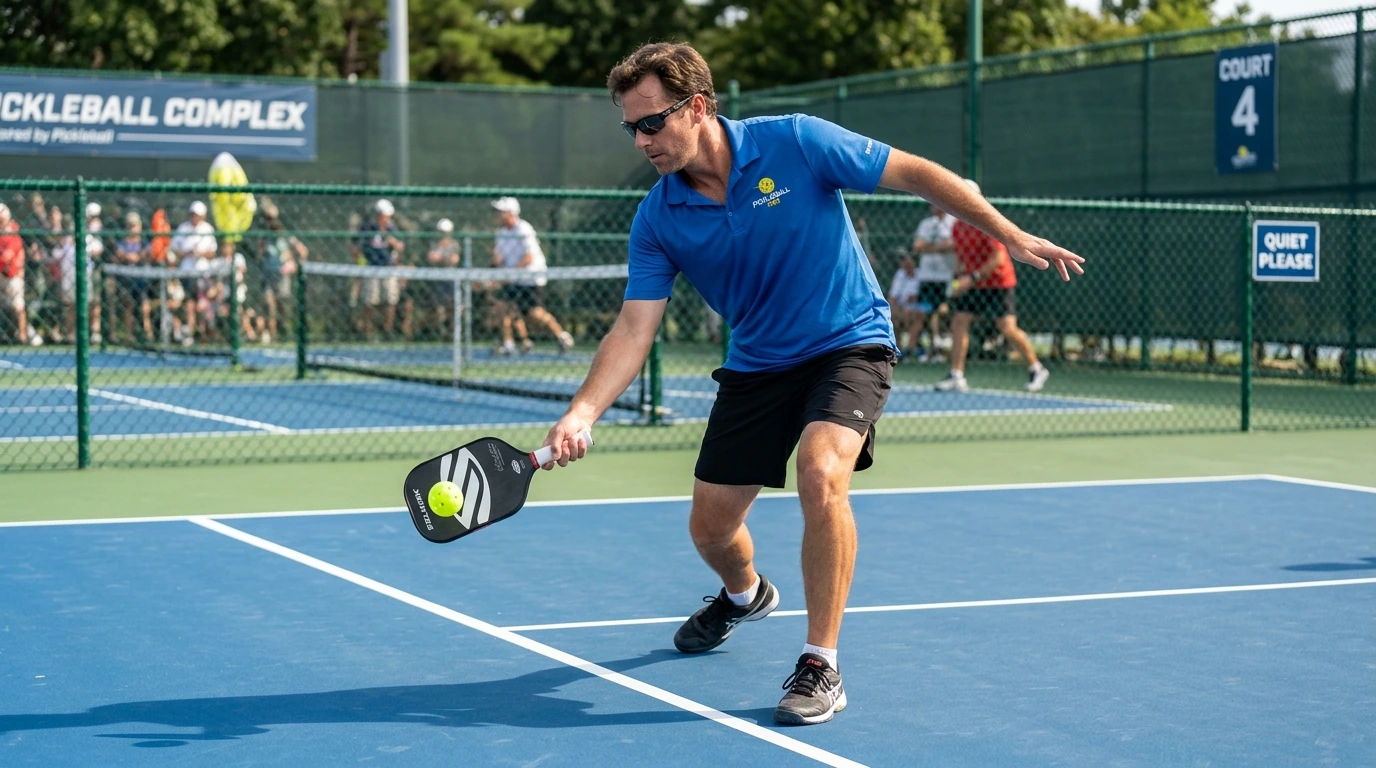
Every rally begins with the pickleball serve, and the serving rules in pickleball are strictly enforced under USA Pickleball guidelines. Unlike tennis, where players smash overhand serves at downward angles, pickleball requires an underhand delivery designed purely to put the ball in play without creating an unreturnable offensive advantage.
Today, players have two legal ways to serve in pickleball: the Volley Serve and the Drop Serve.
3.1 The Traditional Volley Serve (The Three Mandatory Rules)
In a volley serve, the player strikes the ball directly out of the air without allowing it to contact the court surface. To be legal, a volley serve MUST satisfy all three of the following anatomical and mechanical rules at the exact instant of paddle-ball contact:
The 3 Inviolable Volley Serve Rules (Rule 4.A.7)
- Official Ball Specifications (Rule 2.D): Balls must meet strict diameter (2.87–2.97 in), weight, and bounce standards. See our empirical tests comparing hardness, wind drift, and cracking in our indoor vs outdoor pickleball balls lab test.
- 1. Upward Arc Motion: The server’s arm must be moving in an upward arc at the moment of contact. A level horizontal sweep or downward chop is an immediate fault.
- 2. Contact Below the Waist: The point of contact with the ball must be strictly below the server’s waistline (defined as the level of the navel / belly button).
- 3. Paddle Head Below Highest Point of Wrist: The highest point of the paddle head cannot be above the highest part of the wrist (where the wrist joint flexes) at the instant of impact.
3.2 The Modern Drop Serve (Rule 4.A.8)
Introduced provisionally in 2021 and permanently codified into official pickleball rules, the Drop Serve is a fantastic, beginner-friendly alternative. In a drop serve, the server releases the ball from any natural height and lets it bounce on the court surface before striking it.
The revolutionary advantage of the drop serve is that the Three Volley Rules do NOT apply: you do not have to hit below the navel, the paddle head does not have to be below the wrist, and your arm does not have to move in an upward arc. However, two strict conditions apply:
No Tossing or Bouncing: 1. Natural Gravity Drop: The ball must be dropped purely under gravity from the hand or paddle face. You CANNOT toss the ball upward, spin it, push it down, or impart artificial momentum.
Freedom of Stroke: 2. Unrestricted Strike: Once the ball bounces naturally off the court surface, you may hit it forehand, backhand, or sidearm, provided your feet remain in a legal serving position behind the baseline.
3.3 Legal Serving Positioning & Foot Placement (Rule 4.B)
At the moment the paddle contacts the ball during any serve:
Ground Contact: • At least one foot must be touching the ground behind the baseline.
Baseline Clearance: • Neither foot may touch the court surface on or inside the baseline.
Lateral Boundaries: • Neither foot may touch the imaginary extensions of the centerline or sideline.
3.4 Service Flight & Landing Trajectory
The serve must travel diagonally crosscourt and clear the 7-foot Non-Volley Zone (including the kitchen line), landing within the boundaries of the diagonally opposite service court. If the serve touches the baseline, sideline, or centerline, it is IN. However, if the serve touches the Non-Volley Zone line (the kitchen line), it is an immediate FAULT. Remember: on a serve, the kitchen line is OUT!
4. The Two-Bounce Rule Explained (Formerly ‘Double Bounce’)
What Is the Two-Shot Rule in Pickleball? (The Two-Bounce Rule)
Quick Answer: The two-shot rule (officially designated as the Two-Bounce Rule under USA Pickleball Rule 4.A.6) requires that the serve must bounce once before being returned, and the return of serve must bounce once before being hit by the serving team. After these first two shots bounce, players on both sides can freely volley out of the air or play off the bounce.
The Two-Bounce Rule Step-by-Step Flow
Both the serve and the return MUST bounce before any player is permitted to volley out of the air.
The server strikes the ball underhand behind the baseline. The ball flies diagonally crosscourt over the net.
The receiving team MUST let the ball bounce once in their service court before hitting it. Hitting out of the air is an instant fault!
The receiver hits the ball back over the net. The serving team MUST let the return bounce once on their court before striking.
Once both bounces occur, the Two-Bounce requirement is met. Both teams may now hit groundstrokes OR volley out of the air (respecting the kitchen).
One of the most defining aspects of the rules for pickleball is the Two-Bounce Rule (officially titled Rule 4.A.6 in the USA Pickleball rulebook). In casual play, newcomers frequently ask: ‘What is the double bounce rule in pickleball?’ While commonly called the double bounce rule, USA Pickleball officially calls it the Two-Bounce Rule to prevent confusion with a ‘double bounce fault’ (where a ball bounces twice on one side before being hit).
The Two-Bounce Sequence Step-by-Step
- Official Ball Specifications (Rule 2.D): Balls must meet strict diameter (2.87–2.97 in), weight, and bounce standards. See our empirical tests comparing hardness, wind drift, and cracking in our indoor vs outdoor pickleball balls lab test.
- Bounce 1 (The Receiving Side): When the serve travels crosscourt, the receiving team MUST allow the ball to bounce on their court before hitting their return. If the receiver hits the serve out of the air (volley), it is an immediate fault!
- Bounce 2 (The Serving Side): When the receiver returns the ball across the net, the serving team MUST allow that return to bounce on their court before striking it. If the server or server’s partner hits the ball out of the air, it is an immediate fault!
- Rally Unlocked (Open Volleys): Once both teams have hit their first groundstroke (two total bounces in the rally), the Two-Bounce Rule is fulfilled. For the remainder of the rally, both teams are free to either hit the ball on the bounce or volley it out of the air (provided they obey the kitchen rules).
Tactical Rationale: Why does this rule exist? Without the Two-Bounce Rule, the serving team could serve and immediately sprint to the kitchen line, smashing the receiver’s return out of the air for an easy winner. The Two-Bounce Rule forces the serving team to stay back at the baseline for their third shot, giving the receiving team the critical tactical advantage to reach the kitchen line first.
5. The Non-Volley Zone (The Kitchen): Rules, Myths & Physics
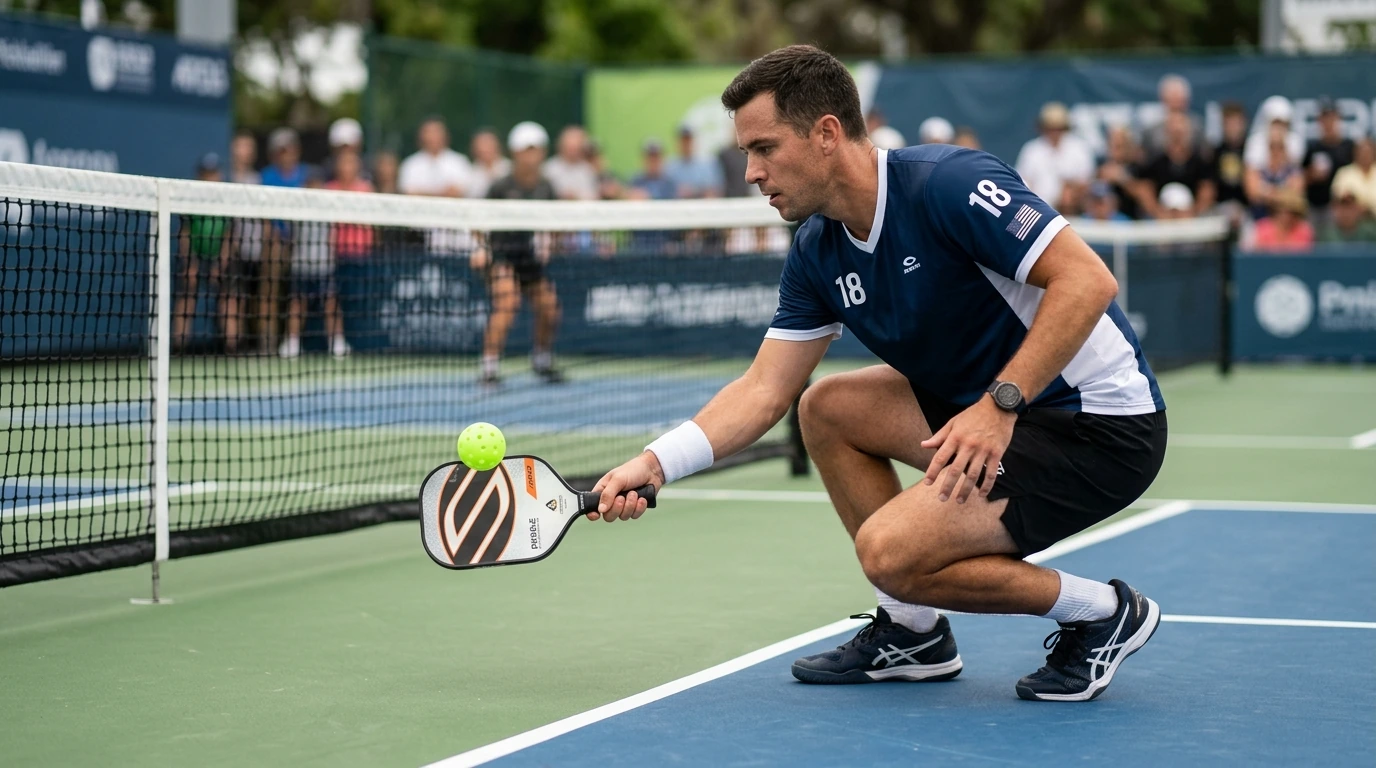
No area of the pickleball court causes more heated arguments, confusion, and rule misunderstandings than the 7-foot Non-Volley Zone (NVZ), universally known as ‘The Kitchen’.
5.1 The Core Kitchen Rule (Rule 9)
The rule of the kitchen is simple yet absolute: You cannot volley the ball (hit it out of the air before it bounces) while standing in, touching, or having any part of your body or gear contact the Non-Volley Zone.
This includes the 2-inch wide kitchen line! In pickleball, the kitchen line is legally part of the kitchen. If your shoe heel, toe, or even your dropped sunglasses touch the kitchen line during or immediately following a volley, you have committed a FAULT.
5.2 The Momentum Rule (The Trailing Fault)
Under official USA Pickleball Rule 9.B, a player’s momentum resulting from executing a volley is legally part of that volley stroke. Even if you contact the ball while legally standing completely outside the kitchen, if your forward momentum causes you, your paddle, your hat, or your partner to touch the kitchen or kitchen line afterwards, it is a FAULT—even if the ball has already bounced twice and the rally was technically won!
A player must establish complete balance and reset both feet entirely outside the non-volley zone before their volley action is legally finished.
5.3 BUSTING THE 3 BIGGEST KITCHEN MYTHS
Common Kitchen Myths Debunked by the Official Rulebook
- Official Ball Specifications (Rule 2.D): Balls must meet strict diameter (2.87–2.97 in), weight, and bounce standards. See our empirical tests comparing hardness, wind drift, and cracking in our indoor vs outdoor pickleball balls lab test.
- MYTH 1: ‘You can never stand in the kitchen.’ –> FALSE! You can legally stand, dance, or sit in the kitchen all day long, provided you are NOT volleying the ball. If the ball bounces inside the kitchen, you can step right in and hit it!
- MYTH 2: ‘You must exit the kitchen immediately after hitting a bounced ball.’ –> FALSE! There is no time limit requiring you to jump out. However, if you remain inside, you cannot hit the NEXT shot out of the air until both feet re-establish contact outside the zone.
- MYTH 3: ‘If your paddle drops into the kitchen, it doesn’t count.’ –> FALSE! Any item that is on your person—including paddle, cap, sweatband, or towel—that touches the kitchen or kitchen line during a volley constitutes an immediate fault.
6. Pickleball Rules and Scoring: Mastering the Three-Number Call
How to Read & Call the 3-Number Doubles Score
Example Callout: ” 4 — 2 — 1 “
Always states the score of the team currently serving the ball. You only gain points while serving.
States the opponent’s current score. Opponents cannot score points when receiving.
Identifies whether the active server is the team’s First Server (1) or Second Server (2).
To newcomers starting out, mastering court flow and scoring is essential. Check our step-by-step primer on how to play pickleball for beginners. In pickleball rules doubles, the score is always called out as three numbers: In pickleball rules doubles, the score is always called out as three distinct numbers: (1) Serving Team Score, (2) Receiving Team Score, and (3) Server Number (1 or 2). For example: ‘6 – 4 – 2’.
6.1 Basic Scoring Rules (Rule 4.D)
Points on Serve Only: • Side-Out Scoring: You can ONLY score points when your team is serving. If the receiving team wins a rally, they do not gain a point; they gain the opportunity to serve (a side-out).
Winning Margin: • Game to 11, Win by 2: Standard pickleball games are played to 11 points, but the winning team must win by at least 2 points. Tournament games are sometimes played to 15 or 21 (win by 2).
6.2 The Three Numbers Decoded for Doubles Play
Every doubles team gets two turns to serve before handing the ball over to the opposing team (with one famous exception at the start of each game).
First Number: 1. First Number: The current score of the team serving.
Second Number: 2. Second Number: The current score of the team receiving.
Third Number: 3. Third Number: Identifies whether the current server is Server 1 or Server 2.
The Unique ‘Start of Match’ 0-0-2 Exception (Rule 4.B.8)
- Official Ball Specifications (Rule 2.D): Balls must meet strict diameter (2.87–2.97 in), weight, and bounce standards. See our empirical tests comparing hardness, wind drift, and cracking in our indoor vs outdoor pickleball balls lab test.
- At the very beginning of every doubles game, the team that serves first is only allowed ONE server before a side-out is called.
- To reflect this, the opening score is ALWAYS called as: ‘0 – 0 – 2’ (Zero – Zero – Two).
- Why? If the starting team was allowed two servers, they would hold an unfair scoring advantage to start the match. Once the first server loses their rally, it immediately side-outs to the opponents, who then begin with Server 1 (‘0 – 0 – 1’).
6.3 Player Rotation Sequence in Doubles
Right-Hand Start: • Starting Position: The starting server on any team always begins serving from the right-hand (even) service court.
Court Switching: • Switching Sides on Points: Whenever the serving team scores a point, the two serving partners switch courts (the server moves to the left court, partner to the right). The receiver NEVER switches sides when the server scores!
Second Server Step-In: • Loss of Rally (Fault by Server 1): The players stay in their current positions, and Server 2 takes the ball and serves from their assigned side.
Side-Out: • Loss of Rally (Fault by Server 2): A Side-Out is declared. The ball transfers to the opposing team’s Server 1, who serves from the right-hand court.
6.4 Singles Pickleball Rules: Can You Play Pickleball with Two People?
Yes, absolutely! Can you play pickleball with two people? Yes, this is known as singles pickleball. While doubles is more popular recreationally, singles is an intense, athletic test of court coverage. For complete court coverage drills and skinny singles scoring, explore our in-depth guide on how to play pickleball singles.
Singles pickleball rules are simpler than doubles because there is no third number called. The score is simply: [Server Score] – [Receiver Score].
Even Score Position: • Even Score (0, 2, 4, 6, 8, 10…): The server serves from the Right Service Court.
Odd Score Position: • Odd Score (1, 3, 5, 7, 9…): The server serves from the Left Service Court.
The receiver simply aligns diagonally across from wherever the server stands. When the server scores, they switch to the opposite court; when the server faults, it is an immediate side-out to the other player.
7. Faults & Line Calls: What Stops Play Immediately?
A fault in pickleball ends the rally immediately. If the receiving team commits a fault, the serving team earns a point. If the serving team commits a fault, they either lose the serve to their partner (in doubles) or cause a side-out.
The Master List of Pickleball Faults (Rule 7)
- Official Ball Specifications (Rule 2.D): Balls must meet strict diameter (2.87–2.97 in), weight, and bounce standards. See our empirical tests comparing hardness, wind drift, and cracking in our indoor vs outdoor pickleball balls lab test.
- 1. Out of Bounds: Hitting the ball out of the court boundaries.
- 2. Net Contact: Hitting the ball into the net or into the net post.
- 3. Two-Bounce Violation: Volleying the ball before the two-bounce rule is satisfied.
- 4. Kitchen Volley Violation: Stepping in the kitchen or touching the line while volleying.
- 5. Momentum Kitchen Fault: Letting your physical momentum carry you into the kitchen after a volley.
- 6. Double Bounce on Court: Failing to hit the ball before it bounces twice on your side.
- 7. Player / Paddle Net Contact: Touching the net system, posts, or opponent’s court while the ball is live.
- 8. Double Hit (Deliberate): Intentionally striking the ball twice or carrying it on the paddle (an unintentional, continuous directional double-hit is legal under Rule 11.A).
- 9. Ball Hits Player: The ball contacting a player’s body or clothing (except the hand below the wrist holding the paddle).
7.1 Official Line Call Rules (Rule 6)
In Pickleball, Is the Line In or Out?
Quick Answer: In pickleball, any ball that touches any part of the baseline, sideline, or centerline is ruled IN. The only exception is the non-volley zone (kitchen) line on the serve: if a serve contacts the kitchen line, it is a fault (OUT). During all subsequent rally play, every court line is in play.
Line calls in pickleball are governed by a cardinal rule: A ball contacting any part of a boundary line is IN, with one single exception:
Perimeter Lines: • Sidelines and Baselines: If a ball touches even 1 millimeter of the sideline or baseline, it is 100% IN.
Centerline: • Centerline on Serve: If a serve touches the centerline, it is IN.
The Kitchen Line Exception: • The Kitchen Line on Serve: If a serve lands on the Non-Volley Zone line, it is a FAULT! During regular play rallies, however, a ball landing on the kitchen line is completely in play.
Benefit of the Doubt: • Player Line Calls: Players call lines on their own side of the net. If you cannot see clear green/blue space between the ball and the line, the ball MUST be called IN (give the benefit of the doubt to your opponent).
8. Modern USA Pickleball Rule Updates (2024–2026)
USA Pickleball updates its official rulebook annually to refine gameplay, protect sportsmanship, and eliminate loopholes. Competitive players must know these recent landmark rule changes:
Key USA Pickleball Rule Adjustments
- Official Ball Specifications (Rule 2.D): Balls must meet strict diameter (2.87–2.97 in), weight, and bounce standards. See our empirical tests comparing hardness, wind drift, and cracking in our indoor vs outdoor pickleball balls lab test.
- 1. Complete Ban on Spin Serves (Rule 4.A.5): Players are strictly prohibited from imparting pre-spin with their fingers or paddle face prior to striking the ball. The ball must be released with zero deliberate rotational spin.
- 2. Clarification on Release Height: For drop serves, the ball must be dropped from an unforced natural height. Stepping onto a chair or tossing upward to gain extra bounce is illegal.
- 3. Draped Net & Center Strap Corrections: If a ball hits a net cable draped over the net post, specific replay criteria now apply.
- 4. Medical Time-Out Standardizations: Players are allotted one 15-minute medical evaluation period per match to treat sudden acute injuries.
9. Frequently Asked Questions (Pickleball Rules Explained)
In pickleball, is the line in or out?
The line is IN in pickleball. If any portion of the ball touches any part of the baseline, sideline, or centerline, it is 100% in play. The single exception is the kitchen line during the serve: a serve that lands on the kitchen line is a fault (out).
What is the two-shot rule in pickleball?
The two-shot rule (commonly called the Two-Bounce Rule) states that after the ball is served, each side must make their first shot off the bounce. The receiving team must let the serve bounce once, and the serving team must let the return bounce once. Only on the third shot of the rally and onward can either team hit a volley out of the air.
What are the 5 basic pickleball rules for beginners?
The 5 basic rules are: (1) The serve must be hit underhand crosscourt past the kitchen line; (2) The Two-Bounce Rule requires the serve and the return to bounce before any volleys; (3) Points can only be scored by the serving team; (4) Games are played to 11 (win by 2); and (5) You cannot volley while touching or stepping into the 7-foot kitchen.
Can you step in the kitchen before the ball bounces?
Yes, you can legally stand in the kitchen before the ball bounces, as long as you do NOT hit the ball out of the air. You must wait for the ball to bounce on the kitchen floor before striking it.
What is the difference between a double bounce rule and a double bounce fault?
The ‘Two-Bounce Rule’ is the required opening sequence where the ball must bounce once on the receiver’s side and once on the server’s side. A ‘double bounce fault’ occurs when the ball bounces twice on one player’s court before they hit it, which ends the rally.
Can you hit the ball with your hand in pickleball?
Yes, but ONLY if the ball strikes the hand below the wrist that is actively holding the paddle, and it is deemed an incidental hit. If the ball hits your free hand, arm, body, or paddle hand above the wrist, it is a fault.
What happens if a serve hits the net cord but lands in the correct service box?
In pickleball, there are NO ‘let’ serves. If the serve touches the net cord but continues over and lands legally in the diagonal service box (beyond the kitchen line), the ball is LIVE and must be played! If it lands in the kitchen or out of bounds, it is a fault.